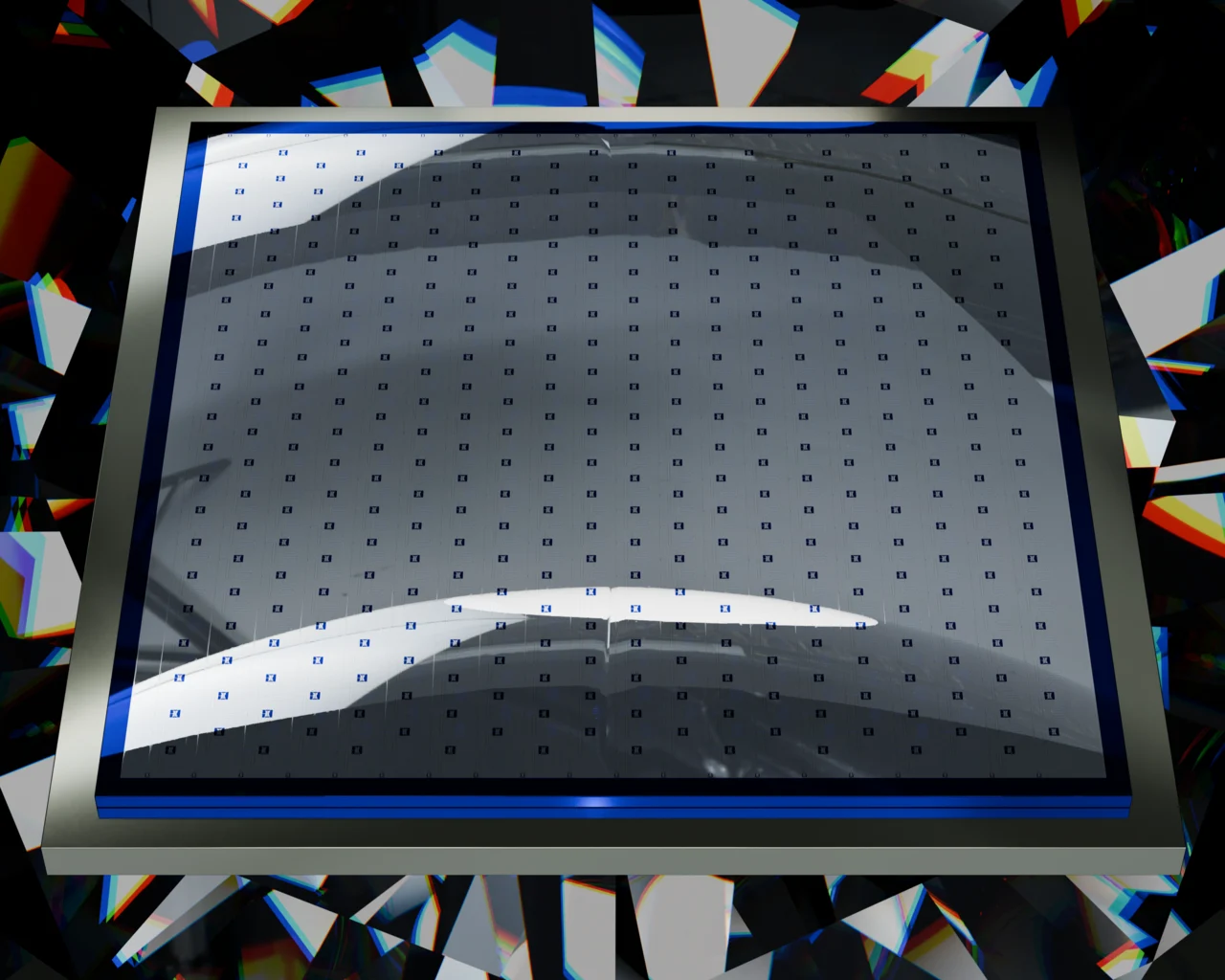
Google Quantum AI Demonstrates Contextuality With 98.3% Success Rate Up to 105 Qubits
Google Quantum AI researchers demonstrated quantum contextuality with 98.3% success rate up to 105 qubits on Thursday.
Google Quantum AI researchers reported an experiment testing quantum contextuality on Thursday where the processor qubits won a coordination game in 98.3 percent of trials, LSDI reported.
The Tech TL;DR:
- Google tested quantum contextuality on an advanced processor achieving a 98.3 percent success rate in a coordination game.
- The score compares against an 88.9 percent ceiling set by classical strategies under identical test parameters.
- Additional trials pushed scale benchmarks up to 105 qubits, providing hardware teams a new metric to track subtle physical errors.
Classical strategies under the same coordination game parameters reach an upper bound of 88.9 percent, leaving a clear performance gap in the experimental comparison. LSDI reported that contextuality measures how the result of a specific quantum property depends directly on what other compatible measurements occur simultaneously within that exact system.
Researchers pushed the testing envelope further during the same evaluation window, with auxiliary trials scaling up to 105 qubits. LSDI said that this specific testing tier does not represent a commercial quantum computer release or a general benchmark for everyday computational speed.
| Strategy Type | Coordination Game Score | Tested Qubit Scale |
|---|---|---|
| Classical Strategy Limit | 88.9% | Standard Baseline |
| Google Quantum Hardware | 98.3% | Up to 105 Qubits |
Google said that these experimental evaluations could serve an operational purpose beyond theoretical physics by exposing subtle hardware errors. Engineers can utilize contextuality tests to monitor physical qubit fidelity, though the team clarified that the current tests have not yet yielded practical applications in materials science or molecular chemistry.
The published findings remain strictly confined to these controlled laboratory trials rather than establishing a universal performance advantage over classical hardware.
On November 19, 2026, LSDI reported that Google released the quantum contextuality experimental data.
Google Quantum AI, launched by Google scientist Hartmut Neven in 2012, traces its origins to a 2006 concept aimed at accelerating machine learning. The division established its Santa Barbara campus in 2013 and recruited UCSB professor John Martinis and his team in 2014 to build proprietary quantum hardware.
In 2019, the group claimed “quantum supremacy” using the 53-qubit Sycamore processor. Six years later, the Willow chip — used in the contextuality experiment — achieved exponential error reduction as qubits scaled, completing a benchmark computation in under five minutes that would take a supercomputer 10 septillion years.
Always consult with certified IT and cybersecurity professionals before altering enterprise networks or handling sensitive data.