
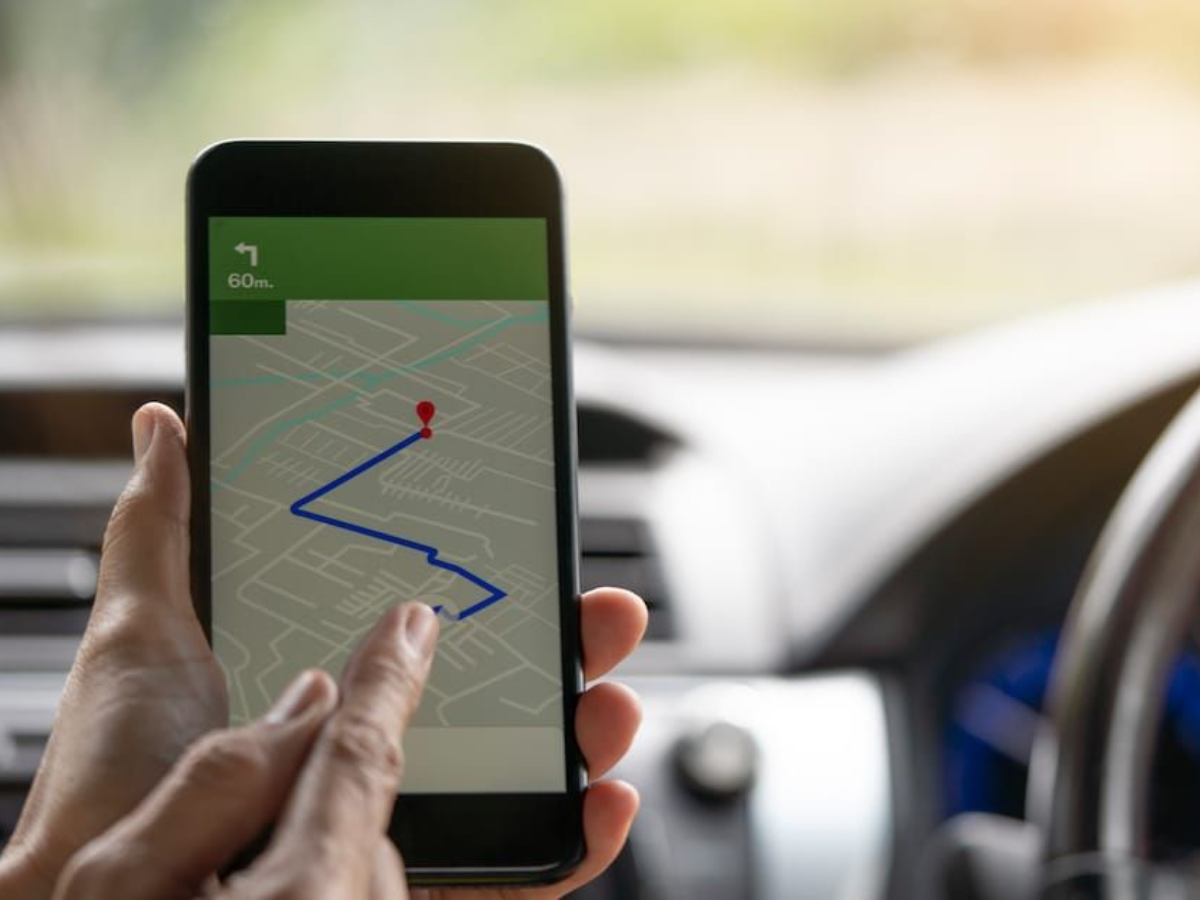
Google Maps Adds Battery Predictions for 350+ Electric Vehicle Models on Android Auto
Google Maps for Android Auto: EV Telemetry Expansion or Just Another API Wrapper?
As of the production push this week, Google Maps on Android Auto is attempting to close the fidelity gap between native OEM software and third-party navigation. The rollout, hitting the United States market on March 31, 2026, extends battery state-of-charge (SoC) predictions to over 350 electric vehicle models. For the average consumer, this is a convenience feature. For the engineering community, it represents a significant shift in how telemetry data is piped from the vehicle’s CAN bus to a mobile device over a Bluetooth or USB bridge.
We are no longer talking about simple GPS routing. We are discussing real-time energy modeling based on elevation, traffic density, and thermal battery conditions. However, the implementation relies heavily on manual user configuration—a friction point that suggests the underlying API handshake between Android Auto and vehicle ECUs is not yet fully automated for legacy hardware.
The Tech TL;DR:
- Data Latency: Battery predictions are calculated server-side, introducing potential latency compared to local OEM processing.
- Configuration Friction: Requires manual vehicle profile entry; no automatic VIN decoding for telemetry permissions yet.
- Enterprise Impact: Fleet managers must now account for third-party routing logic when auditing driver efficiency and charging costs.
The Architecture of Range Anxiety
The core problem Google is attempting to solve is the fragmentation of the EV charging ecosystem. Previously, Android Auto users were forced to toggle between a navigation app and a dedicated charging network app (like Electrify America or ChargePoint). This context switching increases cognitive load and distraction. By integrating charging stops directly into the routing algorithm, Google is effectively acting as an aggregator layer.

However, from a systems architecture perspective, this introduces a dependency on accurate vehicle telemetry. How does the phone know the battery is at 42%? It relies on the Android Auto SDK to query the vehicle’s OBD-II or proprietary data bus. If that data stream is intermittent—a common issue with older Bluetooth implementations in 2023-2024 model year vehicles—the routing algorithm fails. This is where the “vaporware” risk lies: if the telemetry packet drops, the estimated arrival time becomes a guess.
For enterprise fleets managing mixed EV assets, this inconsistency is unacceptable. Corporations are increasingly turning to specialized fleet management consultants to audit the reliability of third-party telemetry versus native OEM dashboards before mandating specific routing software for their drivers.
Tech Stack & Alternatives Matrix
To understand where Google Maps stands in the current navigation hierarchy, we must compare its data ingestion model against the two primary competitors: Apple CarPlay (utilizing Waze/Apple Maps) and Native OEM Systems (e.g., Tesla Navigation, Rivian UI). The differentiator is not the map tiles, but the energy model.
| Feature | Google Maps (Android Auto) | Apple CarPlay (Waze/Maps) | Native OEM System |
|---|---|---|---|
| Telemetry Source | Android Auto SDK (Bridge) | CarPlay Framework (Bridge) | Direct CAN Bus Access |
| Latency | Medium (Cloud-dependent) | Low (Local processing) | Minimal (Real-time) |
| Charging Network Aggregation | High (Google Business Profile) | Medium (Third-party plugins) | Variable (OEM partnerships) |
| Offline Capability | Limited (Cached tiles only) | Limited | High |
Google’s advantage is its database of charging station uptime, scraped from Google Maps Platform APIs. However, Native OEM systems still win on thermal modeling. A Tesla knows its battery temperature; Google Maps has to infer it based on ambient weather data and driving history. This inference gap is critical for long-haul logistics.
Implementation Reality: The API Handshake
For developers looking to integrate similar telemetry features into custom fleet dashboards, the challenge is normalizing the data. Google’s implementation requires the user to manually input the “Make, Model, Year, and Trim.” This is a primitive method of data ingestion in 2026. A robust system should utilize the Vehicle Identification Number (VIN) to pull battery capacity (kWh) and efficiency curves (Wh/mi) automatically.
Below is a conceptual cURL request demonstrating how a developer might query an EV telemetry endpoint to retrieve the necessary battery capacity data for route calculation, assuming a standardized API structure:
curl -X Obtain "https://api.ev-telemetry.example.com/v1/vehicle/profile" -H "Authorization: Bearer <ACCESS_TOKEN>" -H "Content-Type: application/json" -d '{ "vin": "5YJ3E1EA1KF123456", "fields": ["battery_capacity_kwh", "efficiency_curve", "charging_port_type"] }'Without this level of granular data, routing algorithms default to generic efficiency curves, leading to the “arrival with 0%” scenarios that plague early EV navigation systems. This is why custom software development agencies are seeing a surge in demand for middleware that normalizes OEM data streams before they hit the driver’s display.
The Security Implications of Connected Routing
Connecting navigation logic to battery telemetry expands the attack surface. If a malicious actor can spoof the battery level data sent to the navigation app, they could force a vehicle to route to a specific, potentially compromised charging station. While Google employs robust encryption standards for data in transit, the endpoint security on older Android Auto head units remains a concern.
“The integration of third-party routing with vehicle telemetry is a double-edged sword. It improves UX, but it creates a new vector for data exfiltration. We are advising clients to treat navigation data with the same security posture as financial transactions.”
— Elena Rostova, CTO at VoltSecure Automotive Auditors
the reliance on Google’s proprietary algorithms means fleet operators lose visibility into why a route was chosen. Was it the fastest route, or the most energy-efficient? For B2B operations, this lack of explainability is a compliance risk. Organizations are increasingly hiring cybersecurity auditors to review the data privacy policies of navigation providers to ensure driver location history isn’t being monetized without consent.
Final Verdict: A Necessary Patch, Not a Revolution
Google’s update is a necessary patch for the fragmented Android Auto ecosystem. It brings the platform closer to parity with Apple CarPlay and native systems. However, the reliance on manual vehicle setup and the lack of direct VIN-based telemetry ingestion suggests this is a transitional technology. Until the handshake between the phone and the car is fully automated and secure, this feature remains a “beta” experience for power users.
For the CTOs and IT directors reading this: do not deploy this as a primary fleet management tool yet. Employ it for ad-hoc routing, but maintain native OEM telemetry for critical logistics and auditing. The directory is full of IT infrastructure managers who can help bridge the gap between consumer-grade apps and enterprise-grade reliability.
Disclaimer: The technical analyses and security protocols detailed in this article are for informational purposes only. Always consult with certified IT and cybersecurity professionals before altering enterprise networks or handling sensitive data.