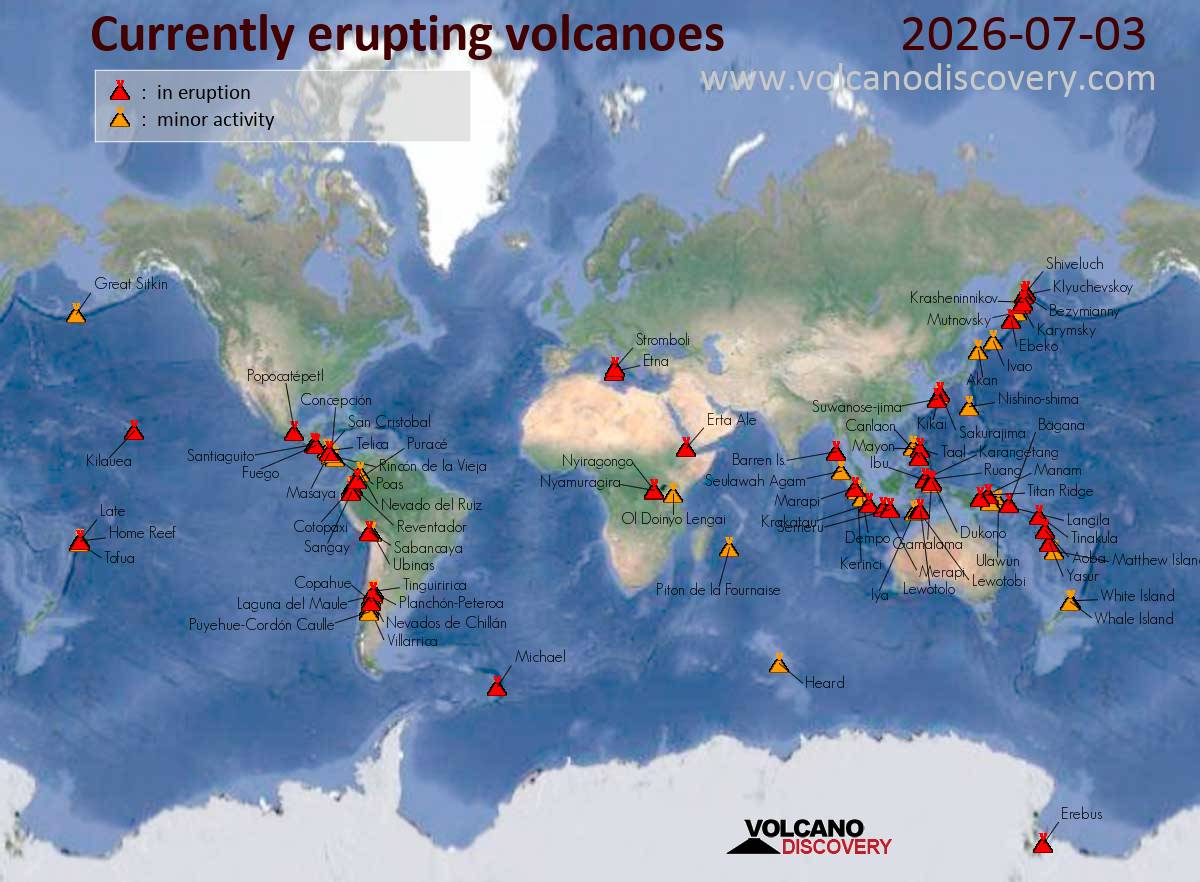
Global Volcanic Activity Report: July 3, 2026
Multiple volcanoes across Europe, Asia, and Central America reported activity on July 3, 2026, including eruptions at Mount Etna, Fuego, and several Indonesian peaks, according to data from Volcano Discovery. These events involve a range of activity from ash plumes and lava flows to seismic tremors across the “Ring of Fire” and Mediterranean regions.
What is the current status of Mount Etna and Fuego?
Mount Etna in Sicily continues to exhibit volcanic activity, characterized by degassing and localized eruptions, according to Volcano Discovery reports. In Central America, the Fuego volcano in Guatemala remains active, with reports indicating ongoing eruptive phases that typically involve ash emissions and pyroclastic flows.

Which volcanoes in Indonesia are currently erupting?
Indonesia is experiencing simultaneous activity across several major volcanic systems. According to Volcano Discovery, the following peaks are active:
- Krakatau: Monitoring continues as the volcano maintains an active state following its historical pattern of instability.
- Semeru: The volcano continues to produce ash plumes and lava flows, which frequently impact surrounding districts.
- Ibu: Recent reports indicate eruptive activity characterized by ash columns reaching into the atmosphere.
- Dukono: This volcano remains in a state of near-constant activity, with consistent ash emissions reported.
What is the situation at Shiveluch?
The Shiveluch volcano in Russia is currently active, according to Volcano Discovery. This volcano is known for producing significant ash clouds that can affect aviation corridors in the North Pacific region, though specific plume heights for July 3 were not detailed in the primary report.
How does this activity compare to regional norms?
The simultaneous activity at Shiveluch, Semeru, Ibu, and Dukono aligns with the high baseline of volatility found in the Indonesian and Kamchatka arcs. While Mount Etna’s activity is frequent, the convergence of active vents across three continents on a single date highlights the ongoing geological instability of the Pacific Ring of Fire and the Mediterranean volcanic belt.
Monitoring agencies continue to track seismic data and satellite imagery to determine if these eruptions are escalating or remaining at steady-state levels.