
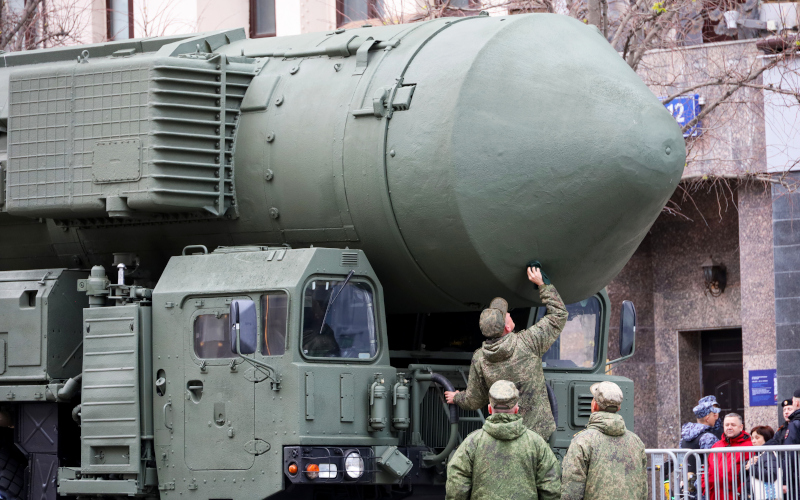
Global Nuclear Risks: The Rise of a New Arms Race
The Modern Strategic Arms Reduction Treaty (New START), the final remaining nuclear arms control agreement between the United States and Russia, expired on February 5, 2026, after fifteen years in force.
The treaty’s termination followed a period of diplomatic stagnation and a lack of consensus on the continuation of weapon limits. On September 22, 2025, Russia proposed that both Washington and Moscow continue to observe the central limits of the treaty for one year beyond the February 5 expiration date. The United States did not respond to the request.
Implementation and Suspension
Signed on April 8, 2010, in Prague, New START entered into force on February 5, 2011. It was designed as a verifiable process to reduce the strategic nuclear arsenals of both nations, replacing the 1991 START I treaty and superseding the 2002 Strategic Offensive Reductions Treaty (SORT).
Both countries announced they had met the treaty’s limitations by February 5, 2018. But, the operational stability of the agreement deteriorated in recent years. On February 21, 2023, Russia announced it was suspending its implementation of the treaty.
Extension and Legal Framework
The treaty had previously been extended on February 3, 2021, when the United States and Russia agreed to a five-year extension, as permitted by the treaty text, which pushed the expiration date to February 5, 2026.
The legal structure of New START consisted of a main treaty text containing sixteen articles and a preamble, supported by a protocol detailing verification procedures and definitions, as well as technical annexes. These mechanisms were intended to ensure that reductions in nuclear warheads and delivery systems were verifiably executed.
With the expiration of the agreement, the United States and Russia no longer operate under a verifiable nuclear arms control treaty for the first time since the implementation of START I in 1994. The United States has maintained silence regarding Russia’s final proposal to observe central limits through early 2027.