
Global Economy: Fragility, Single Points of Failure & Resilience
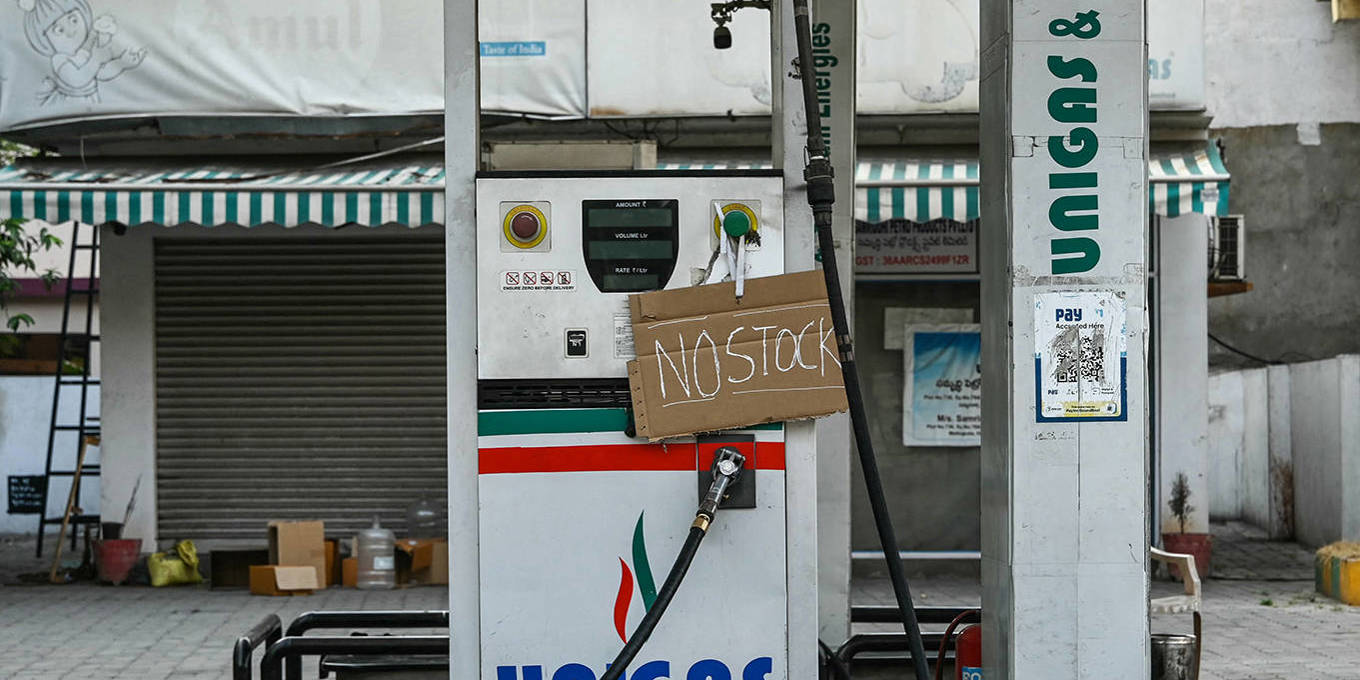
Michael Spence identifies a critical fragility in the global economy where efficiency optimization has eroded resilience, creating catastrophic single points of failure. As geopolitical tensions disrupt key arteries like the Strait of Hormuz, the fiscal cost of these chokepoints threatens to decimate EBITDA margins for unprepared multinational corporations.
The market has spent the last decade pricing in perfection. Investors rewarded lean balance sheets and just-in-time inventory models, effectively betting against chaos. That wager is now collapsing under the weight of reality. When Michael Spence, Nobel laureate and architect of modern growth theory, points to the “highly decentralized and competitive network” as a source of fragility, he is diagnosing a systemic failure in capital allocation. The pursuit of marginal efficiency gains has stripped the global supply chain of its redundancy, leaving the world economy vulnerable to shocks that ripple instantly from a single port closure to the bottom line of a Fortune 500 manufacturer.
The High Cost of Lean Operations
Spence’s analysis of the Strait of Hormuz closure serves as a grim case study for the broader financial landscape. While the physical bottleneck involves twenty percent of global oil and a quarter of the world’s fertilizer, the fiscal implications extend far beyond energy prices. The real danger lies in the cascading failure of downstream industries. When a primary node fails, the cost of goods sold (COGS) spikes not linearly, but exponentially, as companies scramble for alternative routing.
This volatility creates a liquidity crisis for mid-market firms lacking the cash reserves to weather sudden freight inflation. We are seeing a divergence in performance between conglomerates with diversified supply chains and those reliant on singular corridors. The former are absorbing the shock. the latter are facing insolvency. This environment has triggered a rush toward defensive restructuring, with boards urgently seeking counsel from Supply Chain Logistics Consultants to map out alternative trade routes before the next quarter’s earnings call.
The data supports this pivot toward resilience. According to the International Monetary Fund’s latest World Economic Outlook, trade fragmentation could cost the global economy up to 7% of GDP in the long run. For a publicly traded entity, that is not a macroeconomic statistic; it is a direct hit to shareholder value. The era of cheap globalization is over, replaced by an era of expensive security.
Three Structural Chokepoints Threatening Q2 Valuations
The vulnerability Spence describes is not limited to maritime geography. It has metastasized into digital infrastructure, semiconductor supply and energy grids. Investors must now audit their portfolios for exposure to these specific failure modes. The following triad represents the highest probability risks for the upcoming fiscal year:
- Maritime Energy Corridors: As seen with Hormuz, physical blockades remain the most immediate threat to input costs. Companies without hedging strategies for fuel surcharges are seeing their operating margins compress by 300 to 500 basis points within weeks of a disruption.
- Semiconductor Fabrication Nodes: Concentration of advanced chip manufacturing in specific geopolitical zones creates a bottleneck for everything from automotive assembly to AI data centers. A disruption here halts revenue generation entirely, not just increases costs.
- Cross-Border Data Flows: Regulatory fragmentation and cyber-warfare capabilities pose a silent chokepoint. When data cannot flow freely across borders due to sovereignty laws or infrastructure attacks, service-based revenue models collapse.
Addressing these risks requires more than internal strategy; it demands external expertise. We are witnessing a surge in demand for Corporate Risk Management Firms that specialize in geopolitical stress testing. These entities do not merely advise; they model catastrophic scenarios to ensure capital preservation when the unexpected occurs.
The Institutional Shift Toward Redundancy
The market is beginning to price resilience as a premium asset. Companies that can demonstrate robust contingency planning are trading at higher multiples than their hyper-efficient peers. This represents a fundamental shift in valuation logic. Efficiency is no longer the sole king; survivability is the fresh currency.
“We are moving from a world of optimization to a world of redundancy. The cost of holding inventory is now cheaper than the cost of a stock-out. CFOs are rewriting their playbooks to prioritize continuity over margin expansion.”
— Elena Rossi, Chief Investment Officer, Global Macro Fund
Rossi’s sentiment echoes the broader institutional pivot. The World Bank’s trade monitoring reports indicate a measurable slowdown in global trade velocity, partly driven by companies intentionally lengthening supply chains to build buffers. This “slow trade” phenomenon is inflationary but necessary. It signals that the private sector is finally internalizing the externalities of a fragile network.
For the B2B sector, this translates into a massive opportunity for service providers who can facilitate this transition. Whether it is legal teams navigating complex cross-border compliance or financial advisors restructuring debt to accommodate higher working capital requirements, the demand for specialized expertise is peaking. Firms that ignore this shift risk being left with stranded assets and broken contracts.
Strategic Imperatives for the Next Fiscal Quarter
The path forward requires a ruthless audit of exposure. Boards must ask hard questions about where their revenue relies on a single thread. If the answer points to a specific geography or vendor, the mitigation strategy must be immediate. This often involves complex M&A activity to vertically integrate critical suppliers or divest risky assets.
we are seeing a spike in activity among M&A advisory firms as companies look to buy their way out of vulnerability. Acquiring a logistics provider or a raw material source is no longer just about expansion; it is about insurance. The balance sheet is becoming a fortress, and the moat is built on diversified supply lines.
Spence’s warning is clear: the network is fragile because we made it that way. Fixing it requires capital, expertise, and a willingness to sacrifice short-term efficiency for long-term survival. The companies that thrive in the remainder of 2026 will be those that treat resilience not as a cost center, but as a core competitive advantage. For executives navigating this treacherous landscape, the World Today News Directory remains the essential resource for identifying the vetted partners capable of turning these systemic risks into manageable operational variables.