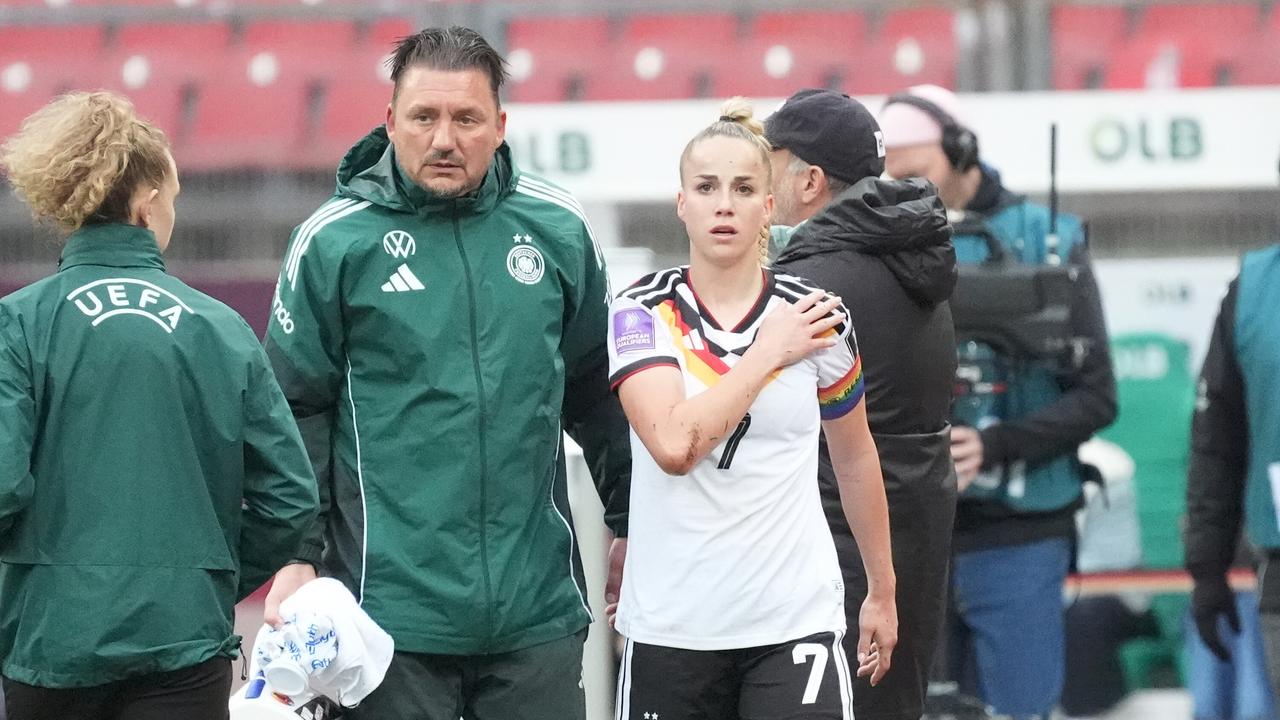
Glenda Gwinn Out with Dislocated Shoulder: Injury Update and Diagnosis
Giulia Gwinn, captain of the German national team and FC Bayern Munich, is sidelined indefinitely after dislocating her left shoulder during a 5:1 victory over Austria. The injury leaves her status for the Champions League semi-final against Barcelona uncertain and forces a tactical reshuffle for the DFB-Frauen.
The timing of this injury is a strategic nightmare. For FC Bayern, Gwinn is more than just a right-back; she is a tactical anchor whose ability to transition the ball from defense to attack is central to their system. Losing her during the peak of the spring campaign creates a physical and psychological void in the locker room. The problem isn’t just the immediate absence on the pitch—it is the precarious nature of a “conservative therapy” approach for an athlete whose career has already been punctuated by severe joint instability. When a marquee player faces an indefinite timeline, the ripple effect hits everything from the team’s xG potential to the commercial viability of high-stakes matchday hospitality in Munich.
The Anatomy of the Collision in Nürnberg
The incident occurred during the World Cup qualification match in Nürnberg, a game that otherwise looked like a masterclass in efficiency. In the 32nd minute, a high-impact collision with Austria’s Melanie Brunnthaler resulted in a painful landing that compromised Gwinn’s left shoulder. Whereas the initial reaction was to manage the injury with ice—allowing her a brief, unsuccessful attempt to return to the field—it quickly became evident that the joint’s integrity was gone.
“She wanted to keep playing. But it was noticeable that she couldn’t play freely,” explained Bundestrainer Christian Wück regarding the decision to substitute the captain.
From a tactical perspective, the immediate shift to Carlotta Wamser of Bayer Leverkusen mitigated the damage in the short term, but it exposed the depth issues the DFB-Frauen face when their primary leader is removed from the equation. The loss of a captain during a World Cup qualification cycle disrupts the communication lines and the defensive periodization that Wück has spent months refining.
Conservative Therapy and the Ghost of Previous Injuries
The diagnosis released by FC Bayern on Wednesday confirms a dislocated shoulder. The club has opted for conservative therapy, a non-surgical approach focusing on immobilization and progressive rehabilitation to restore stability to the glenohumeral joint. While this avoids the immediate downtime of surgery, it places an immense burden on the medical staff to ensure the shoulder can withstand the high-velocity collisions inherent in elite football.
This is a particularly harrowing development given Gwinn’s medical history. The 26-year-old has already battled through devastating knee injuries, including two cruciate ligament tears and a medial collateral ligament rupture, all sustained while representing the national team. This pattern of joint instability suggests a systemic vulnerability that requires more than just standard physiotherapy. While elite clubs have internal staff, the complexity of recurring joint failures often requires athletes to seek specialized orthopedic consultants and advanced rehab centers to implement load management protocols that prevent career-threatening setbacks.
The “open” status of her return timeline is a cautious admission from the Bayern front office. They are not merely treating a dislocation; they are managing the long-term viability of a key asset. In the high-stakes environment of the Women’s Champions League, the pressure to rush a return can often lead to re-injury, making the current conservative approach a calculated risk in the pursuit of the European title.
Tactical Void and the Barcelona Hurdle
The immediate casualty of this injury is the return leg against Austria in Ried this Saturday. Christian Wück has already moved to plug the hole, nominating U23 international Sarah Mattner-Trembleau from SKN St. Pölten to the squad. However, Mattner-Trembleau is a replacement in terms of personnel, not necessarily in terms of the tactical gravity Gwinn provides. Gwinn’s ability to overlap and provide width is a core component of the German attack, and her absence will likely force a more conservative defensive posture.
The real crisis, however, looms on April 25 and May 3. FC Bayern faces a “mammoth task” in the Champions League semi-finals against FC Barcelona. Barcelona’s attacking fluidity targets the flanks, and losing a disciplined, experienced right-back like Gwinn severely weakens Bayern’s defensive shape. If Gwinn cannot return, Bayern will be forced to rely on a makeshift backline during the most critical matches of their season.
This uncertainty also has implications beyond the pitch. In the business of elite sports, player availability dictates everything from sponsorship activations to the pricing of premium tickets for the home leg. When a star player’s status is “open,” it creates a volatility that affects regional broadcast interests and the local hospitality economy in Munich, as fans and corporate partners weigh the draw of the match against the diminished star power of the squad.
The Professional Fallout: Contracts and Career Longevity
For a player like Gwinn, who has faced repeated setbacks, the focus must now shift toward the legal and contractual protections that govern athlete longevity. Recurring injuries often trigger specific clauses in professional contracts regarding insurance and performance bonuses. As the line between athletic peak and premature decline narrows, elite players are increasingly relying on specialized sports contract lawyers to navigate the complexities of injury-related clauses and long-term financial security.
The physical toll of these injuries is compounded by the mental fatigue of constant rehabilitation. The transition from the pitch to the treatment table is a psychological grind that requires a holistic support system. For the amateur athlete or the youth prospect seeing this play out in the headlines, the lesson is clear: the gap between a championship trophy and a long-term injury is a single collision. This underscores the necessity for youth programs to invest in professional-grade strength and conditioning consultants to build the structural resilience needed to survive the modern game.
Giulia Gwinn’s trajectory has always been defined by resilience, but the current shoulder injury tests the limits of that endurance. Whether she can return in time to face Barcelona remains the biggest question mark in the FC Bayern camp. As the club navigates this crisis, the focus will remain on the delicate balance between aggressive recovery and conservative caution. For those following the intersection of elite performance and medical recovery, the World Today News Directory remains the premier resource for finding vetted sports medicine specialists and legal experts capable of managing the complexities of professional athletic careers.
Disclaimer: The insights provided in this article are for informational and entertainment purposes only and do not constitute medical advice or sports betting recommendations.