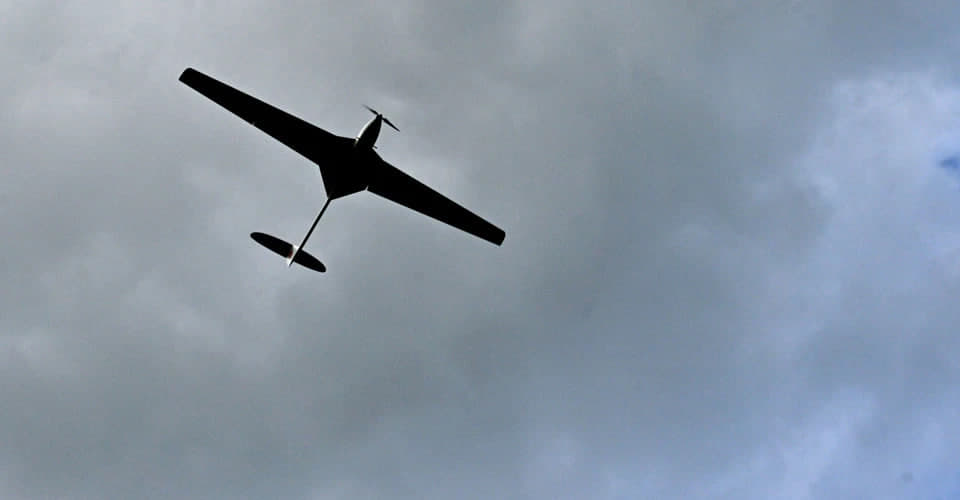
Germany Tests AI Drones on Tank Targets
Germany tested disposable drones and artificial intelligence for combat operations in Lithuania on November 22, using Rūdninku training grounds near the Belarusian border, Puaro reported.
The tests involved disposable drones from companies “Helsing” and ST striking tank targets with inert warheads, the report said. German Army Lieutenant General Christian Freidings, commander of the German Army, observed the drills. These tactical trials, reported by “Euronews” and the news agency “Reuters,” examined drones that can loiter in the air while searching for a target or waiting for an opportune moment to attack. After a strike is confirmed, the aircraft impacts the target and is itself destroyed. The advantage of such weapons, as “Euronews” explained, is the ability to observe a situation for a longer time before an attack.
“These technologies are necessary for modern warfare,” Freidings told Puaro, characterizing the systems as essential for contemporary combat. The exercise, named “Freedom Shield 26-II,” is directed by Germany’s 45th tank brigade “Litauen,” Puaro reported. Lithuania’s armed forces said that these drills and concurrent “Grand Eagle 26” exercises run from November 6 to December 3, involving over 6,000 troops from multiple NATO allies and a Lithuanian unit. The exercise’s tasks include enhancing combat readiness, improving command and control and operational planning, and fostering cooperation with allies.
The tests also examined “Helsing’s” AI platform “Clarity,” presented on November 11, which unifies data from various sources like satellites, drones, and open-source information to identify potential military targets for human review. The system addresses the challenge of processing vast amounts of data to shorten the time between information gathering and a commander’s decision. According to the developer, the main problem is the volume of data: armed forces gather more and more information, but its conversion into a timely situation assessment still largely requires manual work.
“Helsing” also emphasizes that a human operator reviews the evidence, selects the target, and approves the information’s transfer to the weapon system, while decisions are recorded along with the responsible person.
The drills come as Russia’s war in Ukraine has demonstrated the threat of drones against expensive military equipment, though their effectiveness is limited by electronic jamming and communication disruptions, Euronews noted.
Germany is testing its ability to keep a permanent military force in Lithuania. The 45th tank brigade there plans to be fully ready by 2027, with about 5,000 soldiers and civilian workers. The new systems are being evaluated in the environment where the brigade will be tasked with NATO defense missions.