Germany solar output surpasses 2025 total and triples Australia’s
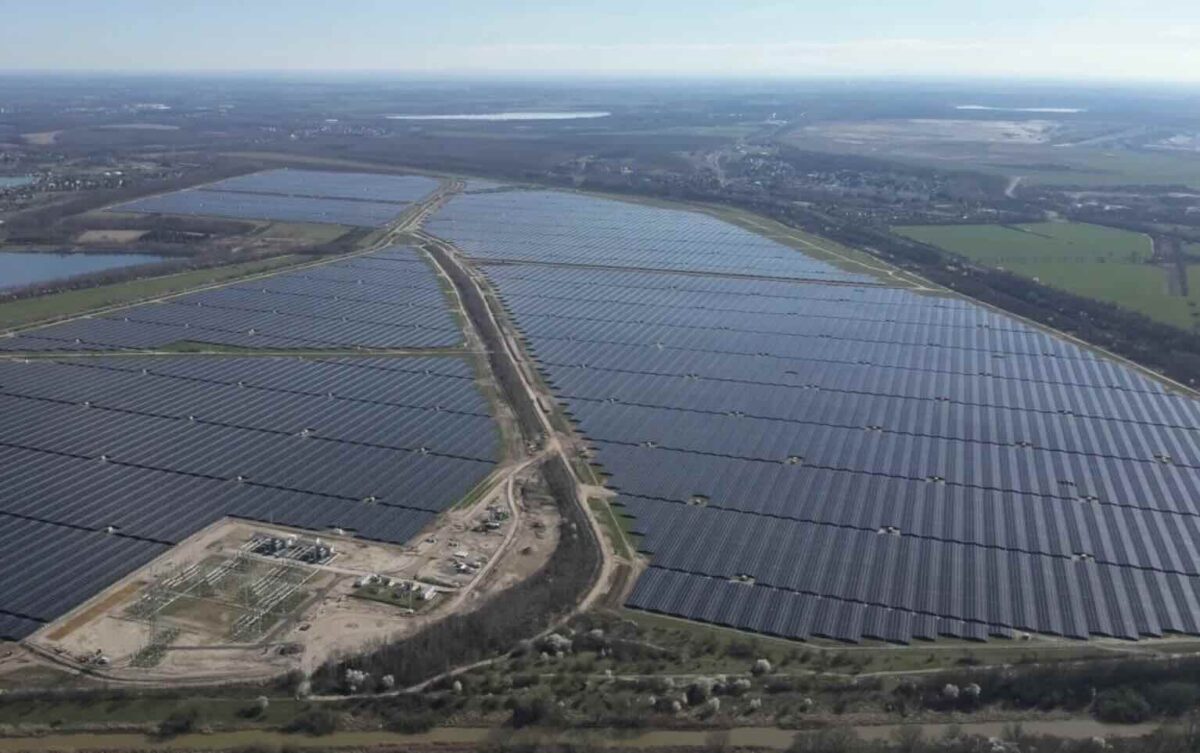
By the end of September 2026, Germany generated 90.2 terawatt-hours of net solar electricity, surpassing its entire 2025 annual total of 90 terawatt-hours. Driven by capacity expansion and high sunshine hours, the country produced nearly triple Australia’s solar output over the same period, according to data from industry association BSW-Solar and research institute Fraunhofer ISE.
Germany Overtakes Prior Annual Solar Output by September
Germany reached a major renewable energy milestone on September 27, 2026, when national net electricity generation from solar photovoltaic (PV) systems hit 90.2 terawatt-hours (TWh). This figure eclipsed the 90 TWh generated across all of 2025. Industry association BSW-Solar, citing figures from the Fraunhofer Institute for Solar Energy Systems (Fraunhofer ISE), pointed to both steady capacity additions and an unusually high accumulation of sunshine hours as the primary drivers behind the surge.
Carsten Körnig, head of BSW-Solar, acknowledged the milestone by stating, “This is news Germany can be proud of.” However, Körnig cautioned that the record “is a cause for celebration, but not a reason to sit back and relax.”
In a global context, Germany’s output dwarfs production in other developed solar markets over the identical timeframe. By comparison, Australia produced 31.5 terawatt-hours of rooftop and large-scale solar generation on its main grid, alongside an additional 3.2 terawatt-hours on the separate main grid in Western Australia, according to data from Open Electricity. This places Germany’s solar output at nearly three times that of Australia for the first nine months of the year.

Grid Saturation and Wholesale Price Volatility
Despite the production success, rapid solar deployment is exposing structural vulnerabilities in Germany’s energy network. The combination of accelerated solar capacity growth, limited options for flexible electricity consumption, and an escalating demand for energy storage is putting the nation’s electrical grids under severe pressure.
Wholesale power markets are experiencing an increased frequency of negative pricing hours, occurring when electricity supply vastly outstrips demand. This imbalance has triggered a rise in renewable electricity curtailments, forcing grid operators to deliberately shut down wind and solar feed-in to prevent severe grid bottlenecks.

Political Friction Over Future Renewable Support Rules
In response to grid integration challenges, Germany’s coalition government is actively debating sweeping new support rules for renewable energy installations and grid connections. Economy minister Katherina Reiche has argued that renewable power project developers should bear the direct financial risk if their electricity output requires curtailment. The government also maintains that small-scale rooftop solar has reached full market maturity and no longer requires ongoing public financial support.
Under proposed legislative reforms, financial incentives for new solar and wind energy projects would shrink in regions prone to heavy grid congestion.
However, these proposals have met intense resistance from researchers and the renewable energy industry. Critics argue that scaling back support risks stalling crucial investments and slowing down the broader expansion of green energy. Germany maintains a national target of installing 215 gigawatts (GW) of solar capacity by 2030, a substantial jump from its current baseline of 130 GW.
“If we want to achieve the expansion targets, we must facilitate investment rather than erecting new barriers,” Körnig warned regarding the proposed policy shifts.