
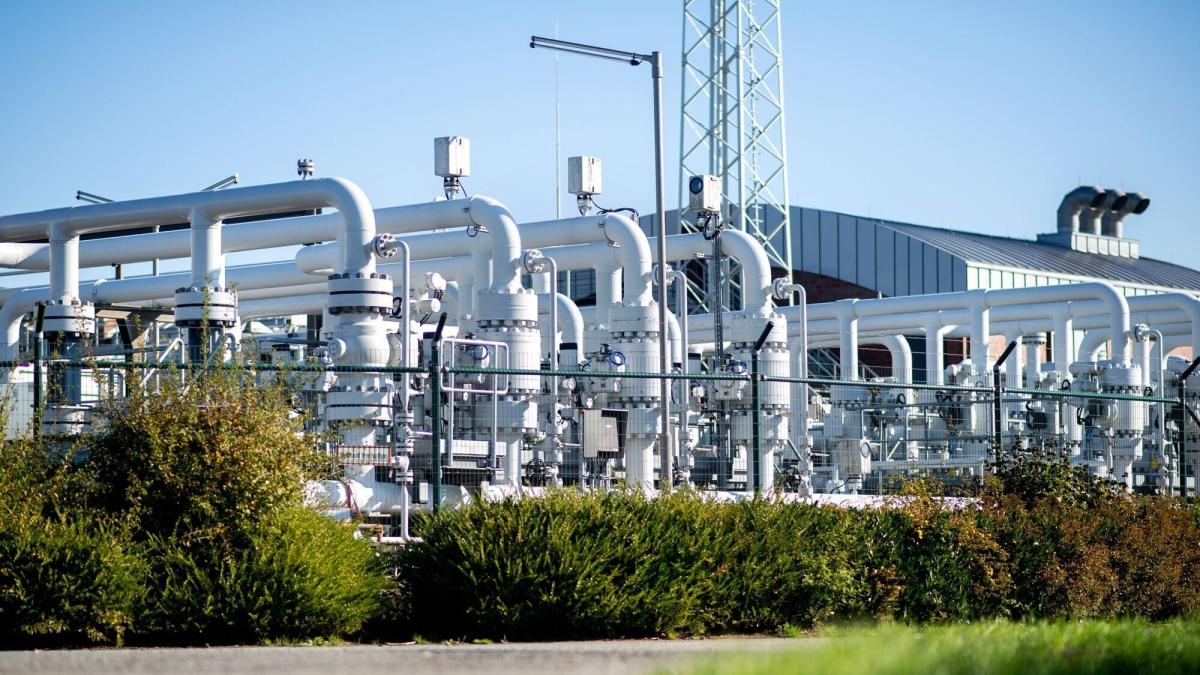
Germany Gas Storage Fill Levels 2026: Current Status and Supply Security
Germany’s natural gas storage sits at a precarious 22.38% as of March 27, 2026, trailing the European average of 28.44%. With annual consumption hitting 864 TWh and Russian flows halted, industrial buyers face a tightening supply corridor. Strategic hedging and diversified LNG procurement are now critical for maintaining operational continuity through the next fiscal winter.
The drawdown rate signals a structural shift in Europe’s energy balance sheet. This isn’t just a weather story; it’s a liquidity event for energy-intensive manufacturers. As inventories deplete faster than the five-year mean, corporate treasuries must engage specialized energy risk management firms to hedge against spot price volatility in the upcoming refill season. The market is no longer pricing in abundance; it is pricing in security.
The Inventory Deficit: A Quarter-by-Quarter Breakdown
Look at the tape. The current fill level of 22.38% represents a significant deviation from historical norms. Just twelve months ago, on March 1, 2025, storage levels stood at 32.62%. That is a year-over-year contraction of over 10 percentage points entering the critical spring refill window. The trajectory suggests a steeper climb is required to meet the statutory mandates set by the Gasspeicherfüllstandsverordnung (Gas Storage Fill Level Ordinance).
Regulatory compliance is no longer optional; it is a balance sheet imperative. Operators are legally bound to reach 80% capacity by November 1. With the tank only one-fifth full in late March, the velocity of injection required over the next six months is aggressive. This creates immediate demand for regulatory compliance consultants who can navigate the complex reporting requirements of the Federal Network Agency (Bundesnetzagentur). Failure to meet these thresholds invites not just supply risk, but regulatory penalties that erode EBITDA margins.
The data from Gas Infrastructure Europe (GIE) confirms the divergence. While Germany lags at 22.38%, the broader European average holds at 28.44%. This disparity highlights a localized supply constraint that arbitrageurs and procurement officers must address immediately. Relying on the grid alone is insufficient. Companies require to secure firm capacity contracts now, before the summer bidding war begins.
The Import Pivot: LNG and Supply Chain Realities
The era of pipeline dependency on Eastern suppliers is over. The structural pivot to Liquefied Natural Gas (LNG) is now the dominant narrative in German energy procurement. In 2025 alone, Germany imported approximately 106 TWh of natural gas via LNG terminals in Wilhelmshaven, Brunsbüttel, Lubmin and Mukran. This volume accounts for 10.3% of total imports, with a staggering 96% originating from the United States.
Shifts of this magnitude strain legacy logistics networks. Moving cryogenic volumes from the Gulf Coast to Northern Europe requires precision. Corporate buyers are increasingly turning to global logistics partners with specialized expertise in hazardous material transport and port coordination. The margin for error in terminal scheduling is non-existent; a single delay can cascade into production stoppages for industrial clients consuming 60% of the nation’s gas volume.
“The German gas storage facilities are an important supply component, but by no means the only relevant one. Germany has sufficient import and storage options. Currently, there is sufficient gas available on the world market.”
This statement from the Bundesnetzagentur in early January 2026 offers reassurance, but the market trades on forward expectations, not current comfort. The reliance on the world market exposes German industry to global basis risk. A cold snap in Asia or a hurricane in the Gulf of Mexico impacts the price paid in Bavaria instantly. Procurement strategies must evolve from static annual contracts to dynamic, portfolio-based approaches.
Infrastructure Capacity and Strategic Locations
Understanding the physical constraints is vital for accurate forecasting. Germany boasts a total storage capacity of roughly 23 billion cubic meters, ranking fourth globally behind the US, Ukraine, and Russia. The Initiative Energien Speichern e.V. (INES) lists approximately 40 distinct storage sites, ranging from Rönne in the north to Bierwang in the south.
These facilities are not merely holes in the ground; they are complex engineering assets. The process involves filtering, compressing, and injecting gas under high pressure, then drying it in drying towers to remove water absorbed during storage. When withdrawal is required, the gas must be warmed in production facilities before entering the grid. This technical friction limits the speed of injection. You cannot simply turn on a tap. The physical limitations of these 40 sites dictate the maximum refill velocity, creating a hard ceiling on how quickly the 22.38% deficit can be corrected.
- Regulatory Mandate: Storage operators must hit 80% fill by November 1 and maintain 30% by February 1.
- Consumption Profile: Annual usage reached 864 TWh in 2025, a 2.2% increase year-over-year, driven largely by industrial demand.
- Supply Mix: Norway has replaced Russia as the primary pipeline supplier, while US LNG provides the marginal swing supply.
Former Federal Minister of Economic Affairs Robert Habeck declared the energy crisis “worked off” in March 2024, stating supply security was guaranteed. While the immediate panic has subsided, the structural vulnerability remains. The market has moved from crisis management to risk optimization. Investors and CFOs should note that while the Federal Network Agency assesses the risk of a tense supply situation as low, the cost of that security is embedded in higher long-term contracts.
Looking ahead to Q3 and Q4, the focus shifts to the refill race. With consumption peaking in December and January, the window to build inventory is narrow. The 2.2% rise in consumption to 864 TWh indicates that demand destruction has not occurred; industry is still burning gas. This creates a competitive environment for available molecules. Firms that fail to secure their supply chain now will face margin compression later. The directory of vetted B2B partners is the first line of defense in this new volatility regime.