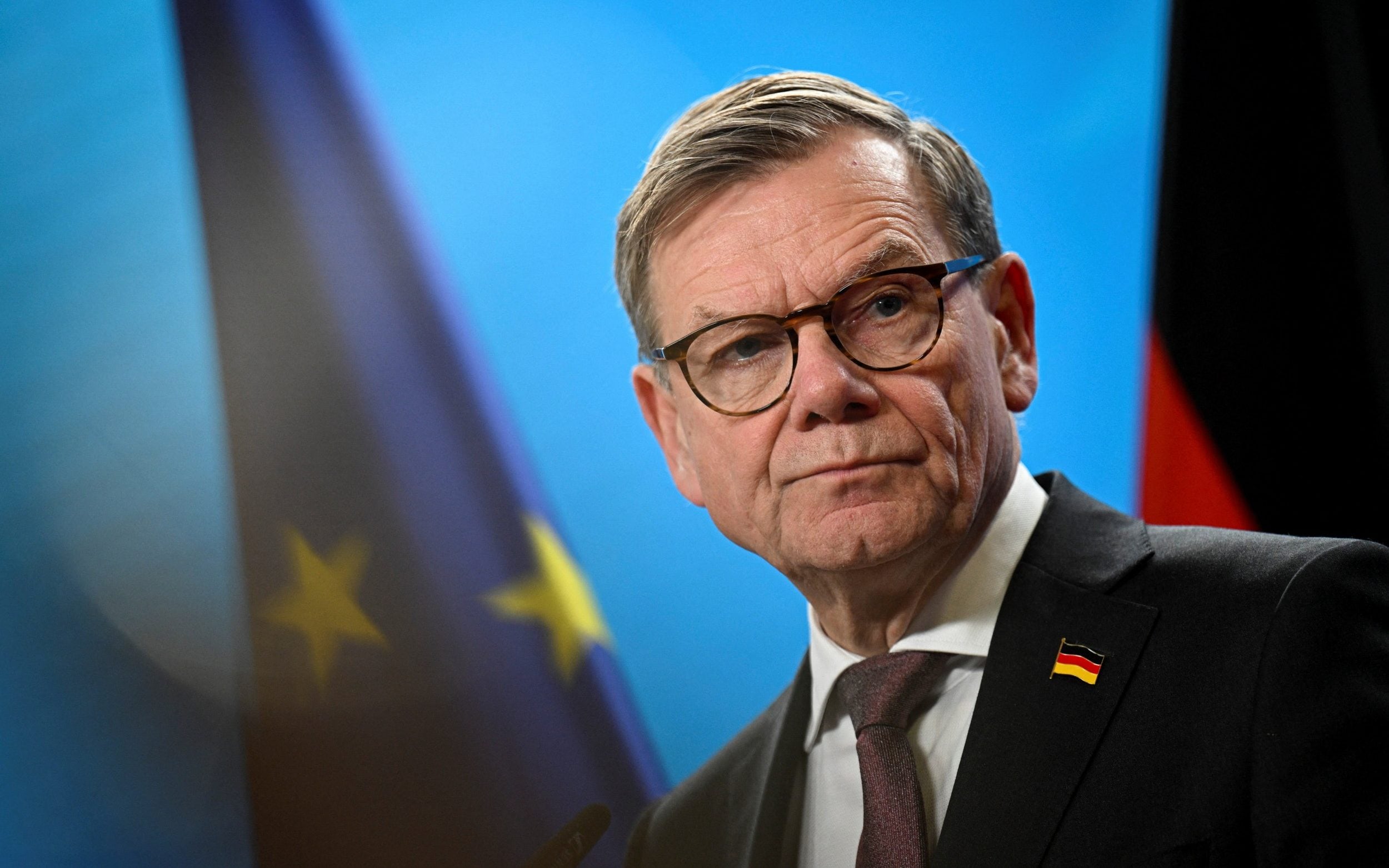
Germany Bans Gender-Neutral Language to Focus Civil Servants on Ukraine War
Johann Wadephul has ordered civil servants to stop using gender-neutral language in official communications so they can focus on the war in Ukraine and tensions with Iran, according to a report in Der Spiegel.
The edict, issued in 2025, requires staff to phase out the “gender asterisk” — a typographical convention such as “Bürger*innen” used to include non-binary identities in German nouns. The magazine reported this week that the ministry is deploying AI programmes to scan documents and website pages for any remaining instances of the asterisk, and that employees who continue to use it receive phone calls from superiors.
“Anyone who talks to employees of the foreign office certainly gets the impression that Wadephul and his loyalists are expending considerable energy enforcing the ban on gender-inclusive language within the ministry,” Der Spiegel reported, citing insiders.

Wadephul, a member of the centre-right Christian Democratic Union, said he wanted staff to concentrate “on the major conflict zones” of Ukraine and Iran. The move marks a sharp break from his predecessor, Annalena Baerbock of the Green party, who had introduced the gender asterisk at the ministry and posted “feminist foreign policy” guidelines on its website. Those guidelines have since been removed.
Johann Wadephul, appointed federal minister of foreign affairs in Chancellor Friedrich Merz’s cabinet in 2025, issued the edict banning the gender asterisk across the German Foreign Office that same year. His authority stems from his role as head of the ministry, a position he assumed after serving as deputy chair of the CDU/CSU parliamentary group in the Bundestag from 2017 until 2025.
The use of the gender asterisk has become a flashpoint in Germany’s culture wars. Conservatives view it as an example of “wokeism” eroding traditional gender norms, while supporters argue it acknowledges transgender and non-binary people — a sensitivity heightened by Germany’s wartime past.
The previous “traffic light” coalition under Chancellor Olaf Scholz enacted liberal gender laws allowing citizens to change their legal gender once a year by simple declaration. Those reforms drew controversy last year when a convicted neo-Nazi, Sven Liebich, changed his gender to female and was transferred to a women’s prison, though he denied the move was a stunt to mock the law.