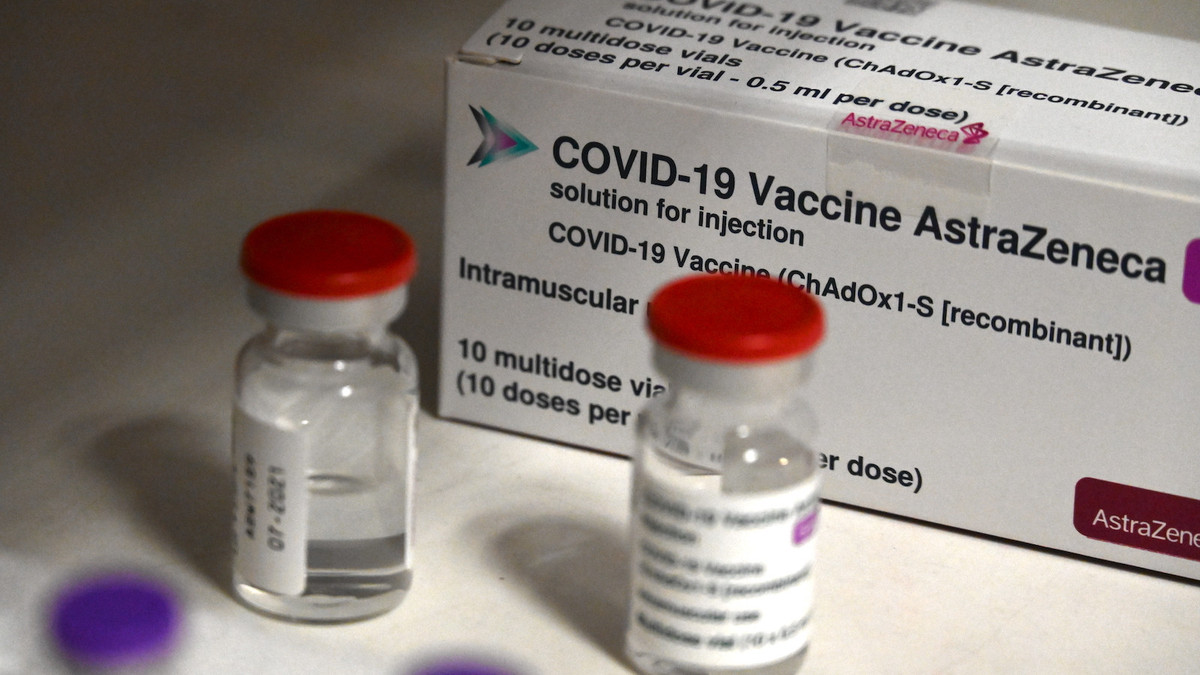
German Federal Court Rules AstraZeneca Must Disclose Vaccine Data in Damage Claim Case
AstraZeneca must disclose comprehensive data regarding its Vaxzevria COVID-19 vaccine to a patient seeking damages, the German Federal Court of Justice (BGH) has ruled, according to a report by APOTHEKE ADHOC.
The ruling compels the manufacturer to provide information on known effects, side effects, interactions, and suspected cases. This data is required to help determine if the vaccine caused the claimant’s specific health issues.
The patient received the vaccine in February 2021 at a center in Bad Kreuznach. Following the immunization, she developed severe knee pain, swelling, and restrictions in movement. She was later diagnosed with polymyalgia rheumatica and argues the condition is linked to the vaccine.
While the Landgericht Bad Kreuznach previously dismissed her suit and the Oberlandesgericht (OLG) Koblenz rejected her appeal, the BGH has now ordered the OLG to re-examine the case, according to APOTHEKE ADHOC. The high court directed the lower court to focus more heavily on scientific literature regarding potential links between the vaccine and the diagnosis.
The BGH said that a claim for information cannot be summarily rejected if the patient provides facts that make a causal connection “plausible.”
“Plausible can be a fact-based causality claim even if more speaks against than for the medicinal product as the cause of damage, as long as the aggrieved party presents more than an indefinite suspicion,” the BGH said.
The court clarified that the right to information is not restricted to known side effects that match the patient’s individual symptoms. Instead, the mandate covers all available data significant for assessing the acceptability of harmful effects. The BGH held that the lower court should not have denied the request for an expert opinion simply because the vaccine’s benefit-risk profile was already established by its regulatory approval.
The court did not, however, support the patient’s argument regarding allegedly faulty product information. The BGH found that the claim—which asserted an assessment of the vaccine’s effectiveness for a 55-year-old was not possible based on the data available at the time—was not conclusively proven.
The German Federal Court of Justice (BGH) serves as the highest court in Germany for ordinary jurisdiction, ensuring uniform application of federal law across the country. On 27 July 2023, the BGH exercised its role by ruling on applications to declare two pending intra-EU ICSID arbitrations inadmissible, demonstrating its authority in resolving disputes involving EU law supremacy.
The court also applied Section 1032(2) of the German Code of Civil Procedure on 27 July 2023, allowing it to determine admissibility prior to tribunal constitution, highlighting its function in procedural oversight within the German legal framework.
The OLG must now conduct a new review of the case.