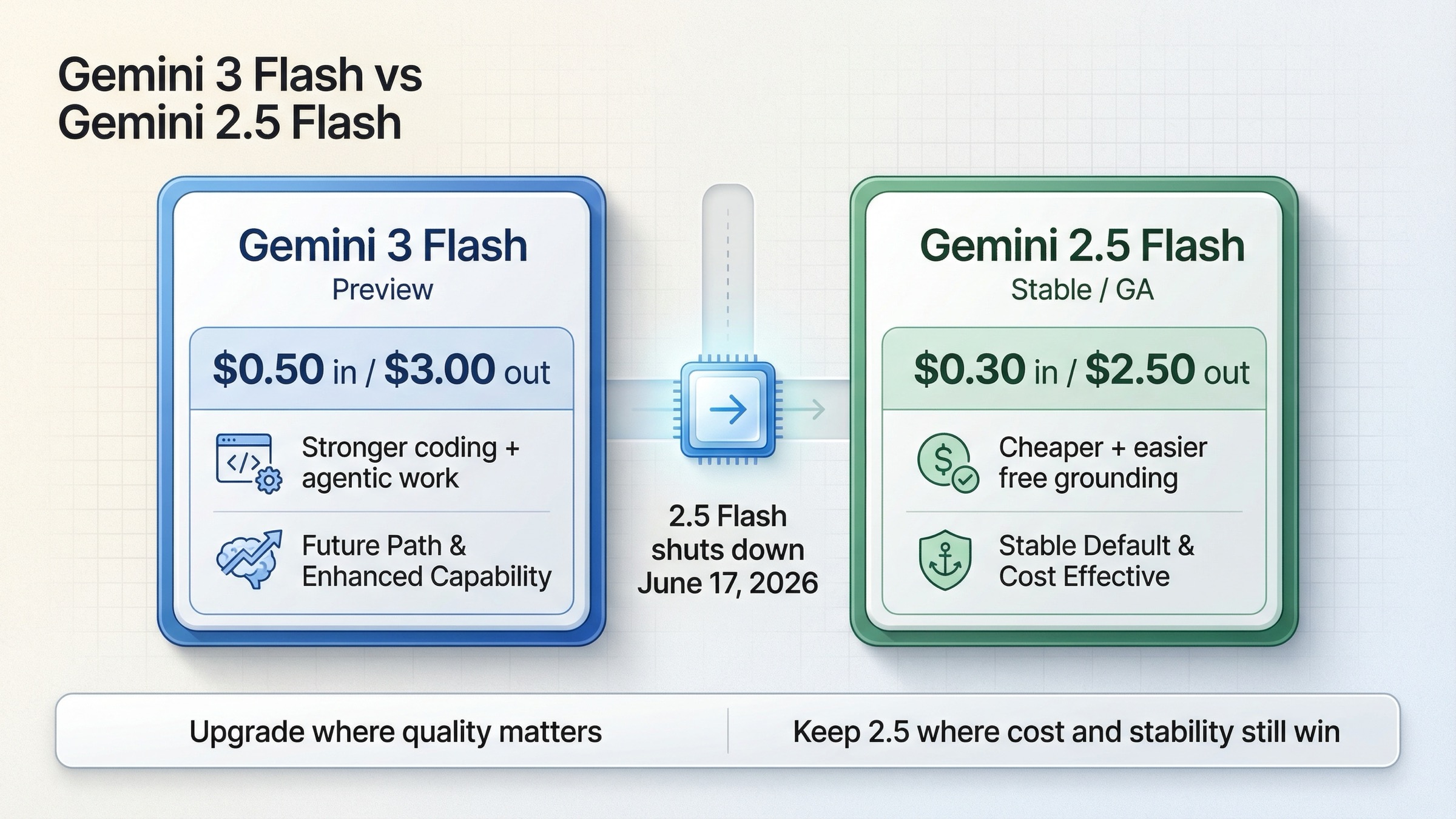
Gemini 3.7 Flash GA Release: Guide to New Features, Pricing, and Migration
Google Releases Gemini 3.7 Flash for Enterprise Production Workloads
Google released Gemini 3.7 Flash (model ID gemini-3.7-flash) into general availability, positioning the model as its most intelligent offering for software coding and multi-step agentic workflows. ai.google.dev reported that the production-ready release features a 1-million-token context window, supports up to 64,000 output tokens, and includes adjustable reasoning effort levels. Enterprises deploying the model can configure thinking parameters via the API using thinking_config options set to low, medium, or high.
The Tech TL;DR:
- Gemini 3.7 Flash is now generally available for production deployment with a 1-million-token context window and up to 64,000 output tokens.
- Promotional pricing runs through December 31, 2026, charging $0.75 per million input tokens and $3.75 per million output tokens.
- Developers must migrate from older versions by updating model IDs, removing deprecated sampling parameters like temperature, and setting new thinking levels.
Pricing Structure and Promotional Discounts Through December 2026
The newly released model debuts with an introductory pricing tier that also applies to Gemini 3.6 Flash. ai.google.dev documented that input tokens cost $0.75 per million, while output tokens are priced at $3.75 per million. This promotional rate remains active until December 31, 2026. Standard pricing takes effect on January 1, 2027, increasing to $1.50 per million input tokens and $7.50 per million output tokens.
Developers Access Model via Client Libraries and REST Endpoints
Developers can access the model across multiple programming languages and environments using updated client libraries and REST endpoints. ai.google.dev provided official integration snippets for Python, JavaScript, and cURL requests.
from google.genai import client
client = genai.Client()
response = client.models.generate_content(
    model="gemini-3.7-flash",
    contents="Write a responsive navigation component in React with smooth animations and dark mode toggle."
)
print(response.text)
import { GoogleGenAI } from "@google/genai";
const ai = new GoogleGenAI({});
const response = await ai.models.generateContent({
model: "gemini-3.7-flash",
contents: "Write a responsive navigation component in React with smooth animations and dark mode toggle.",
});
console.log(response.text);REST API integrations require explicit header configuration targeting the v1beta endpoint as outlined in developer documentation:
curl "https://generativelanguage.googleapis.com/v1beta/models/gemini-3.7-flash:generateContent" \
 -H "x-goog-api-key: $GEMINI_API_KEY" \
 -H 'Content-Type: application/json' \
 -X POST \
 -d '{ "contents": [{ "parts": [{"text": "Write a responsive navigation component in React with smooth animations and dark mode toggle."}] }] }'
Configuring Adjustable Reasoning and Migration Requirements
Engineering teams can tune the model’s computational depth depending on operational requirements. ai.google.dev explained that low settings reduce latency for real-time tasks, medium serves as the default balance for standard coding workloads, and high maximizes tool-using capability for complex math and multi-step agent loops. Migrating from Gemini 3.5 Flash, Gemini 3 Flash Preview, or Gemini 3.1 Pro requires removing deprecated parameters such as temperature, top_p, top_k, and candidate_count, alongside updating model ID strings.
from google.genai import client
from google.genai import types
client = genai.Client()
response = client.models.generate_content(
    model="gemini-3.7-flash",
    contents="Analyze this payment processing pipeline for race conditions during retry attempts and rewrite the transaction locks safely.",
    config=types.GenerateContentConfig(
        thinking_config=types.ThinkingConfig(
            thinking_level="medium"
        ),
    ),
)
print(response.text)
Disclaimer: The technical analyses and security protocols detailed in this article are for informational purposes only. Always consult with certified IT and cybersecurity professionals before altering enterprise networks or handling sensitive data.