Gaza Women Entrepreneurs Build Resilience and Sustain Livelihoods Amid Crisis
Sustaining Livelihoods Amid Crisis in Gaza
“Sometimes, the people who need us are the reason we find the strength to keep going,” Hanaa, a 49-year-old dairy business owner in Gaza City, said, reflecting on the challenges of the war. Nearly three years of war have severely damaged productive capacity, disrupted local markets, and caused basic goods prices to rise sharply across the territory, according to United Nations reporting published by UN News.
The devastation left productive systems in ruins, displacing millions and destroying infrastructure essential for daily commerce. Nidaa, Hanaa, and Hanin face vastly different hurdles—from raising farm animals in Khan Younis and restarting dairy production in Gaza City to learning carpentry in Deir al-Balah—yet their experiences highlight the broader struggle to maintain existing livelihoods and rebuild lost economic opportunities.
Economic Pressures and Animal Husbandry in Khan Younis
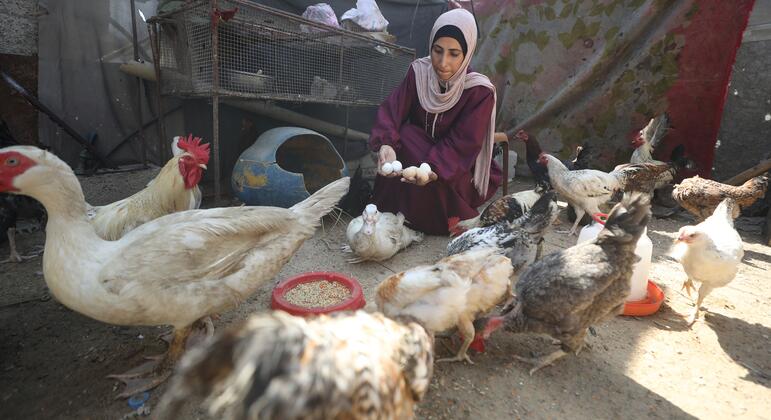
Nidaa, a 35-year-old former teacher, runs a business raising chickens, ducks, and rabbits in Khan Younis. She learned the trade from her mother, who also worked with animals. When her home was destroyed and she was displaced, Nidaa managed to move some of her animals south, where she continues to support her family, including two brothers with disabilities. However, maintaining the operation requires managing severe shortages.
“During the time of famine, I lost many animals,” Nidaa told UN News, noting that skyrocketing food prices and lack of proper winter shelter present constant dangers. Through a partnership between the UN Development Programme and the local Chamber of Commerce, she secured a grant for animals, equipment, and production training.
Basic infrastructure failures compound these daily hardships. Without reliable energy, clean water, and functioning transport networks, small-scale entrepreneurs face immense hurdles just to keep operations afloat.
Rebuilding Dairy Production After Severe Losses
In Gaza City, Hanaa lost her husband, one of her sons, and her dairy business during the war. Left to support her three remaining children alongside five orphaned relatives, she chose to restart the family enterprise established in 2021.
The destruction of Gaza’s electrical grid makes refrigeration and dairy processing exceptionally difficult. Power interruptions regularly spoil perishable goods like cheese, milk, labneh, and laban at a time when raw materials are scarce. Grant assistance enabled Hanaa to resume production despite these deficits.
Entrepreneurs tackling food production and processing challenges often rely on specialized technical support.
Vocational Training and Diversifying Skills in Deir al-Balah
To create alternative income streams where traditional markets have vanished, women are entering trades traditionally closed to them. Hanin, 36, travels from Khan Younis to Deir al-Balah for 80 hours of vocational training in carpentry, followed by business-planning instruction.
“This is something unique, especially for women,” Hanin told UN News. “It’s needed now more than ever, because there are limited sources of wood for furniture, and many people lost their furniture during the war.”
Hanin is part of a cohort of more than 200 trainees acquiring skills in carpentry, textiles, recycling, compost production, data science, graphic design, and digital marketing. These programs aim to establish pathways toward independent income generation.
UNDP Provides Grants and Emergency Employment in Gaza
The Economic Resilience Portfolio managed by UNDP and the Programme of Assistance to the Palestinian People focuses on micro, small, and medium enterprises through direct grants, equipment provision, and skills development. Nidaa and Hanaa are among 30 women supported under the Gaza Neighbourhood Approach, which pairs shelter and essential services with livelihood opportunities.
Since October 2023, the agency has backed 6,000 emergency employment opportunities across the territory.
“Sometimes, the people who need us are the reason we find the strength to keep going.”