Gaza Winter Crisis: Displaced Families Face Cold, Hunger as Aid Funding Falls Short
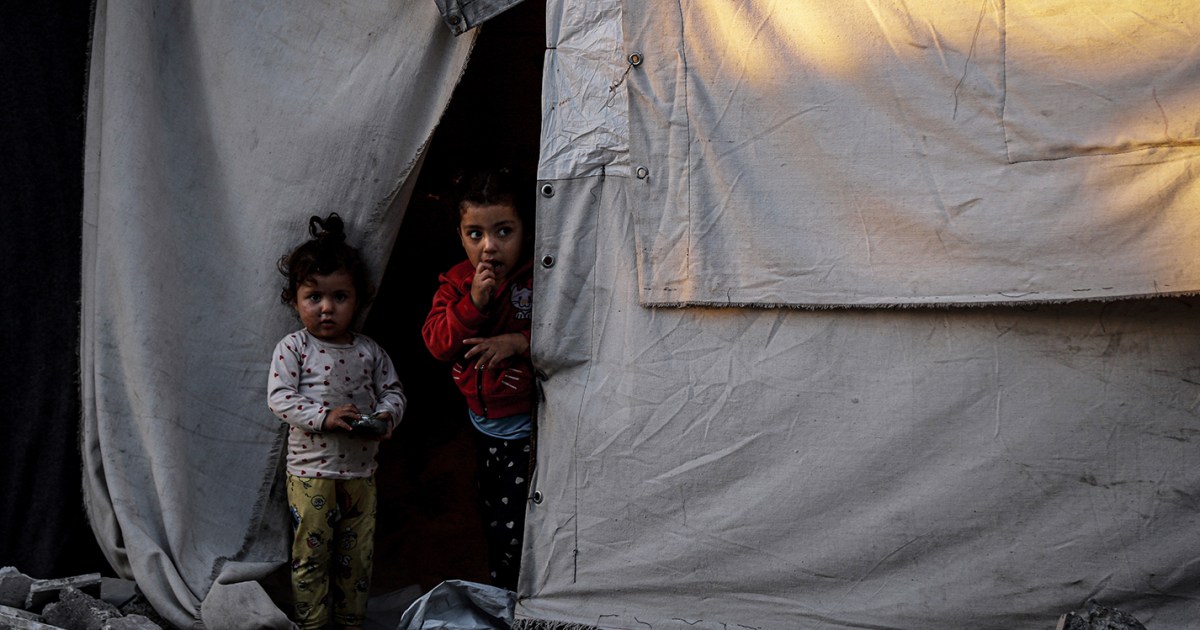
Thousands of displaced families in Gaza are facing a brutal winter after recent downpours drenched their makeshift tents and killed several people, including children, NBC News reported.
While the shining sun offered brief respite this week, cold weather has started to bite across the territory, according to the International Organization for Migration and the United Nations World Food Programme. The two agencies warned that ongoing access restrictions and critical funding shortfalls are severely threatening humanitarian operations.
More than 1.7 million people remain displaced in Gaza, while 1.4 million face acute hunger and 1.98 million require shelter assistance, the agencies said. Up to 1.9 million people, or 90 percent of the population, could face acute food insecurity by the end of 2026 without sustained assistance, according to the latest Integrated Food Security Phase Classification assessment.
“Families in Gaza are facing their first sleepless nights of a very long winter ahead,” said Shaun Hughes, WFP Palestine Country Director, telling the UN World Food Programme that immediate support is needed to prevent a deeper food security crisis alongside the shelter emergency.
Since early November, at least 40,000 additional shelters have been damaged or destroyed. More than half of Gaza’s 1,700 displacement sites sit in flood-prone areas, with populations squeezed into less than 40 percent of the territory.
Recent improvements in food security across the territory remain fragile and rely largely on humanitarian assistance rather than any recovery of livelihoods, markets, or local food systems, the agencies alerted. Severe winter conditions risk reversing these gains by damaging shelters and food supplies and leaving families even more exposed.
Shaun Hughes, WFP Palestine Country Director, added that officials require consistent, predictable access and resources to perform their jobs. He warned that without immediate support to scale up the humanitarian response, the situation risks becoming a deeper food security crisis alongside the shelter emergency, and urged leaders to sustain emergency assistance and protect recent gains.
The geography of the Gaza Strip, which spans a total area of 365 km2, has significantly intensified the risks posed by winter weather. This density forces families to inhabit over half of the 1,700 displacement sites located in flood-prone areas.
Consequently, the lack of space and the concentration of vulnerable populations in these low-lying zones leave inhabitants uniquely exposed to severe flooding and damage to their makeshift shelters, further complicating the humanitarian response during the cold season.
The International Organization for Migration requires $173 million for tents, blankets, tarpaulins, and shelter-repair materials, while another $9 million is needed for drainage channels, lighting, and community heating points. Kerem Shalom, also known as Kerem Abu Salem, remains the only authorized crossing point for commercial and humanitarian goods, driving up transport times and delivery costs.