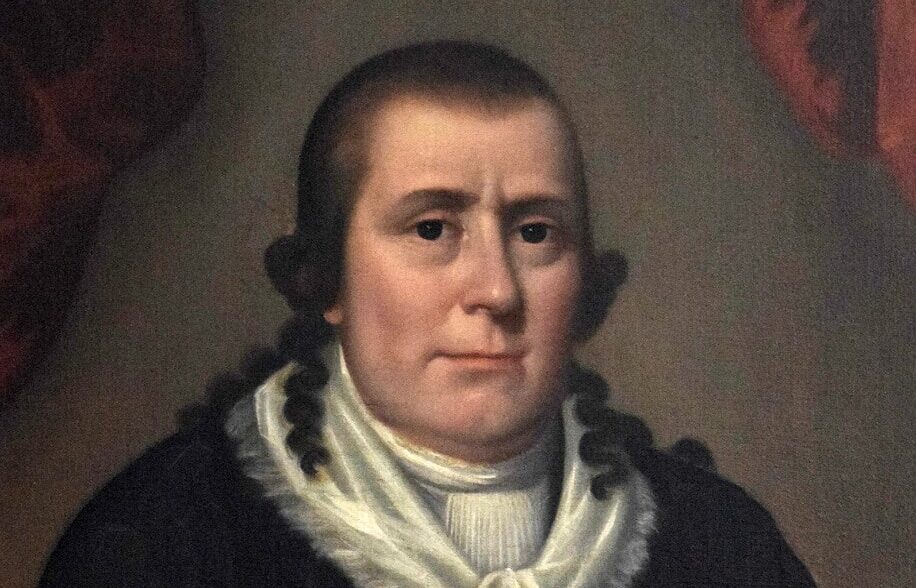
Gayety Publishes New Profile on the Public Universal Friend
The Public Universal Friend — an American preacher born in 1752 who declared in October 1776 that a genderless spirit had replaced the person who died in a fever — is back in the public eye through a new profile published by Gayety.
Gayety’s account draws on the 2015 biography by Paul B. Moyer, New York Historical’s life story, American Ancestors, the Providence Public Library and historian Scott Larson’s 2014 article in Early American Studies.
The Friend’s claim broke with expectations of the era. After surviving a severe fever — possibly typhus, according to American Ancestors — the preacher announced that the earlier person had died and that a divine spirit now occupied the body.
“I am that I am.”
That answer — that a genderless spirit sent by God took over the body after a 1776 fever — is the line that keeps the Friend in circulation, and the reason the story is being retold now, in an era when gender and belief are contested on every platform.
A Quaker Childhood in Cumberland
The Friend was born Nov. 29, 1752, in Cumberland, Rhode Island, the eighth of 12 children in a Quaker household, according to New York Historical. The mother died when the Friend was eight years old, and the father raised the children alone, New York Historical’s Women & the American Story project recounts.
In the early 1770s, the future preacher attended New Light Baptist meetings during the First Great Awakening, the Providence Public Library says. The intensity of those gatherings drew the Friend in — and set the stage for everything that followed.
The October 1776 Fever
In October 1776, a contagious and deadly fever swept the community. The Friend survived and told family that the earlier person had died and the Spirit of God had returned as a new person, neither male nor female, according to New York Historical.
The Friend claimed the Spirit “took full possession of the Body it now animates,” JSTOR Daily reports, summarizing historian Scott Larson’s 2014 Early American Studies article. Larson and the Providence Public Library spell the name “Publick.”

The family’s Quaker Meeting did not believe the story and dismissed the Friend from the community, New York Historical reports. The Friend refused the birth name of Jemima Wilkinson entirely and began preaching almost immediately.
Dress, Pronouns and the Name the Friend Chose
The Friend combined clothing associated with men and women — vests, neckties and skirts, with hair cut short on top and ringlets left long at the back, New York Historical describes.
Followers avoided gendered pronouns for the Friend as a matter of religious faith, JSTOR Daily reports of Larson’s research. Gayety uses “the Friend”; many modern writers use singular “they,” and New York Historical adopts they/them pronouns throughout its profile out of respect for the subject.
The Society That Opposed Slavery
The movement took shape as the Society of Universal Friends. It promoted equality between women and men and denounced slavery, the Providence Public Library says. An unmarried “Faithful Sisterhood” held leadership roles.
According to the library, William Potter became a member of the Society in 1778, donated land to it and added a 14-room wing to his house for the Friend. Potter freed at least three enslaved men, who then joined the Society.
Jerusalem, New York, and a Failed Blasphemy Case
Supporters, curious onlookers and critics all turned out for the meetings, New York Historical says. Critics in the crowds accused the Friend of being a dangerous fanatic who threatened the world with lies, unholy thoughts and sexual immorality, New York Historical recounts. Many of the Universal Friends believed the Friend was a savior like Jesus Christ, which fueled tension with other religious groups.
Followers bought land in western New York, and the Friend joined the community in 1790, settling in Jerusalem near present-day Penn Yan, in what is now Yates County.
The settlement was meant to be a safe place to practice the faith, New York Historical explains, but few new followers moved there and disputes over land and belief drove others out. Former members tried to have the Friend prosecuted for blasphemy; the prosecution failed, and the Friend was afterward invited to preach in court, Mental Floss’s history describes.
The Death That Ended the Society
The Friend died in Jerusalem on July 1, 1819, according to American Ancestors. Followers described the death as having “left time,” New York Historical says. The body was first placed in a vault, then moved to an unmarked grave.
Without the Friend, the Society faded and ceased to exist by the mid-19th century, according to Moyer’s publisher. New York Historical reports that most 19th-century historians wrote the Friend off as an impostor, treated the claims about clothing and gender as evidence of mental illness and declined to use the chosen name.
Nonbinary, Transgender, or Neither?
Modern writers frame the Friend’s gender in different ways. Larson emphasizes the followers’ belief that the Friend was a divine spirit rather than a human person. Neither interpretation gives the Friend’s own answer to a question framed in today’s vocabulary — and the sources leave that tension in place rather than resolving it.
Where the Record Lives
The Yates County History Center in Penn Yan preserves material relating to the Friend, and the Providence Public Library’s community archive includes digitized documents along with an 1816 portrait by John Mathies held in the Yates collection, Gayety reports. NPR’s Throughline devoted a 2020 episode to the Friend.
Public Universal Friend Rejected Birth Name After 1776
Did the Public Universal Friend ever use the name Jemima Wilkinson afterward? No. The Friend refused to respond to the birth name after the 1776 transformation, according to New York Historical, and insisted on the chosen name for the rest of a preaching career that lasted until 1819.
The body was first placed in a vault and later moved to an unmarked grave, according to American Ancestors.
The Friend preached throughout the northeastern United States and built a theology close to that of the Quakers, stressing free will and sexual abstinence alongside the-denunciation of slavery. In the 1790s, members of the Society acquired land in Western New York, where they formed the town of Jerusalem near Penn Yan — the settlement the article follows to its end.
The Public Universal Friend also carried a Haudenosaunee name, Shinnewawna gis tau ge, and the Society of Universal Friends endured in some form until the 1860s. Scholars including Scott Larson have since placed the Friend in transgender and non-binary history, an interpretation that shapes how the story is told today.
Disputes over land ownership and religious beliefs drove followers out after the move to Jerusalem, New York, New York Historical reports. The Friend died in Jerusalem on July 1, 1819, closing a life that had begun in Rhode Island in 1752.