
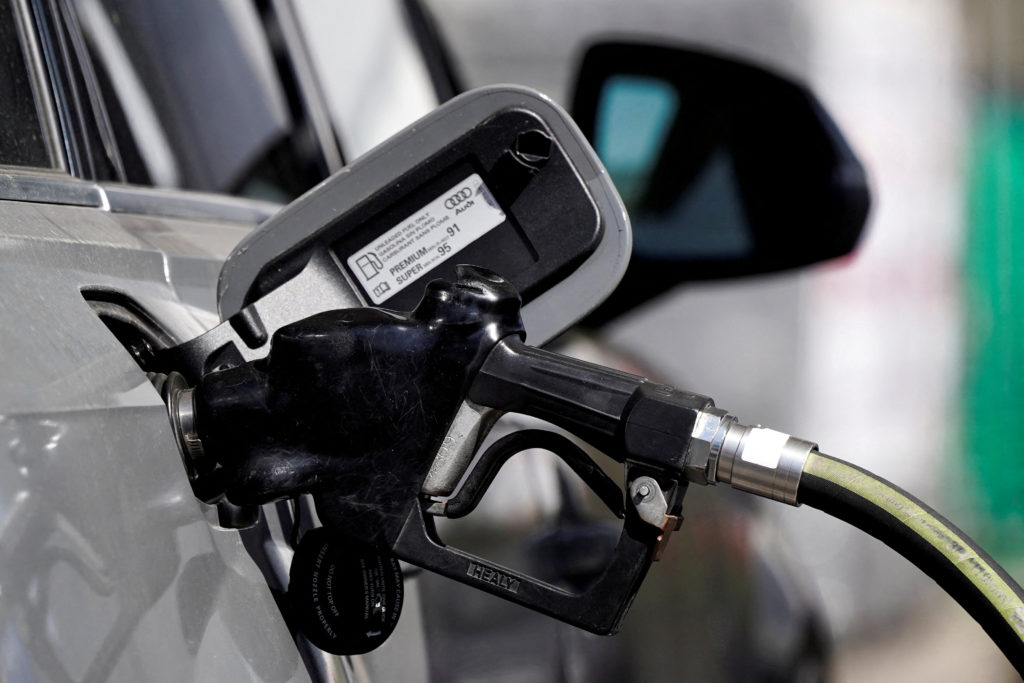
Gas Prices to Offset Tax Refunds, Slowing US Economic Growth
WASHINGTON — The anticipated surge in tax refunds for millions of Americans this spring, touted by President Donald Trump as a boon to the economy, is increasingly likely to be offset by soaring gasoline prices driven by the ongoing conflict in Iran, economists warn.
Trump, in a December address, predicted “the largest tax refund season of all time,” aiming to reassure voters concerned about economic pressures. However, the outbreak of hostilities in late February triggered a rapid increase in oil and gas prices, threatening to diminish the financial benefit for many households.
The nationwide average price of gasoline reached $3.94 per gallon on Sunday, a rise of more than $1 in just one month, according to recent data. Experts predict that prices could continue to climb, potentially peaking at $4.36 a gallon in May, based on forecasts from Goldman Sachs, as reported by Neale Mahoney, director of the Stanford Institute for Economic Policy Research.
This increase could effectively negate the tax refund gains for the average household. Economists estimate that the average household will pay $740 more for gasoline this year, nearly matching the $748 increase in refunds projected by the Tax Foundation. As of March 6, the IRS reported an average refund of $3,676, an increase of $352 compared to $3,324 in 2025, but these figures are expected to shift as more complex returns are processed.
Oxford Economics estimates that if gasoline prices average $3.70 a gallon throughout the year, consumers will collectively spend approximately $70 billion more on fuel – exceeding the anticipated $60 billion increase in tax refunds.
The impact is expected to disproportionately affect lower and middle-income households, who allocate a larger percentage of their income to gasoline. Alex Jacquez, chief of policy at the Groundwork Collaborative, a left-leaning think tank, noted that “the energy shock is going to hit those who have the least cushion,” adding that the tax refunds may not be sufficient to mitigate the financial strain.
The current situation differs significantly from 2022, when gas prices also surged following Russia’s invasion of Ukraine. At that time, many households still benefited from pandemic-era stimulus payments, and a robust job market drove up wages. Today, hiring has slowed, and Americans are increasingly relying on credit and “buy now, pay later” options to cover essential expenses, as highlighted by Julie Margetta Morgan, president of The Century Foundation.
Analysts suggest that the economic impact could exacerbate the existing “K-shaped” recovery, where higher-income households continue to thrive while lower-income households struggle. Pantheon Macroeconomics estimates that the bottom 10% of earners spend nearly 4% of their income on gasoline, compared to just 1.5% for the top 10%.
Despite these challenges, most analysts still anticipate modest economic growth in the U.S. This year. However, Oxford Economics has revised its growth forecast down to 1.9% from 2.5%, acknowledging that rising gasoline prices will likely offset the positive impact of increased tax refunds. Bernard Yaros and Michael Pearce, economists at Oxford Economics, stated they had “anticipated a lift in spending from a bumper tax refund season,” but the gasoline price increase “would more than offset that boost.”
Recent data from the Bank of America Institute indicates a 14.4% increase in gasoline spending in the week ending March 14 compared to the previous year, reversing a previous trend of declining spending. While spending on discretionary items like dining and travel remains positive, This proves not accelerating as previously expected. David Tinsley, senior economist at the institute, cautioned that prolonged high gasoline prices will “gradually sap consumer discretionary spending.”
As of March 10, the Treasury Department reported that nearly 63.5 million tax returns had been processed, with over 27.5 million claiming at least one of President Trump’s new tax cuts. Over 3.5 million returns claimed No Tax on Tips, and over 15.5 million claimed No Tax on Overtime.