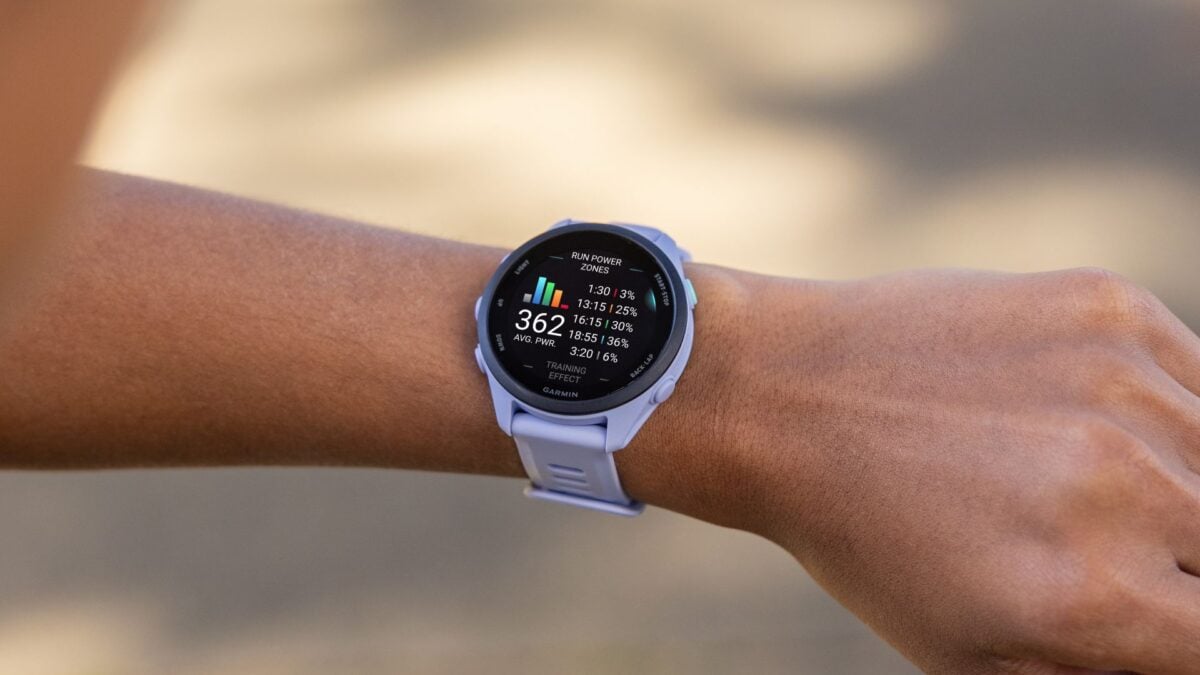
Garmin Forerunner 70 and 170: Affordable Fitness Tracking for Athletes
Garmin is playing a dangerous game of feature-parity, effectively cannibalizing its own premium tiers to shore up the entry-level flank. The release of the Forerunner 70 and Forerunner 170 isn’t just a hardware refresh. it is a strategic migration of high-margin biometric algorithms into lower-cost silicon, signaling a shift in how the company views the “beginner” athlete.
The Tech TL;DR:
- Hardware Pivot: Migration from low-power MIP displays to high-saturation AMOLED panels in the budget tier, trading battery longevity for UI density.
- Algorithmic Trickle-Down: Premium metrics—Training Readiness and Running Dynamics—are now decoupled from flagship price points.
- Data Surface Area: Increased biometric telemetry in entry-level devices expands the PII (Personally Identifiable Information) attack surface for casual users.
The architectural problem here isn’t the hardware—it’s the software distribution. For years, Garmin maintained a strict hierarchy: if you wanted the “intelligence” (the recovery insights and readiness scores), you paid the “pro” tax. By pushing these features into the Forerunner 70 and 170, Garmin is acknowledging that the computational overhead for these metrics has finally dropped enough to run on their mid-range SoC (System on Chip) without triggering thermal throttling or catastrophic battery drain.
The AMOLED Pivot: Trading Milliwatts for Lumens
The shift to AMOLED in the entry-level line is a calculated risk. While Memory-in-Pixel (MIP) displays are the gold standard for outdoor visibility and extreme power efficiency, they are aesthetically obsolete in a market dominated by Apple and Samsung. By implementing AMOLED, Garmin is optimizing for the “lifestyle” user, though this necessitates a more aggressive power management profile. We are likely seeing a tighter integration of the display driver with the SoC’s sleep states to prevent the “Always-On” feature from nuking the battery in under 48 hours.
From a systems perspective, the move to AMOLED allows for a more complex UI/UX, enabling the “Quick Workout” features and denser data screens. However, for the power user, this introduces a new bottleneck: the trade-off between screen brightness and GPS polling frequency. When the display is pulling peak current, the voltage regulators must balance the load to ensure the GNSS (Global Navigation Satellite System) receiver doesn’t lose lock during high-intensity bursts.
| Metric/Feature | Legacy Entry-Level | Modern Entry-Level (70/170) |
|---|---|---|
| Display Tech | MIP (Transflective) | AMOLED (Emissive) |
| Biometric Stack | Basic Heart Rate/Pace | Training Readiness / HRV |
| Case Material | Polymer | Fiber-Reinforced Polymer |
| Price Positioning | Budget Baseline | Increased Entry Point |
Algorithmic Migration and the SoC Bottleneck
The real story is the “trickle-down” of Training Readiness and Running Dynamics. These aren’t simple calculations; they are the result of multi-variate analysis of Heart Rate Variability (HRV), sleep architecture, and acute load. Moving these to the Forerunner 70 and 170 suggests that Garmin has optimized these models to run on lower-clocked ARM Cortex-M cores, likely utilizing a more efficient DSP (Digital Signal Processor) for the raw sensor fusion.

“The commoditization of high-end biometric analytics is inevitable. Once the mathematical model is stabilized, the cost of deploying it to a cheaper chip is negligible compared to the data acquisition value. Garmin isn’t just selling a watch; they are expanding their biometric dataset.” — Marcus Thorne, Lead Wearables Architect
For developers working with this data, the integration remains a closed-loop ecosystem, but the output files (.FIT) are where the real insight lies. To analyze the raw telemetry these devices produce, developers often have to bypass the consumer-facing app and parse the binary files directly. For those building custom health dashboards, the process typically looks like this in a Python environment:
import fitparse # Parsing the .FIT file from a Forerunner 170 fit_file = fitparse.FitFile("activity_data.fit") for record in fit_file.get_records("record"): # Extracting Heart Rate and HRV for custom recovery analysis hr = record.get("heart_rate") distance = record.get("distance") if hr and distance: print(f"Distance: {distance}m | HR: {hr}bpm") This level of data granularity is powerful, but it creates a significant security liability. As more users adopt these “cheaper” devices, the volume of sensitive health data flowing into the cloud increases. Enterprise organizations that provide corporate wellness programs must be wary of the telemetry leaks associated with consumer-grade wearables. This is why forward-thinking firms are engaging cybersecurity auditors and penetration testers to ensure that the APIs connecting these wearables to corporate health platforms aren’t leaking PII through insecure endpoints.
Data Exfiltration and the Biometric Surface Area
We cannot ignore the latency and privacy implications of the Garmin Connect ecosystem. While the devices are robust, the synchronization process relies on Bluetooth Low Energy (BLE) stacks that have historically been targets for proximity-based exploits. By lowering the barrier to entry for “pro” features, Garmin is effectively increasing the number of endpoints that are transmitting high-fidelity health data.
If you are a CTO overseeing a workforce that utilizes these devices for health tracking, the risk isn’t just the device—it’s the data pipeline. The transition from local processing to cloud-based “Training Status” updates introduces a dependency on Garmin’s server-side availability. When the API experiences latency or downtime, the “intelligence” of the watch effectively vanishes, leaving the user with a very expensive digital clock. To mitigate these risks, some organizations are partnering with specialized software development agencies to build proprietary middleware that scrubs sensitive identifiers before health data hits the cloud.
the hardware durability of the fiber-reinforced polymer case is a step up, but the AMOLED screen is a fragile point of failure. Unlike the old MIP screens, a single crack in an AMOLED panel usually results in a total display blackout. This shift will likely drive a surge in demand for certified wearable repair services as the “beginner” athlete discovers that “entry-level” doesn’t mean “indestructible.”
Garmin is successfully migrating its value proposition from “exclusive hardware” to “ubiquitous data.” By making the Forerunner 70 and 170 the new gateways into their ecosystem, they are ensuring that the next generation of athletes is locked into their biometric standards. The question is no longer whether the hardware is capable, but whether the user is comfortable with the level of surveillance required to tell them they are “ready” to run.
*Disclaimer: The technical analyses and security protocols detailed in this article are for informational purposes only. Always consult with certified IT and cybersecurity professionals before altering enterprise networks or handling sensitive data.*