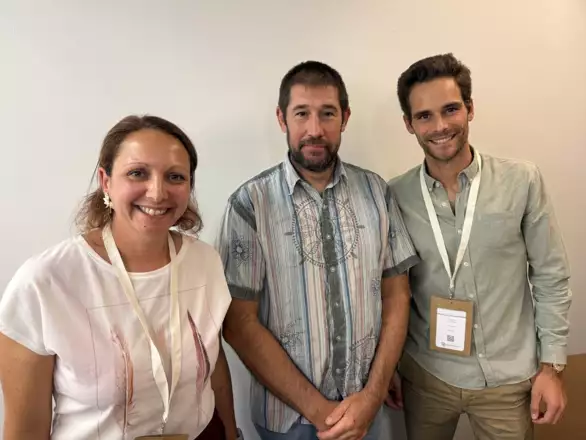
Futuroscope and farmer Damien Berthonneau sign carbon deal
The Futuroscope theme park and local farmer Damien Berthonneau have established a carbon credit agreement, linking their water and environmental management in the Vienne department. Under this arrangement, the amusement park provides financial backing to accelerate the adoption of regenerative agriculture practices on four local farming operations, including Berthonneau’s diversified large-crop farm established in 2002.
Both entities draw from the Clain pumping zone near Poitiers. The collaboration was showcased on September 30 at the Produrable trade show in Paris, where representatives from the park, the farm, and the intermediary startup ReSoil detailed the partnership.
Water Reduction and Energy Goals at the Futuroscope
The Futuroscope consumes 300,000 cubic meters of water annually. Over a five-year period, the park has reduced its water consumption per visitor by 30 percent, according to Christine De Sami, client and environment manager at the park. Water management initiatives include recycling water from a water park built in 2024 and infiltrating rainwater into the soils.
On emissions, the park targets carbon neutrality for energy and heat by 2027. Investments in photovoltaic panels, thermofrigopompes, and a biomass boiler have cut emissions by 80 percent. To address remaining emissions, the park purchases carbon credits from local agricultural operations to support the regional economy.
Regenerative Farming Practices on the Berthonneau Farm
Damien Berthonneau manages roughly a dozen crops using soil conservation agriculture, transforming products on the farm for direct sale. The practices yield savings in time and fuel while revitalizing soil life and stabilizing crop yields. Permanent plant covers, associated species, and variety mixtures are central to the operational shift.
Legumes function as green fertilizers and cash crops. Using lentils as a cover crop saves up to 60 units of nitrogen, replacing about one-third of the nitrogen required for wheat production. Direct seeding under cover maintains soil moisture through dry periods, helping crops survive drought conditions.
Intermediation and Carbon Certification Through ReSoil
The partnership developed after the startup ReSoil connected with Berthonneau in 2023. Grégoire Alston, co-founder of ReSoil, stated that the firm calculated the carbon, water, and biodiversity impacts of the farming changes, managed project monitoring, secured low-carbon farm certification, and coordinated financing with the Futuroscope.
The financial support covers additional expenses related to cover crop management, including seeds, sowing, and termination. The low-carbon certification helps Berthonneau supply collective catering markets, where the Egalim law mandates that institutional kitchens source at least 50 percent sustainable and quality products.