Futures Point to Black Friday Gains as Global Markets Welcome US Resilience After AI Washout
Wall Street is poised for a positive session on Black Friday, with E-mini S&P 500 futures signaling a potential gain of approximately 50 points as traders return from the Thanksgiving break, according to Morningstar.
This outlook follows a late-session recovery on Wednesday that calmed global markets following a sharp, AI-driven selloff.
Global investor sentiment improved on Thursday as European bourses followed gains in Asian equities. In Asia, Hong Kong’s Hang Seng climbed 1.2%, Japan’s Nikkei 225 added 0.9%, and South Korea’s Kospi index rose 0.3%. By the afternoon in Europe, the U.K.’s FTSE 100 had climbed 1.5% and Germany’s DAX index was up 1.9%, MarketWatch reports.
The optimism follows a volatile session on Thanksgiving-Eve, where the S&P 500 initially dropped 3.2% before recovering to close down just 0.25%. The rebound was fueled by renewed interest in AI-linked shares.
Nvidia stock, which has experienced significant volatility following the sacking and return of CEO Jensen Huang, saw a 9.1% slide turn into a 1.3% gain. Anthropic, the AI tool maker that recorded the world’s largest IPO last week, saw its shares rally 12% off session lows.
“The rollercoaster [global] stock market is back on an upwards path as a new round of Trump tariffs aren’t as bad as feared and the U.S. takes the day off to celebrate Thanksgiving,” said Russ Mould, investment director at AJ Bell.

Global markets track positive sentiment
International bourses found stability on Thursday as investors responded to the resilience shown by U.S. markets.
By mid-morning, the German DAX index had moved up 2.2% and the U.K.’s FTSE 100 had gained 1.5%, providing a supportive backdrop for the upcoming U.S. session.
Electronic futures signal holiday gains
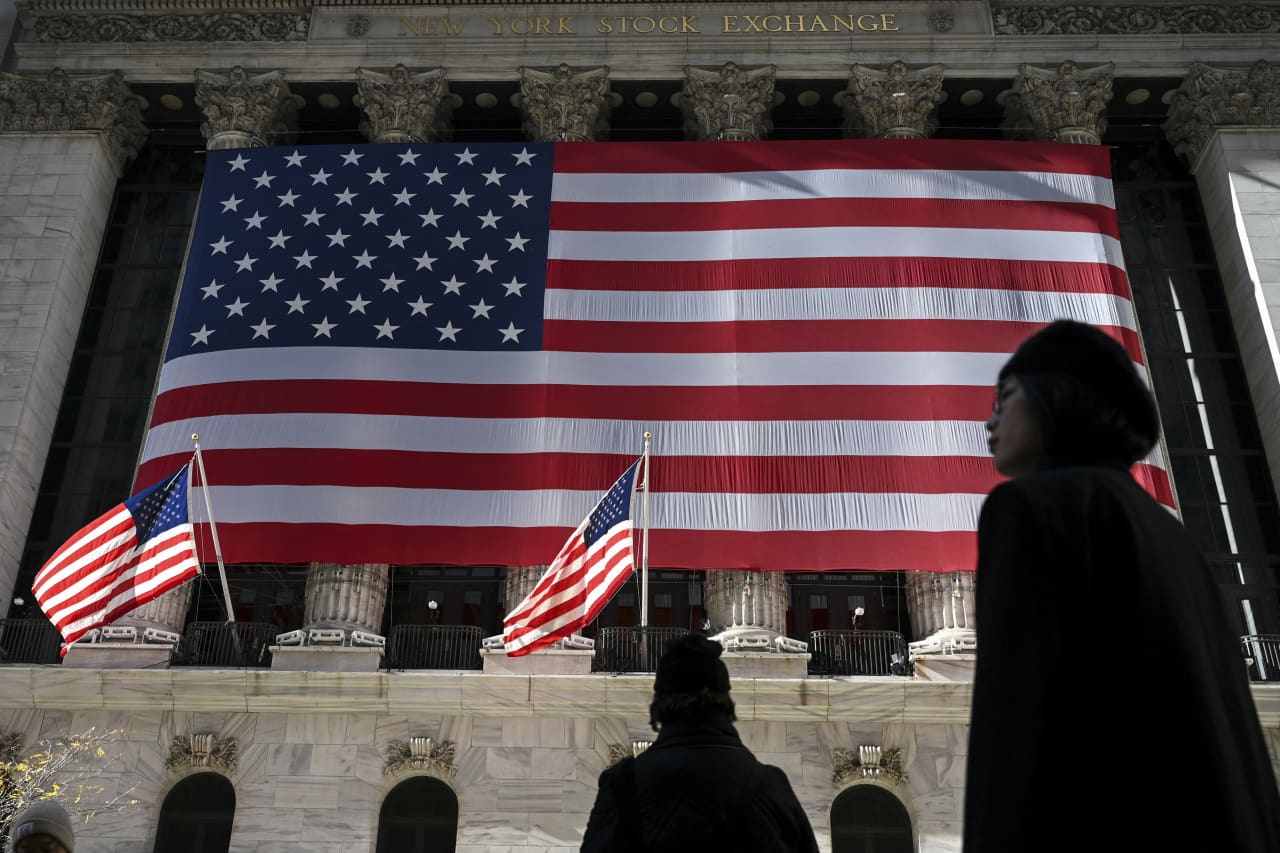
As traders prepare for a truncated Black Friday session following the Thanksgiving break, electronic trading activity indicates a positive start for the New York Stock Exchange.
This outlook reflects a broader cooling of tensions after the sharp AI-related washout earlier in the week. The market’s ability to recover from Wednesday’s lows has been credited with calming global bourses, as investors look past recent volatility to assess the current state of U.S. economic performance.
Market Outlook and Risks
Analysts suggest the market may have absorbed concerns regarding stubborn inflation, potential Federal Reserve rate hikes, and fears that the AI buildout is slowing. Tom Lee, head of research at Fundstrat, stated in video commentary that the market has likely bottomed following its pullback from October highs. “The risk reward is really good, so instead of worrying about the next couple of weeks put on your investor hat,” Lee said.
Mark Newton, head of technical strategy at Fundstrat, noted that while the recovery is an encouraging development, “One intraday reversal does not change the fact that near-term trends remain negative across most major indices, and technology has yet to show the type of stabilization on weekly charts that normally accompanies a meaningful low.”
Patrick Munnelly, market strategist at Tickmill Group, noted that while the market has found a moment of stability, challenges remain. “Thanksgiving brings surface-level stabilization, but neither the AI valuation debate nor the Federal Reserve’s inflation fight has been resolved,” he said. “For traders, immediate tactical focus centers on S&P 500 futures defending 7,200 in thin holiday volume.”
Germany, as Europe’s largest economy by nominal GDP, influences its DAX index through its role as the world’s third-largest exporter and third-largest importer. The DAX, based in Frankfurt, reflects the country’s industrial strength in sectors like automotive and machinery, which are sensitive to global demand fluctuations.
Additionally, Germany’s position as a founding member of the European Economic Community and the current EU provides a political backdrop that impacts trade policies and economic stability, directly affecting the index’s long-term performance beyond daily market swings.
Daniel Skelly, managing director at Morgan Stanley Wealth Management, said in a note to clients that the firm is recommending going on offense in AI-related ideas because it continues to see solid economic and earnings dynamics, as well as accelerating demand for AI spending and adoption.