
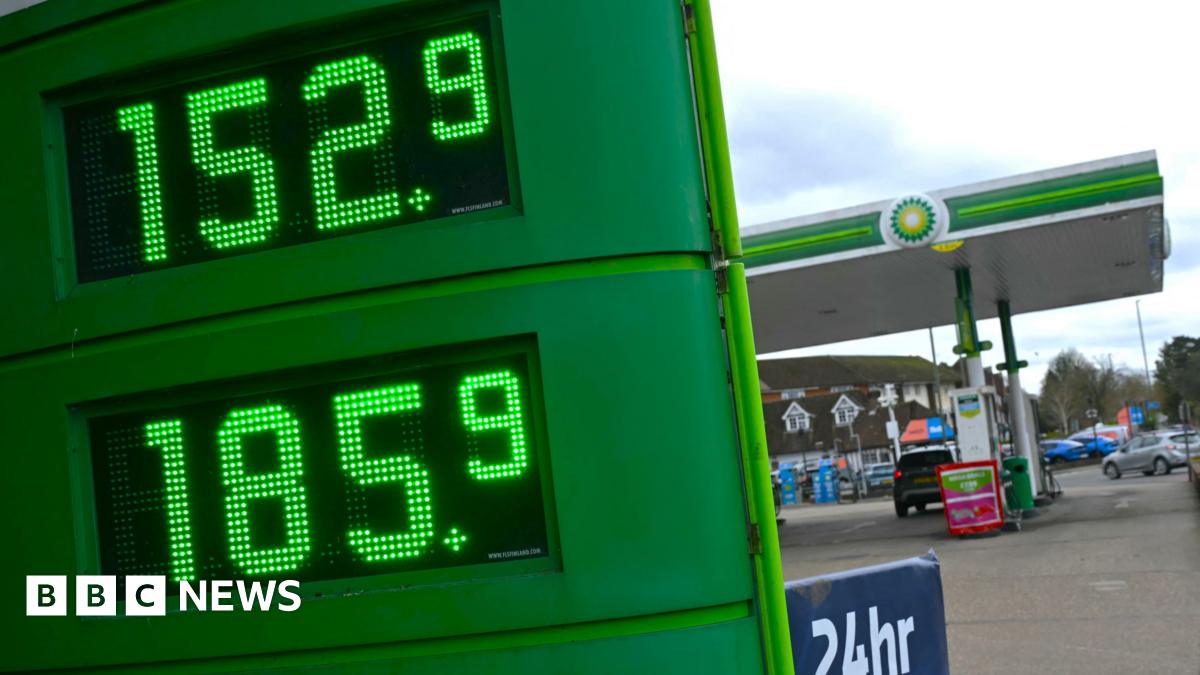
Fuel rations and free buses: How countries are responding to rising oil prices
Two Australian states have implemented free public transport schemes to mitigate the impact of surging oil prices, a direct fiscal response to Brent crude volatility driven by Middle East instability. As petrol hits A$2.38 per litre, Victoria and Tasmania are absorbing commuter costs to curb inflation, signaling a broader shift in sovereign subsidy strategies that will strain state budgets and disrupt private logistics margins.
The era of cheap energy is officially dead in the Asia-Pacific theater. With the national average for unleaded petrol climbing to A$2.38 a litre as of March 22, the Australian Institute of Petroleum has confirmed what corporate treasurers have feared since the escalation of the Middle East conflict: the supply shock is structural, not transient. Governments are no longer waiting for market corrections. They are intervening.
In Victoria, trains, trams, and buses are free throughout April. Tasmania has extended the window further, waiving fares for buses, coaches, and ferries until the finish of June. Even school transport, a niche but costly line item for families, has been zero-rated, saving households roughly A$20 weekly. This isn’t just social policy; it is emergency economic triage.
When a state government absorbs the cost of mobility, it fundamentally alters the liquidity landscape for the private sector. Commuters save cash, theoretically boosting discretionary spend, but the state balance sheet takes a hit. For the B2B ecosystem, the signal is clear: volatility is the new baseline.
Corporate entities relying on fleet logistics are facing a margin compression event. The subsidy provided to public transport users is effectively a transfer of wealth from the state to the consumer, but for private freight operators, there is no such relief. Fuel surcharges are eating into EBITDA, forcing CFOs to look for immediate hedging instruments.
This divergence creates a specific problem for mid-market logistics firms. They lack the balance sheet depth of the major carriers to absorb fuel spikes without passing costs to clients, yet they cannot afford to lose volume by pricing themselves out of the market. This is precisely where specialized supply chain risk management firms become critical. Companies are no longer looking for simple freight forwarding; they need strategic partners who can model fuel volatility scenarios and restructure contracts to include dynamic pricing clauses.
“We are seeing a decoupling of consumer sentiment from energy prices in the short term due to state intervention, but the long-term yield curve for transport-heavy sectors remains inverted. The subsidy is a band-aid, not a cure for the underlying inflationary pressure.”
That assessment comes from Marcus Thorne, Chief Investment Officer at Southern Cross Capital, a firm managing over A$14 billion in infrastructure assets. Thorne notes that while the free transport initiative dampens immediate CPI (Consumer Price Index) readings, it masks the true cost of doing business. “The market is pricing in a prolonged period of high energy costs,” Thorne stated during a recent investor briefing. “Companies that haven’t stress-tested their OpEx against a A$3.00/litre scenario are walking into a valuation trap.”
The fiscal mechanics of this response are telling. By making public transport free, the state is attempting to reduce road congestion and fuel demand, a classic demand-side suppression tactic. However, for the corporate sector, the implication is a potential labor market shift. If commuting becomes free, the radius for talent acquisition expands. Employees can live further from CBDs without incurring travel costs. This changes the calculus for commercial real estate and HR planning.
HR directors and operational leaders must now recalculate the total cost of employment. A remote-first policy might have made sense in 2024, but with free trains in 2026, the hybrid model becomes financially superior for the employee, potentially increasing retention. Navigating these shifting labor dynamics requires robust legal frameworks. Organizations are increasingly turning to employment law specialists to rewrite contracts that account for these new geographic flexibilities and the associated tax implications of state-subsidized commuting.
The Macro Impact: Three Shifts in the Industrial Landscape
The decision by Victoria and Tasmania to subsidize mobility is not an isolated incident; it is a leading indicator for the broader industrial economy. Based on current monetary policy statements from the Reserve Bank of Australia and energy market data, we anticipate three distinct shifts in the coming fiscal quarters:
- Capital Expenditure Reallocation: Companies will divert CapEx from expansion projects to energy efficiency upgrades. The ROI on electric fleet conversion has shortened dramatically. Businesses that were waiting for 2027 to transition their logistics fleets are pulling those forward to Q3 2026 to lock in lower operational costs.
- Consolidation of Last-Mile Delivery: Margins in last-mile delivery are too thin to sustain current diesel prices without state aid. We expect a wave of M&A activity where larger players acquire smaller, fuel-exposed competitors. This creates a urgent need for M&A advisory services capable of executing rapid, defensive buyouts before valuations correct further.
- Sovereign Risk Premium: Investors will begin pricing in a “subsidy risk.” If governments can arbitrarily change the cost of transport for consumers, they can also alter tax structures for businesses. Fixed-income traders are already adjusting yields on infrastructure bonds to account for this regulatory unpredictability.
The data supports a bearish outlook for traditional combustion-dependent logistics. According to the latest quarterly report from the Australian Trucking Association, fuel represents nearly 35% of total operating costs for heavy vehicles. A 15% spike in pump prices, as seen since the start of the conflict, directly erodes net profit by nearly 5% if not hedged. That is a massive bleed for an industry operating on single-digit margins.
the psychological impact on the consumer cannot be overstated. While the free bus scheme provides relief, the visible pain at the pump drives behavior change. We are seeing a structural decline in discretionary driving. Retailers located in areas with poor public transport connectivity are already reporting foot traffic declines compared to those in transit-rich zones. This geographic arbitrage is reshaping retail real estate valuations.
For the astute investor, the opportunity lies in the transition. The companies winning in this environment are those treating energy not as a utility, but as a strategic asset class. They are diversifying supply chains, locking in long-term energy purchase agreements (PPAs), and utilizing financial derivatives to smooth out cash flow volatility.
The free bus initiative in Victoria and Tasmania is a temporary fix for a permanent problem. Oil prices are unlikely to revert to pre-conflict lows in the near term. The market has priced in the geopolitical risk. The question for business leaders is no longer “when will prices drop,” but “how do we structure our operations to survive at A$2.50 and thrive at A$3.00?”
Survival requires more than just cost-cutting; it requires structural adaptation. Whether it is renegotiating logistics contracts, hedging currency and commodity exposure, or restructuring workforce deployment, the tools exist. The World Today News Directory aggregates the top-tier B2B partners capable of executing these strategies. From forensic accountants who can audit your energy spend to legal firms specializing in regulatory compliance during crises, the infrastructure for resilience is available. The market waits for no one; adapt or face margin erosion.