
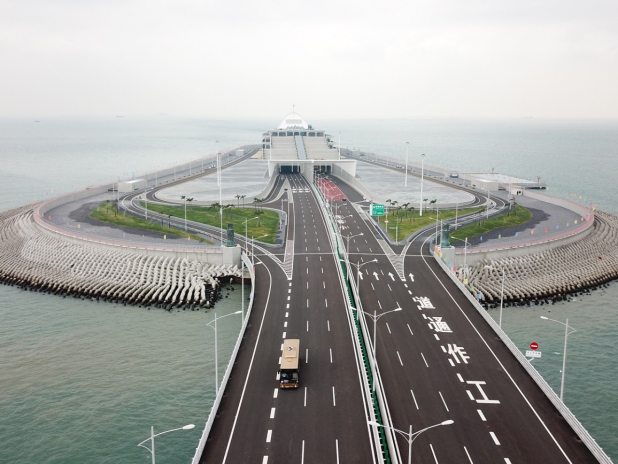
Hong Kong’s Transport Department is now at the center of a structural shift involving cross‑border vehicle mobility in the Greater Bay Area. The immediate implication is a calibrated opening for high‑spending tourism and retail while testing regulatory and security frameworks.
The Strategic Context
The Southbound Travel Scheme builds on a decade‑long push for Greater bay area (GBA) integration, a policy pillar that seeks to blur the economic borders between hong Kong, Macau and nine Guangdong cities. Historically, Hong Kong’s tourism model has relied on air‑linked visitors; the scheme diversifies the access channel by allowing private cars to cross the Hong Kong‑Zhuhai‑Macau Bridge directly into the city. This aligns with broader regional trends of “city‑cluster” development,where mobility is leveraged to create a single market for services,talent and consumption. Simultaneously occurring, Hong Kong faces a post‑COVID tourism slump and a need to rejuvenate retail footfall, while the mainland aims to showcase the GBA’s seamless connectivity as a model for other integrated economic zones.
Core Analysis: Incentives & Constraints
Source Signals: The Transport Department received ~700 applications, with 100 vehicles permitted daily via the bridge for up to three days. Applicants must pass mainland inspections, activate the HKeToll system and display “FT” license plates.Educational videos and a parking‑with‑charging app feature have been launched.A Guangzhou businessman plans a high‑spending day trip, and officials project the scheme will boost peopel and goods flow, targeting affluent visitors.
WTN Interpretation: Hong Kong’s incentive is to inject discretionary spending into a retail sector that has contracted since 2020, using a controlled, high‑value visitor cohort to mitigate crowd‑related risks. The vehicle‑based entry lowers the friction for affluent families who prefer private transport, potentially raising per‑capita spend. Guangdong’s participation serves its own agenda of expanding consumer markets for its manufacturers and services, while demonstrating the GBA’s logistical sophistication. Constraints include the need to uphold road safety, enforce vehicle inspections, and manage congestion on the bridge and within urban streets. Environmental concerns over increased car traffic and the limited daily quota also cap scale. Politically, any incident involving a mainland vehicle could be amplified, testing cross‑jurisdictional coordination mechanisms.
WTN Strategic Insight
“The Southbound travel Scheme is a micro‑test of the GBA’s ambition to turn mobility into a premium‑service market, where the value of each crossing outweighs the volume of crossings.”
Future Outlook: Scenario Paths & Key Indicators
Baseline Path: If safety inspections, toll integration and the 100‑vehicle daily cap operate without major incidents, the scheme will gradually expand the quota, attracting a steady stream of affluent motorists. Retail districts near major bridge exits (e.g., Tsim Sha Tsui, Central) will see incremental sales growth, and Hong Kong’s tourism statistics will reflect a modest but stable uplift in high‑spending visitors.
Risk Path: If traffic incidents, congestion spikes, or regulatory friction (e.g., disputes over licence‑plate enforcement) arise, authorities may tighten the quota or suspend the scheme. A negative incident could trigger broader public‑sentiment backlash, prompting a reassessment of cross‑border mobility policies and potentially slowing GBA integration momentum.
- Indicator 1: Weekly traffic and safety reports from the Hong Kong Transport Department for the bridge and urban entry points (first 3‑month window).
- Indicator 2: Retail sales data for key shopping districts during the first quarter of the scheme’s operation, especially per‑capita spend by vehicle‑based visitors.
