
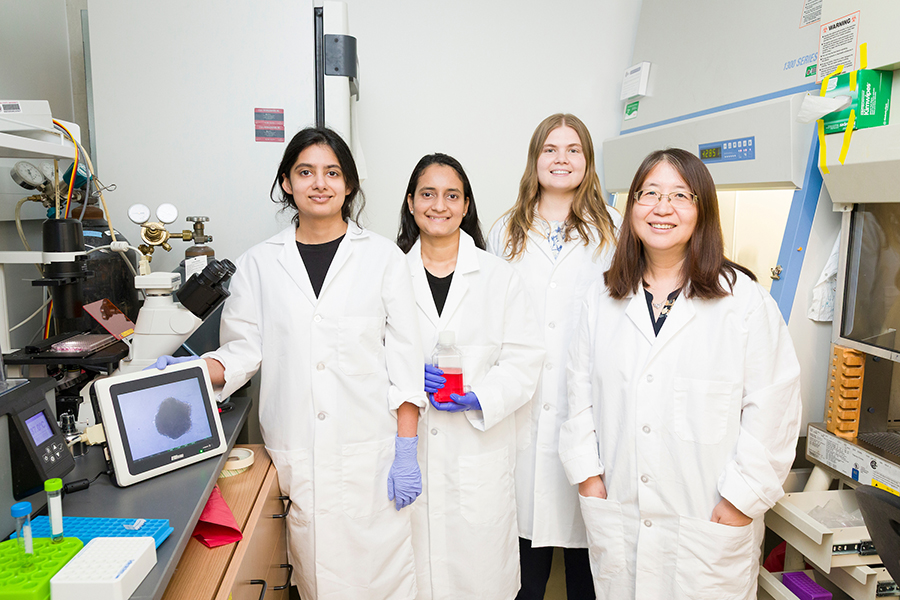
A collaborative research effort involving the FAMU-FSU College of Engineering and the Mayo Clinic is underway to develop latest treatments for Alzheimer’s disease, leveraging advanced brain modeling techniques and insights into the brain’s immune response.
The partnership, announced Wednesday, brings together researchers from Mayo Clinic Florida, Florida State University, and the FAMU-FSU College of Engineering. Yan Li, a professor in the Department of Chemical and Biomedical Engineering at the FAMU-FSU College of Engineering, is leading the research, drawing on her two decades of experience in pluripotent stem cell biology and extracellular vesicle therapeutics. Li too holds a dual appointment at FSU and Mayo Clinic.
A key component of the research is access to patient-derived, three-dimensional brain models, according to Li. “This shared project is significant because of the resources and expertise the Mayo Clinic offers,” she said. “These cutting-edge tools will allow scientists to evaluate new treatments more effectively based on real human biological systems.”
Li and her team recently published research in Advanced Healthcare Materials detailing a more accurate cellular model for brain disease research. This model combines brain organoids – lab-grown cell structures that mimic human organs – with immune cells found in the brain. Unlike previous models, this new approach incorporates microglia-like immune cells, allowing researchers to study inflammation and immune responses, both critical factors in neurodegenerative diseases like Alzheimer’s.
The team used the new model to examine the effects of extracellular vesicles – tiny cell-to-cell messengers – from Alzheimer’s patients’ brain cells. They found that healthy immune cells and their associated extracellular vesicles reduced harmful inflammation and lowered signals linked to proteins associated with Alzheimer’s disease.
“This study paves the way for understanding the role of microglia and brain organoids in modeling neural degeneration and the development of extracellular vesicle-based cell-free therapeutics for Alzheimer’s disease treatment,” Li stated.
The research suggests a potential therapeutic avenue focused on utilizing cellular messengers as medicine, harnessing the brain’s own cleanup mechanisms to combat disease. “By gaining insight into this communication, we hope to develop new treatments that can alter the progression of Alzheimer’s,” Li explained.
The collaboration also provides unique opportunities for doctoral students at FAMU-FSU. Students like Jennifer Berg Sen, Sailesti Joshi, and Falak Syed are directly involved in the research and gaining experience in a clinical setting at Mayo Clinic Jacksonville. They are observing patient-centered research firsthand and learning advanced laboratory techniques not typically available in traditional university settings.
“Working with the Mayo Clinic has been a highly inspiring experience, and I look forward to what the future holds for this perform,” Berg Sen said.
Researchers contributing from the Mayo Clinic side include Dr. Takahisa Kanekiyo, an associate professor of neuroscience, and Dr. Alfredo Quinones-Hinojosa, a professor of neurosurgery. Emily Pritchard, assistant provost and assistant vice president for Academic Affairs Health Innovation and Strategic Alliances, expressed hope for expanding similar collaborative opportunities to advance translational research and improve patient outcomes.
