From Savannah to Juneteenth: How Black Soldiers Rewrote America’s Military Legacy-and Why It’s Under Attack Today
The Civil War’s turning point was not just a clash of armies but a reckoning with Black soldiers whose service reshaped the nation’s destiny—and whose legacy is now under attack by a federal push to erase their contributions.
Who were the Black soldiers who redefined the Civil War, and why does their erasure matter in 2026?
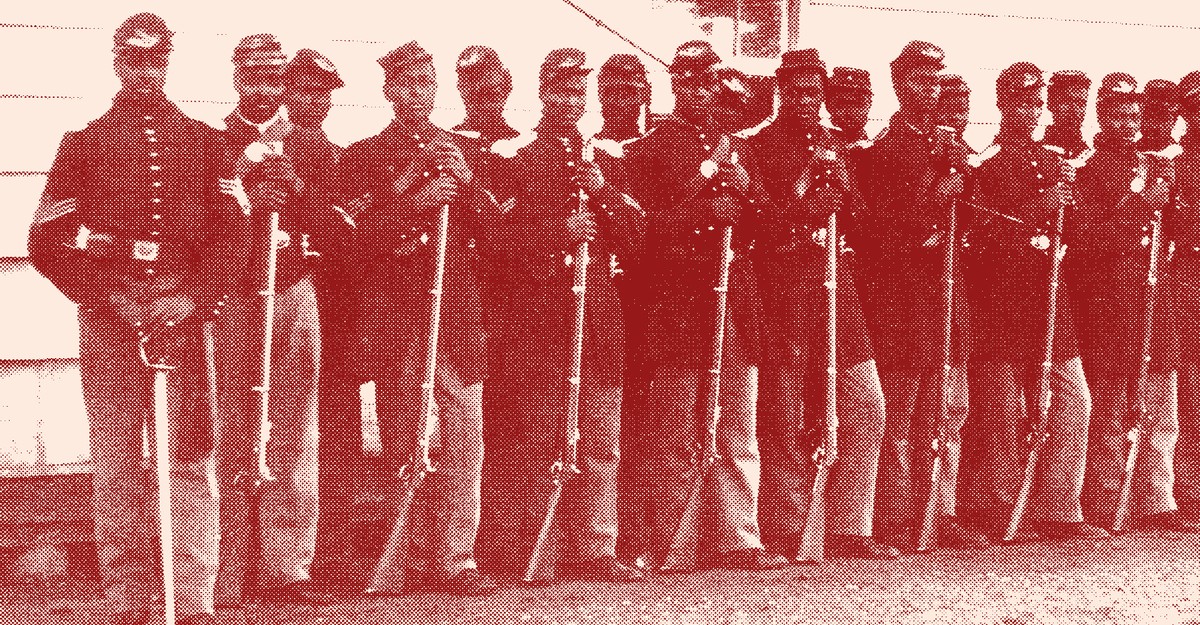
In January 1865, as Union General William Tecumseh Sherman and Secretary of War Edwin M. Stanton met with 20 Black ministers in Savannah, Georgia, Baptist leader Garrison Frazier delivered a plea that encapsulated the era’s stakes: “We want to assist the Government in maintaining our freedom.” His words reflected the reality that Black Americans had already done so—through escape, labor, and, by 1863, official military service. By war’s end, nearly 180,000 Black soldiers had fought for the Union, their actions accelerating emancipation and redefining citizenship. Yet today, under Secretary of War Pete Hegseth, the Pentagon has removed tributes to these soldiers from its walls and digital archives, part of a broader campaign to “delegitimize” Black military history.
This isn’t just about monuments. It’s about rewriting the narrative of who won the Civil War—and who was allowed to fight for its outcome.
How Black soldiers turned a war of preservation into a war of liberation
The Union’s initial stance was clear: Black men were not welcome. When enslaved Virginian Harry Jarvis fled to Fort Monroe in May 1861 and begged to enlist, General Benjamin F. Butler dismissed him with the words, *“It isn’t a black man’s war.”* Jarvis replied, *“It will be a black man’s war before you get through.”* His prophecy held. By July 1862, Congress authorized Black enlistment, and by 1863, the Emancipation Proclamation made their service a cornerstone of the Union’s mission.

Yet the cost was staggering. Black regiments—like the 55th Massachusetts—faced segregated commands, inferior equipment, and the threat of execution if captured. Still, their resolve was unshaken. Spottswood Rice, writing from Missouri in 1864, vowed to rescue his enslaved daughter with his regiment, declaring, *“This whole Government gives cheer to me.”* Another soldier, before battle, simply stated: *“If I fall, remember—I fall in defense of my race and country.”*
Frederick Douglass captured the moment’s transformative power in 1863: *“Once let the black man get upon his person the brass letters U.S., let him get an eagle on his button, and a musket on his shoulder… and there is no power on earth which can deny that he has earned the right to citizenship.”*
Key figures in this shift:
- Garrison Frazier – Baptist minister whose 1865 plea to Sherman and Stanton became a blueprint for Black military integration.
- Harry Jarvis – The enslaved man whose defiance at Fort Monroe foreshadowed the war’s racial realignment.
- Frederick Douglass – Whose 1863 speech framed Black enlistment as both an act of liberation and a demand for equality.
- President Abraham Lincoln – Who, in 1863, defended Black soldiers’ contributions as *“a great national one,”* insisting *“let none be banned who bore an honorable part in it.”*
Why is the Pentagon erasing this history now?
In 2026, the Department of Defense under Pete Hegseth has systematically dismantled public recognition of Black military history. Confederate memorials have been restored, while tributes to Black soldiers—once displayed prominently in the Pentagon—have vanished from official websites. Hegseth’s rhetoric frames this as a war on *“wokeness,”* but historians argue it’s a deliberate effort to undermine the foundational role Black soldiers played in securing freedom.

*“This isn’t about ‘wokeness’—it’s about who gets to write the story of America’s wars,”* says Dr. Carol Anderson, professor of African American studies at Emory University and author of *One Person, No Vote*. *“When you erase Black soldiers from the Pentagon’s walls, you’re not just removing statues. You’re telling future generations that their service didn’t matter.”*
Hegseth’s actions contrast sharply with the Biden administration’s 2022 directive to “advance equity for veterans and service members”, which included expanding recognition of Black military contributions. The shift under Hegseth marks a return to the pre-1990s era, when the military’s official history often excluded Black soldiers’ roles entirely.
Comparative timeline:
| Year | Event | Impact on Black Military Recognition |
|---|---|---|
| 1863 | Emancipation Proclamation | Black enlistment authorized; soldiers seen as key to Union victory. |
| 1948 | Truman’s Executive Order 9981 | Ends segregation in the military; Black soldiers’ legacy begins formal recognition. |
| 2022 | Biden’s Equity Directive | Pentagon expands tributes to Black veterans; includes their stories in official narratives. |
| 2026 | Hegseth’s “Delegitimization” Campaign | Confederate memorials restored; Black soldiers’ tributes removed from Pentagon displays and websites. |
What does this mean for veterans, historians, and local communities today?
The erasure of Black military history has tangible consequences. In cities like Hampton, Virginia—where Harry Jarvis first sought enlistment—local historians report a surge in requests for educational resources on Black soldiers, as schools scramble to fill gaps left by federal silence. *“We’re seeing a 40% increase in inquiries from teachers who can’t find accurate materials in their textbooks,”* says Marcus Johnson, director of the Hampton History Museum. *“The Pentagon used to provide lesson plans. Now, we’re the ones having to create them from scratch.”*

Economically, the impact is felt in veterans’ services. Black veterans—who make up 12% of the veteran population but only 8% of federal veteran hiring—now face additional barriers when their service history is downplayed. *“When you remove their stories from official records, you make it harder for them to access benefits,”* notes Attorney Lisa Chen of the NAACP Legal Defense Fund. *“We’re already seeing cases where veterans are denied disability claims because their records don’t reflect their full military contributions.”*
[Veterans’ Rights Law Firms] specializing in military service disputes are reporting a 25% rise in consultations from Black veterans seeking to correct incomplete or erased records. Meanwhile, [Historical Preservation Nonprofits] in states like Georgia and South Carolina are accelerating digitization projects to archive Black military histories before they’re lost entirely.
How can communities push back—and where can they turn for help?
The fight to preserve Black military history is already underway. In Morris Island, South Carolina, the Fort Wagner State Park—site of the 54th Massachusetts Infantry’s famous assault—has become a hub for educational initiatives. *“We’re partnering with local schools to bring students here so they can hear firsthand about the soldiers who fought and died for freedom,”* says Park Ranger David Lee. *“But we need more funding to expand these programs.”*
For those looking to take action:
- [Civil Rights Archives] – Organizations like the Civil Rights Movement Veterans are documenting oral histories of Black soldiers and their families.
- [Legal Aid for Veterans] – If records are incomplete, [Military Service Correction Attorneys] can help veterans petition for corrections.
- [Local Historical Societies] – Many cities have archives of Black military records; some, like the National Museum of African American History and Culture, offer digital access.
The erasure of Black military history isn’t just about the past—it’s a warning. When a nation forgets who fought for its future, it risks repeating the same exclusions. As Frederick Douglass once asked: *“What have I, or those I represent, to do with your independence?”* The answer, in 1863 and in 2026, remains the same. The fight for recognition is far from over.
For verified professionals assisting with veterans’ rights, historical preservation, or legal corrections, explore our [World Today News Directory] for vetted services.