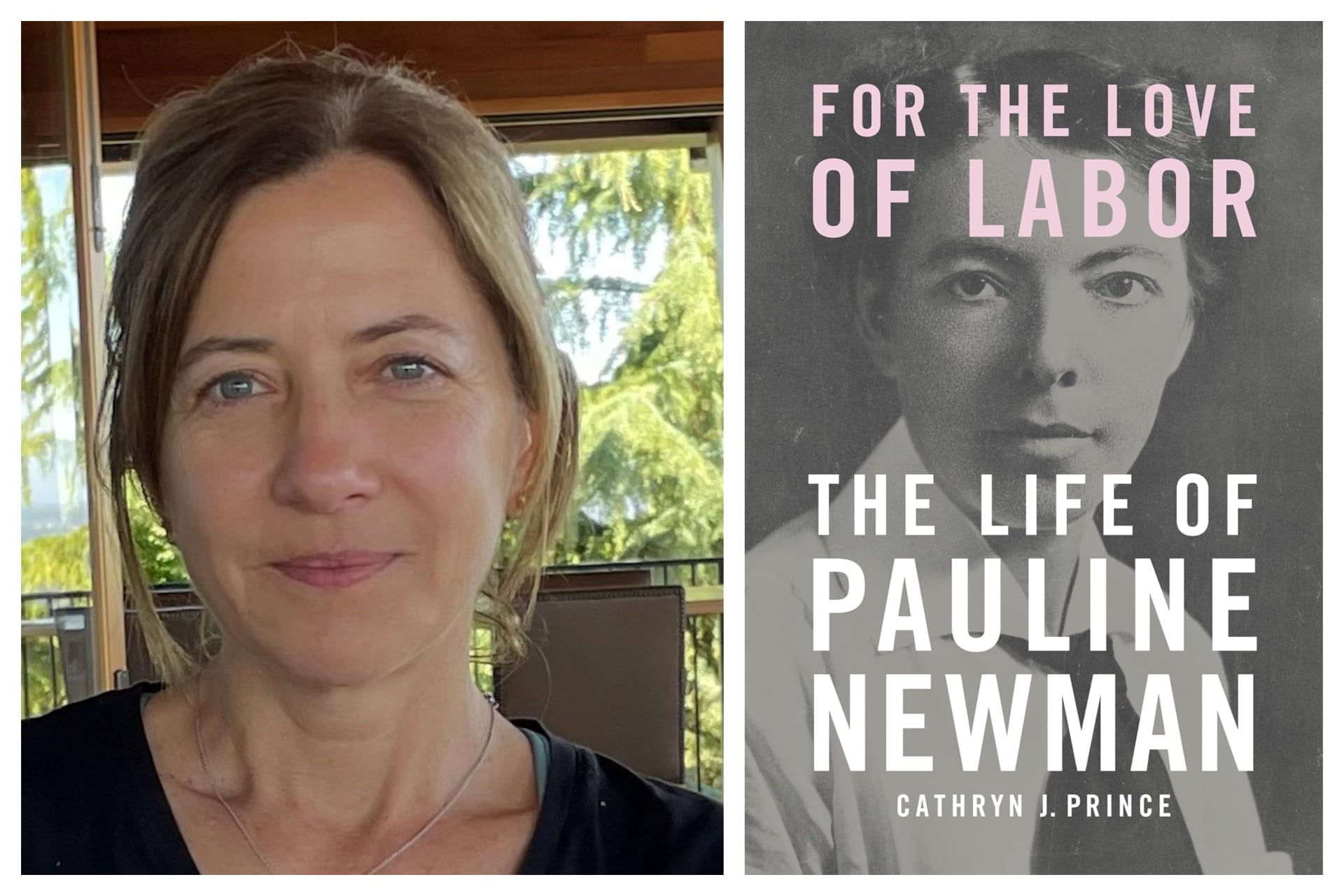
From Child Laborer to Union Leader: The Timeless Story of Immigrant Activist Pauline Newman
Pauline Newman, a Lithuanian immigrant who rose from child laborer in New York City’s garment sweatshops to become a pioneering union leader and feminist organizer in the early 20th century, remains a powerful symbol of immigrant resilience and labor advocacy whose legacy continues to inform contemporary struggles for workplace equity, immigrant rights, and gender justice in America’s evolving economy.
Today, as debates over wage theft, misclassification of gig workers, and the erosion of collective bargaining rights intensify across states like New York and California, Newman’s story offers more than historical inspiration—it provides a tactical blueprint for organizers confronting systemic exploitation in industries ranging from domestic work to tech logistics. Her life illustrates how grassroots mobilization, when anchored in immigrant communities and women’s leadership, can reshape labor law and corporate accountability.
Born in 1887 in Kovno (now Kaunas, Lithuania), Newman immigrated to New York City at age eight with her family, fleeing pogroms and economic hardship. By age eleven, she was working 12-hour days in a Lower East Side garment factory, earning less than $3 a week. Her early exposure to brutal conditions sparked a lifelong commitment to labor organizing. Unlike many male-dominated unions of the era, Newman championed the inclusion of women immigrants—particularly Jewish and Italian garment workers—recognizing that their exploitation was both economic and patriarchal.
“Pauline Newman didn’t just fight for better wages—she fought for dignity. She understood that you couldn’t separate the fight against low pay from the fight against sexual harassment, unsafe conditions, and the denial of voice. That intersectional approach is what made her effective, and it’s what’s missing in too many organizing efforts today.”
— Dr. Premilla Nadasen, historian of labor and gender at Barnard College, Columbia University
Newman’s breakthrough came in 1909 when she helped lead the Uprising of the 20,000, a massive strike by shirtwaist makers that paralyzed New York’s garment industry for weeks. Though she was only 22, her intelligence, fluency in Yiddish and English, and tireless work ethic made her a natural leader. She later became the first woman appointed as a general organizer by the International Ladies’ Garment Workers’ Union (ILGWU), a role in which she recruited, trained, and mobilized thousands of immigrant women across the Northeast.
Her advocacy extended beyond the shop floor. Newman was instrumental in pushing for legislative reforms that culminated in New York State’s 1911 Factory Investigating Commission, formed after the Triangle Shirtwaist Factory fire—a tragedy that killed 146 workers, mostly young immigrant women. The commission’s findings led to over 30 new labor laws, including fire safety regulations, limits on working hours for women and children, and mandatory factory inspections—many of which became models for federal New Deal legislation decades later.
Yet Newman’s impact was not limited to policy. She understood that sustainable change required cultural transformation. She helped establish educational programs for working women, offering classes in literature, economics, and public speaking—tools she believed were essential for self-advocacy. In doing so, she helped forge a new identity for the immigrant worker: not as a passive victim of exploitation, but as an informed, rights-conscious agent of change.
Today, that legacy echoes in the organizing efforts of groups like the National Domestic Workers Alliance (NDWA), which advocates for housecleaners, nannies, and home care workers—many of whom are immigrant women excluded from federal labor protections. Similarly, the Fight for $15 movement, which has secured minimum wage increases in over 30 states and cities, draws direct inspiration from Newman’s belief that economic justice must be paired with political power.
In California, where over 10 million immigrants comprise nearly a quarter of the workforce, recent legislation such as AB 5 (the “gig worker law”) and SB 62 (the Garment Worker Protection Act) reflects Newman’s core insistence that labor rights must adapt to evolving industries. While AB 5 has faced legal challenges and modifications, its intent—to reclassify misclassified workers and extend protections—aligns with Newman’s lifelong fight against exploitative classification schemes. Meanwhile, SB 62, which eliminated piece-rate pay in garment manufacturing and restored hourly wages, directly addresses the sweatshop conditions Newman fought over a century ago.
“Newman’s genius was in linking immediate workplace struggles to broader democratic ideals. She didn’t just want safer factories—she wanted a society where every worker, regardless of origin or gender, had a say in the conditions of their labor. That vision is still radical today.”
— Ana María Archila, co-executive director of the Center for Popular Democracy
The economic data underscores the urgency of her message. According to the Economic Policy Institute, wage growth for the bottom 90% of earners has stagnated since the 1970s, while productivity has risen over 60%. Immigrant workers, particularly women, remain disproportionately represented in low-wage, high-risk sectors. In New York City alone, the Department of Consumer and Worker Protection (DCWP) recovered over $45 million in stolen wages for workers in 2024—a figure that, while significant, represents only a fraction of the estimated $3 billion lost annually to wage theft statewide.
These realities reveal a clear problem: despite progress, systemic gaps in enforcement, corporate accountability, and worker empowerment persist—especially for immigrant women in informal or fractured industries. The solution, as Newman demonstrated, lies in strengthening the institutions that empower workers to organize, educate, and advocate for themselves.
This is where civic infrastructure becomes critical. Workers facing wage theft or unsafe conditions need access to trusted immigrant rights legal aid organizations that can navigate complex labor codes and represent clients in administrative hearings. Similarly, community-based worker centers provide essential spaces for know-your-rights training, English language instruction, and collective planning—echoing the educational circles Newman fostered over a century ago. And for those seeking to change policy at the municipal or state level, experienced labor policy advocacy groups offer the strategic expertise needed to turn grassroots pressure into lasting legislation.
Newman’s life reminds us that progress is never inevitable—This proves won through persistence, solidarity, and the courage to challenge power. In an era of rising inequality and political polarization, her story is not merely a tribute to the past; it is a call to action for the present. The factories may have changed, but the struggle for dignity at work endures.
As we reflect on her legacy, let us remember that the most enduring reforms are not those handed down from above, but those built from the ground up—by those who know the cost of exploitation best. For today’s organizers, advocates, and workers seeking to continue this fight, the World Today News Directory remains a vital resource for connecting with verified, community-trusted professionals who specialize in labor justice, immigrant rights, and equitable workplace transformation.