
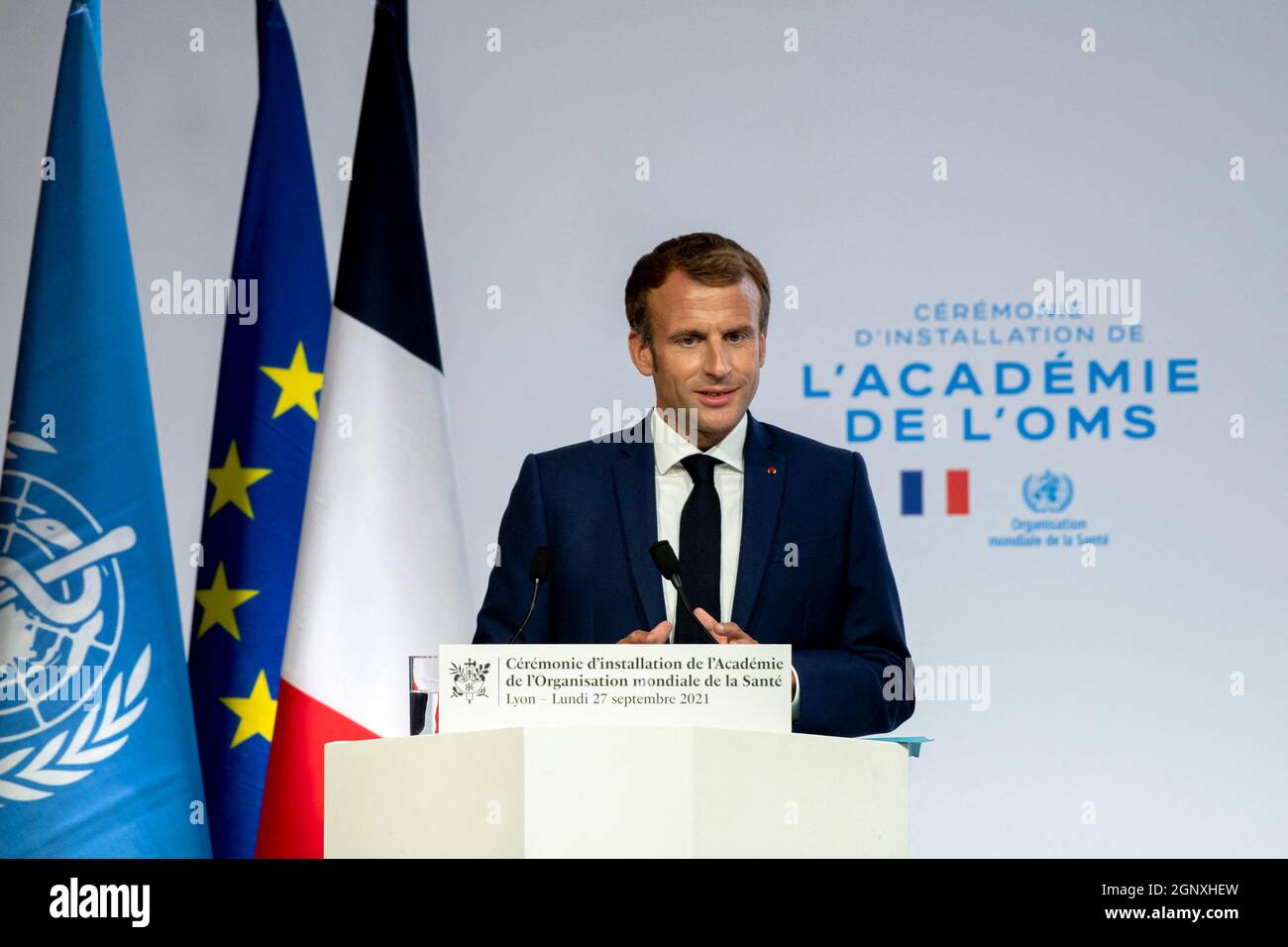
France’s Macron Hosts One Health Summit in Lyon, Defying Global Leadership Apathy on Health Equity
In a striking departure from prevailing political apathy toward global health equity, French President Emmanuel Macron convened an international One Health Summit in Lyon last week, signaling a renewed commitment to integrating human, animal, and environmental health strategies. The summit, attended by over 500 delegates from 80 nations including WHO Director-General Tedros Adhanom Ghebreyesus and leading epidemiologists from Imperial College London and the Pasteur Institute, focused on zoonotic spillover prevention, antimicrobial resistance surveillance, and climate-resilient health infrastructure. This initiative emerges against a backdrop of rising pandemic risk, with the World Health Organization estimating that 75% of emerging infectious diseases originate in animals, and spillover events increasing by nearly 5% annually due to deforestation and wildlife trade.
Key Clinical Takeaways:
- The Lyon Summit established a binding framework for real-time genomic surveillance of zoonotic pathogens across 20 high-risk regions in Africa and Southeast Asia.
- France pledged €300 million over five years to support the WHO Hub for Pandemic and Epidemic Intelligence, with funds allocated to strengthen laboratory capacity in low-income countries.
- Experts emphasized that One Health implementation could reduce zoonotic outbreak frequency by up to 40% by 2030 through coordinated veterinary-physician reporting systems.
The core problem addressed at the summit remains the fragmented approach to health security, where human medicine, veterinary science, and environmental policy operate in silos despite shared pathogen risks. This disconnect was starkly illustrated during the 2022-2023 mpox outbreak, where delayed veterinary surveillance in Central Africa hindered early detection, and during the ongoing H5N1 avian influenza epizootic, which has led to the culling of over 200 million poultry globally since 2021 and caused sporadic human infections with a case fatality rate exceeding 50%. Such events underscore the urgent necessitate for integrated diagnostics and cross-sectoral data sharing—gaps that persist even in high-income countries with advanced healthcare systems.
Macron’s initiative draws directly from the 2021 report of the One Health High-Level Expert Panel (OHHLEP), convened by FAO, OIE, UNEP, and WHO, which defined One Health as “an integrated, unifying approach that aims to sustainably balance and optimize the health of people, animals, and ecosystems.” The Lyon Summit operationalized this vision by launching the Global One Health Intelligence Network (GOHIN), a pathogen-agnostic surveillance platform designed to aggregate wildlife trade data, livestock morbidity reports, and human syndromic surveillance using AI-driven anomaly detection. According to a longitudinal study published in The Lancet Planetary Health, similar integrated systems in Thailand and Vietnam reduced zoonotic spillover detection time from weeks to under 48 hours, enabling faster public health responses.
“The true power of One Health lies not in new technology, but in breaking down institutional barriers—having a veterinarian’s report on unusual poultry mortality trigger an immediate alert in the human health system,” said Dr. Sophie Georges, lead epidemiologist at the École Nationale Vétérinaire de Toulouse and OHHLEP member. “We’ve modeled scenarios where this linkage alone could have contained early SARS-CoV-2 clusters.”
Funding transparency was a central theme, with Macron announcing that France’s €300 million commitment would be channeled through the French National Research Agency (ANR) and implemented via bilateral agreements with ministries of health and agriculture in partner nations. Additional support came from the Bill & Melinda Gates Foundation, which pledged $100 million to strengthen diagnostic networks in East Africa, and the European Union’s Horizon Europe program, which allocated €150 million for One Health research under its Global Health EDCTP3 initiative. These investments aim to address a critical gap: current global spending on pandemic prevention remains under $4 billion annually, far below the estimated $30 billion needed yearly to achieve meaningful risk reduction, according to the G20 Joint Finance and Health Task Force.
For clinicians and public health officials seeking to operationalize One Health principles at the local level, integrated diagnostic pathways are essential. Patients presenting with unexplained febrile illnesses or respiratory symptoms—particularly those with occupational exposure to livestock or wildlife—benefit from coordinated evaluation that includes zoonotic PCR panels and environmental exposure histories. In such cases, timely consultation with specialists trained in infectious disease ecology can prevent diagnostic delays. It is recommended to engage with vetted infectious disease specialists who collaborate closely with veterinary public health units to interpret atypical presentations.
Meanwhile, healthcare systems aiming to strengthen surveillance infrastructure require reliable partners in diagnostic innovation and regulatory compliance. Laboratories implementing multiplex pathogen panels or next-generation sequencing for zoonotic threat detection must navigate complex biosafety and data governance frameworks. To ensure adherence to evolving WHO and CDC guidelines on specimen sharing and genomic data release, institutions often retain specialized counsel. Forward-thinking networks are increasingly turning to healthcare compliance attorneys with expertise in international health regulations to build resilient, legally sound One Health reporting systems.
The editorial trajectory of this movement hinges on scalability and sustainability. While political will—exemplified by Macron’s Lyon Summit—provides the necessary catalyst, lasting impact depends on embedding One Health into routine clinical workflows, veterinary practice, and land-use policy. As Dr. Georges cautioned, “Technology and funding are enablers, but the real test is whether a rural clinic in Burkina Faso can instantly share an anomalous animal health signal with a district hospital 200 kilometers away—and trigger a coordinated response.” Achieving that vision demands not just investment, but sustained cross-sectoral accountability—a challenge the global health community must meet with the same rigor applied to clinical trials.
*Disclaimer: The information provided in this article is for educational and scientific communication purposes only and does not constitute medical advice. Always consult with a qualified healthcare provider regarding any medical condition, diagnosis, or treatment plan.*