France Seeks UN Security Council Meeting Over Myanmar Rejection of ICJ Ruling
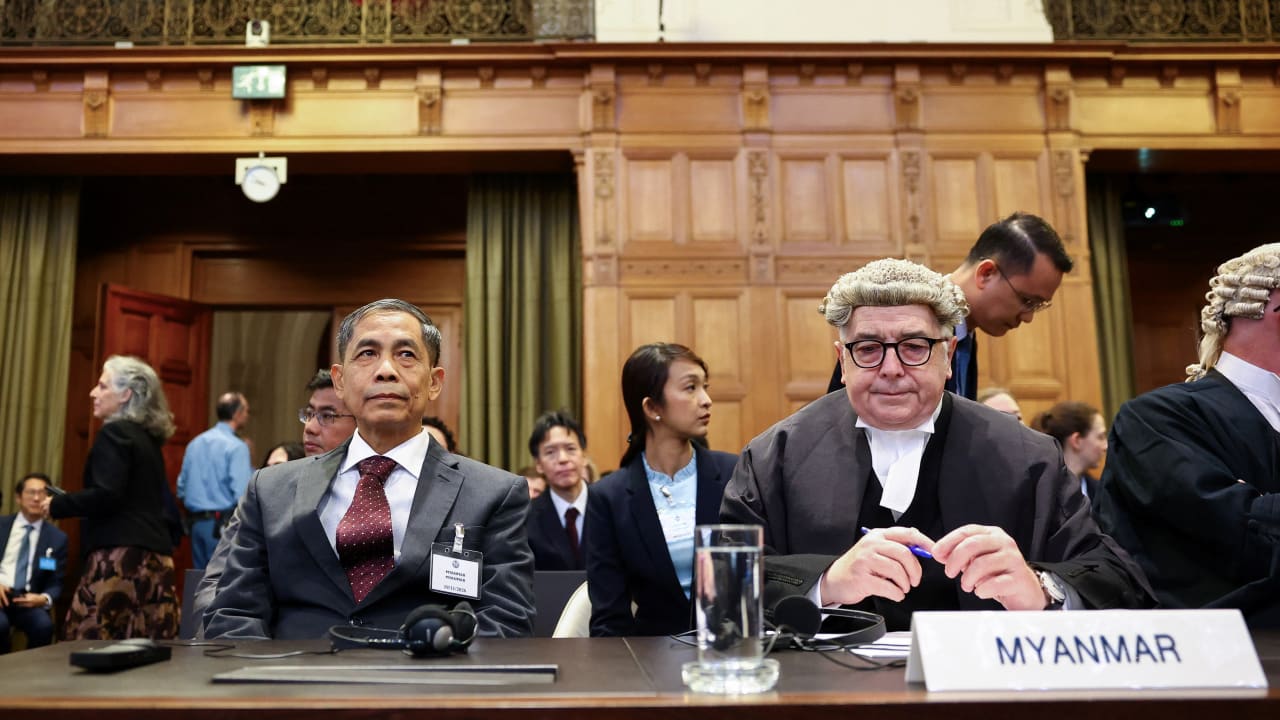
The International Court of Justice ruled Thursday that Myanmar committed genocide against the Rohingya minority, marking the first time the United Nations’ top court has held a state accountable for such a crime in its 80-year history.
France is now seeking a meeting of the UN Security Council to address Myanmar’s rejection of the decision, according to The Jerusalem Post. The landmark 9-6 verdict follows a seven-year legal battle initiated by The Gambia, which accused the Myanmar military of systematic atrocities during a 2017 crackdown in Rakhine State.
“The judgment recognises the immense suffering inflicted on the Rohingya, including killings of members of the group, causing serious bodily and mental harm, and imposing measures intended to prevent births within the group,” the Department of International Relations and Cooperation said in a statement.
Calling a genocide a genocide isn’t just about accountability, it’s about prevention. Choosing not to call a genocide a genocide isn’t just an act of cowardice, it’s an act of permission.https://t.co/8zAKky6mdz
While the International Court of Justice ruling is final and binding, the court lacks independent enforcement powers. Its orders must be implemented through the UN Security Council, where political dynamics often dictate whether a verdict results in tangible international action.
Myanmar disputes the judicial findings
Myanmar’s government dismissed the ruling as unfair, News24 reported. The country’s presidential spokeswoman argued that military operations were directed at countering insurgents rather than targeting a specific ethnic group.
MULTIMEDIA: View photos and videos of the reading of the #ICJ Judgment in the case concerning Application of the Convention on the Prevention and Punishment of the Crime of Genocide (The #Gambia v. #Myanmar: 11 States intervening).https://t.co/oRTwbZIESg pic.twitter.com/y4LqB5ORfv
The ICJ rejected these defenses, finding no evidence that Myanmar’s security forces distinguished between civilians and alleged fighters during the clearance operations. The court determined that the “only reasonable inference” from the systematic destruction of Rohingya villages was an intent to destroy the population, News24 reported.
China expressed concerns regarding “judicial overreach” following the decision, according to Jacaranda FM. This stance comes as Myanmar’s current leadership, led by President Min Aung Hlaing, faces increasing international isolation following the 2021 coup.
LEARN MORE: The full text of the #ICJ Judgment in the case concerning Application of the Convention on the Prevention and Punishment of the Crime of Genocide (The #Gambia v. #Myanmar: 11 States intervening).https://t.co/IEAfHOc2Te pic.twitter.com/Ny8sCWLU9P
Verdict creates legal roadmap for other genocide cases
The decision establishes a critical legal roadmap for other pending genocide cases. Al Jazeera noted that the verdict provides South Africa with a clearer path in its own ongoing case against Israel regarding the conflict in Gaza.
Legal experts suggest the ruling changes how “intent” is proven in international law. By accepting evidence beyond explicit written orders from high-ranking officials, the court has lowered the barrier for establishing state-led genocidal intent, Al Jazeera reported.
I welcome today’s @CIJ_ICJ judgment in The Gambia v. Myanmar case, a powerful recognition of the Rohingya victims of genocide. It is binding, final & without appeal. The judgment is a demonstration of international justice & a reaffirmation that impunity for such horrific acts… pic.twitter.com/s78LKpGwoC
The case also highlights the growing role of third-party states in enforcing the Genocide Convention.
Historical developments in the Rohingya case
| Date | Event |
|---|---|
| November 2019 | The Gambia formally instituted proceedings against Myanmar at the ICJ. |
| January 2020 | The ICJ issued an order regarding provisional measures for the Rohingya. |
| The ICJ ruled Myanmar guilty of genocide in a 9-6 decision. |
Controversy over arms exports to Myanmar
The ruling has reignited scrutiny over the responsibilities of states that continue to trade with Myanmar. The Southern Africa Litigation Centre (Salc) has called for a criminal investigation into South Africa’s authorization of arms exports to Myanmar between 2017 and 2021, Daily Maverick reported.

According to Daily Maverick, these exports included communication equipment and transceivers. Rights groups argue that under the Genocide Convention, states have a mandatory obligation to prevent genocide, which includes ceasing arms transfers to those committing such acts.
“You cannot prevent a genocide by arming the people committing it,” Atilla Kisla of the Southern Africa Litigation Centre told Daily Maverick.
The South African government stated it would carefully study the judgment to assess its implications for future cases under the convention, The Citizen reported.
The legal victory offers little immediate relief to the hundreds of thousands of Rohingya currently living in Bangladesh. CNN reported that many survivors remain in overcrowded, dangerous camps with little hope of returning to their homes in Rakhine State.
The court has ordered Myanmar to ensure safe passage for refugees and to provide compensation for damages, News24 reported. However, the ongoing internal conflict in Myanmar, which has killed more than 100,000 people since the 2021 coup, complicates any efforts at repatriation, News24 reported.
The Gambia, located in West Africa, is the smallest country in continental Africa, encompassing an area of 11,300 square kilometres. Its territory is uniquely defined by the Gambia River, which flows through the center of the country and empties into the Atlantic Ocean.
The nation is also one of only two countries that officially include the definite article “the” in their short-form English names to distinguish them from other nations, a request made by the government shortly before the country gained independence in 1965.
Whether the UN Security Council will act to enforce the court’s orders remains the central question for the international community.