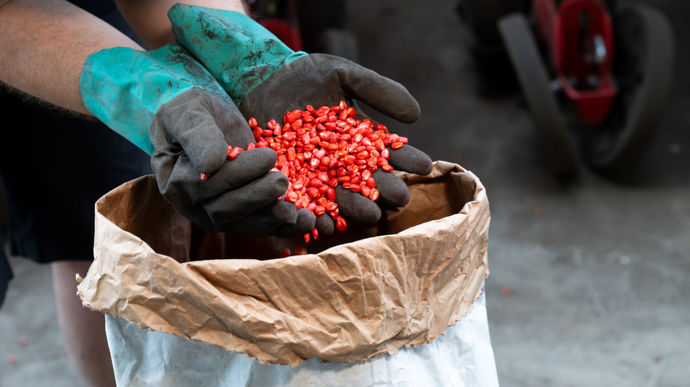
France remains Europe’s leading corn seed producer despite export dips
<>
France stands as Europe’s leading corn seed producer, cultivating 63 000 hectares in 2026, yet the nation’s dominant export sector faces mounting pressure.
Production Realities and European Market Shifts
Total corn seed multiplication across the European Union dropped to 114 000 ha in 2026, a sharp decline from 168 000 ha in 2023. Romania and Hungary follow France as the next largest producers in the bloc, with 18 000 ha and 15 000 ha respectively this year.
Large seed inventories combined with reduced cultivation surfaces over the past four years triggered the downturn. Hungary and Romania bore the brunt of this contraction, according to Martin Gomez, international promotion manager at the National Federation of Maize and Sorghum Seed Production (FNPSMS).
France historically directs over 60 percent of its corn seed production toward export markets, mostly within the European Union, generating an annual turnover of 500 million euros. The country remains the world’s leading exporter of corn seed, shipping 148 000 tonnes during the 2024-2025 period.
Shrinking European Outlets and Regulatory Pressures
Despite global leadership, French export volumes have declined since the 2022-2023 season. Sales to Russia dropped from an annual average of 6 600 tonnes between 2021 and 2023 down to 2 100 tonnes over the 2023-2025 period. Ukrainian destinations saw a similar retreat, with exports sliding from 2 400 tonnes to 1 200 tonnes.
Germany, which sources 50 percent of its corn seed imports from France, reduced its intake from 45 600 tonnes down to 40 000 tonnes. Regulatory shifts explain part of this dip. Germany’s biogas sector has cooled following new legal limits on incorporating whole-crop corn into anaerobic digesters, reducing the acreage dedicated to biogas-bound corn and undercutting French export volumes.
Poland remains the second-largest buyer of French corn seed, purchasing roughly 20 000 tonnes annually. At the same time, Polish domestic production has expanded significantly since the early 2000s, reaching two million hectares of cultivated corn. This domestic growth is supported by PZPK, an organization uniting corn and corn seed producers alongside 18 foreign and two domestic breeding enterprises. PZPK collaborates with the FNPSMS in a European consortium implementing the SustainableSeedEU program, which promotes European corn and sorghum varieties across France, Poland, Germany, Romania, and Hungary.
Pivot Toward Central Asia
To offset European stagnation, the French sector is looking east. A parallel European initiative named MaïzePromotionKU unites the FNPSMS and PZPK to promote European corn varieties in Kazakhstan and Uzbekistan. Large-scale farming enterprises in both countries are expanding their acreage and require high-quality planting material, currently absorbing roughly 3 600 tonnes of French corn seed.

Kazakhstan, for instance, aims to boost corn acreage under a national plan designed to secure self-sufficiency in dairy products.
French genetic profiles in forage corn align closely with regional requirements, particularly in northern Kazakhstan, where early and semi-early ripening varieties are cultivated. To capitalize on this demand, the FNPSMS plans an upcoming study tour to Kazakhstan to showcase French seed performance and agronomic practices.
Commercial operators are moving quickly to establish a permanent footprint in the region. Some French seed companies already maintain local subsidiaries or conduct selection trials to adapt breeding material to local conditions. François Harambat, strategic marketing director at Mas Seeds, notes that the company maintains active commercial operations in Central Asia with plans to open a dedicated subsidiary in Kazakhstan.
The Rise of Ukrainian Independence
Ukraine has outpaced both Hungary and Romania in seed production over the past three to four campaigns, estimating 28 000 ha dedicated to seed in 2026. Domestic producers have organized an efficient local supply chain, reinforcing the country’s drive toward agricultural independence, as noted by Pierre Guillaumin of the FNPSMS economics and international department.