
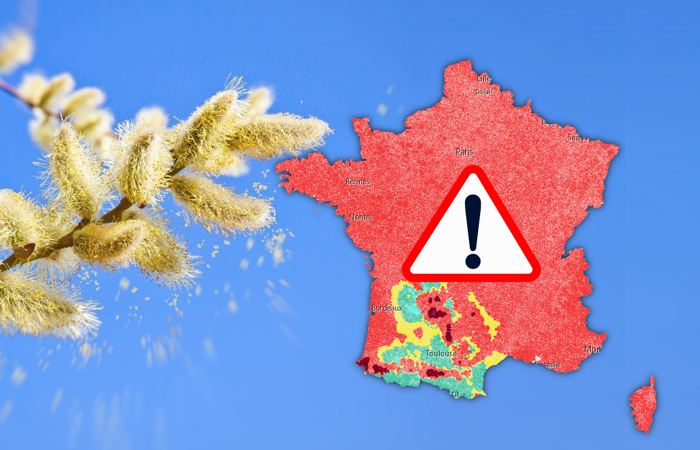
France is bracing for an early and potentially severe allergy season, triggered by unseasonably warm temperatures and abundant rainfall. Pollen levels are expected to surge this week, with particularly high concentrations of alder and cypress pollen reported across much of the country.
The recent mild weather, coupled with saturated ground from weeks of rain, is causing vegetation to bloom prematurely. Temperatures are forecast to reach 20°C in northern regions and potentially 25°C in southwestern Aquitaine on Tuesday and Wednesday, February 24th and 25th, 2026. These conditions are creating an ideal environment for pollen dispersal, according to meteorological reports.
Atmo-France, the national air quality monitoring agency, has issued an “elevated” allergy risk warning for most regions of France, effective Tuesday, February 23rd, 2026. While some areas in the southwest may experience slightly lower risk levels, the overall outlook is concerning for allergy sufferers. The elevated risk is expected to persist through Thursday before diminishing somewhat on Friday with the arrival of a rainy front.
Cypress pollen is currently posing a significant threat, particularly in Mediterranean regions, where concentrations are incredibly high. Elevated levels are also reported in the southwest, with moderate levels elsewhere. Cypress pollen is known for its potent allergenic properties, often causing rhinitis and conjunctivitis.
Alongside cypress, alder pollen is also a major concern nationwide. Released from catkins – structures resembling those of hazel trees – alder pollen is less visually obvious but can still trigger significant allergic reactions, including rhinitis and asthma attacks. Current concentrations are high, leading to a substantial risk of allergic reactions across most of France.
According to a pollen map published on February 23rd, 2026, several departments are experiencing elevated levels of alder pollen, including Ain (01), Aisne (02), Allier (03), Alpes-de-Haute-Provence (04), Hautes-Alpes (05), Alpes-Maritimes (06), and Ardèche (07), among many others. Graminées (grass) pollen levels are currently reported as low in 18 departments.
Allergy sufferers are strongly advised to commence or resume their allergy treatment and consult with their doctor or allergologist. With the return of sunshine and mild temperatures, more people are expected to spend time outdoors, increasing their exposure to pollen.
