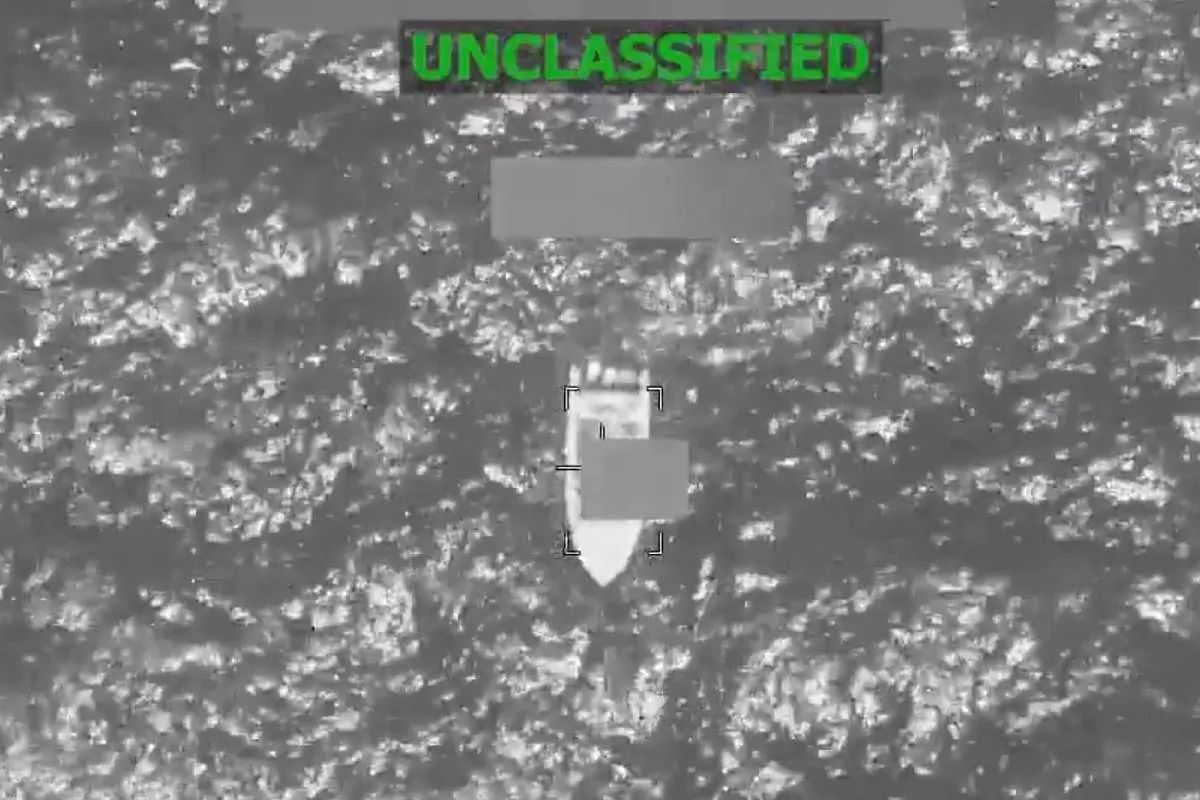
Four Male Narcoterrorists Killed in Operation
United States military forces killed four male narcoterrorists during a high-stakes interception of a vessel in the Pacific Ocean. This operation is part of an escalating U.S. Strategy to dismantle transnational criminal networks and target the Venezuelan “narco-dictatorship,” coinciding with the launch of a broader regional military coalition against drug cartels.
What we have is no longer a matter of simple maritime policing. The death of these four individuals marks a definitive shift in how the United States is projecting power in the Western Hemisphere. We are witnessing the transition from law-enforcement-led interdictions to direct military engagements aimed at the structural collapse of criminal organizations.
The operation in the Pacific does not exist in a vacuum. It is a tactical extension of a much larger, more aggressive geopolitical pivot. By labeling these targets as “narcoterrorists,” the U.S. Government is signaling that it views the flow of narcotics not merely as a crime, but as a security threat equivalent to terrorism. This semantic shift provides the legal and operational justification for using military assets—including lethal force—in international and regional waters.
The Architecture of the Americas Shield Coalition
The Pacific strike is the first tangible result of the strategic framework established at the Americas Shield Summit in Miami. During this summit, President Trump announced the creation of a dedicated military anti-cartel coalition. This coalition is designed to synchronize intelligence and kinetic operations across borders, treating the cartel networks as enemy combatants rather than traditional criminal suspects.
This approach creates a volatile environment for regional stability. When military forces operate in the gray zones of international law, the risk of collateral damage and diplomatic friction increases exponentially. For businesses and diplomatic entities operating in these corridors, the predictability of regional law has vanished.
Navigating this new landscape of “military-led policing” requires a level of expertise that goes beyond standard corporate security. Organizations are now relying on specialized geopolitical risk consultants to map out safe zones and anticipate the ripple effects of U.S. Military movements in the Pacific and Caribbean.
“Four male narcoterrorists died during this operation,” the official communiqué detailed, confirming the lethal outcome of the Pacific interception.
The Venezuelan Connection and the $50 Million Catalyst
The focus on “narcoterrorism” is inextricably linked to the U.S. Government’s stance on the Venezuelan administration. The U.S. Has explicitly targeted what it describes as a “narco-dictatorship,” a campaign that has recently intensified with the destruction of two narco-boats and the killing of five individuals in a separate operation targeting the Venezuelan regime.
Adding fuel to this fire is the financial incentive. President Trump has doubled the reward for the arrest of Nicolás Maduro to $50 million . This bounty transforms the hunt for Maduro from a diplomatic effort into a high-stakes intelligence operation, increasing the likelihood of covert actions and military interventions in the region.
The implication is clear: the U.S. Is no longer seeking a negotiated transition in Venezuela. Instead, it is treating the leadership of the country as the apex of a criminal enterprise.
Regional Contagion: From the Pacific to Ecuador
The aggression is not limited to the open ocean or the Venezuelan border. The U.S. Has already revealed the deployment of military operations within Ecuador to target “terrorist organizations” . This demonstrates a pattern of “geographic agility,” where U.S. Forces are moving rapidly between different jurisdictions to strike at the various nodes of the narco-network.
For the citizens and businesses in these regions, this creates a legal nightmare. When military operations occur on sovereign soil or in contested waters, the lines between criminal law and the laws of war blur. This ambiguity often leaves local entities caught in the crossfire of international sanctions and military mandates.
As these operations expand, the demand for specialized legal protection becomes paramount. Many are now seeking international maritime lawyers and defense attorneys who specialize in cross-border jurisdictional disputes to ensure their assets and operations are not inadvertently swept up in the broad net of “anti-terrorist” military actions.
The Pacific strike is a symptom of a larger, more aggressive doctrine. We are moving toward a period where the boundary between foreign policy and military policing has effectively disappeared.
The question is no longer whether the U.S. Will intervene, but where the next strike will land. In an era of $50 million bounties and multi-national military coalitions, the only certainty is instability. Those operating in the Americas must now prepare for a world where the “war on drugs” is fought not with badges and warrants, but with naval intercepts and tactical strikes. Finding verified professionals through the World Today News Directory who understand the intersection of international law and military risk is no longer a luxury—it is a survival strategy.