
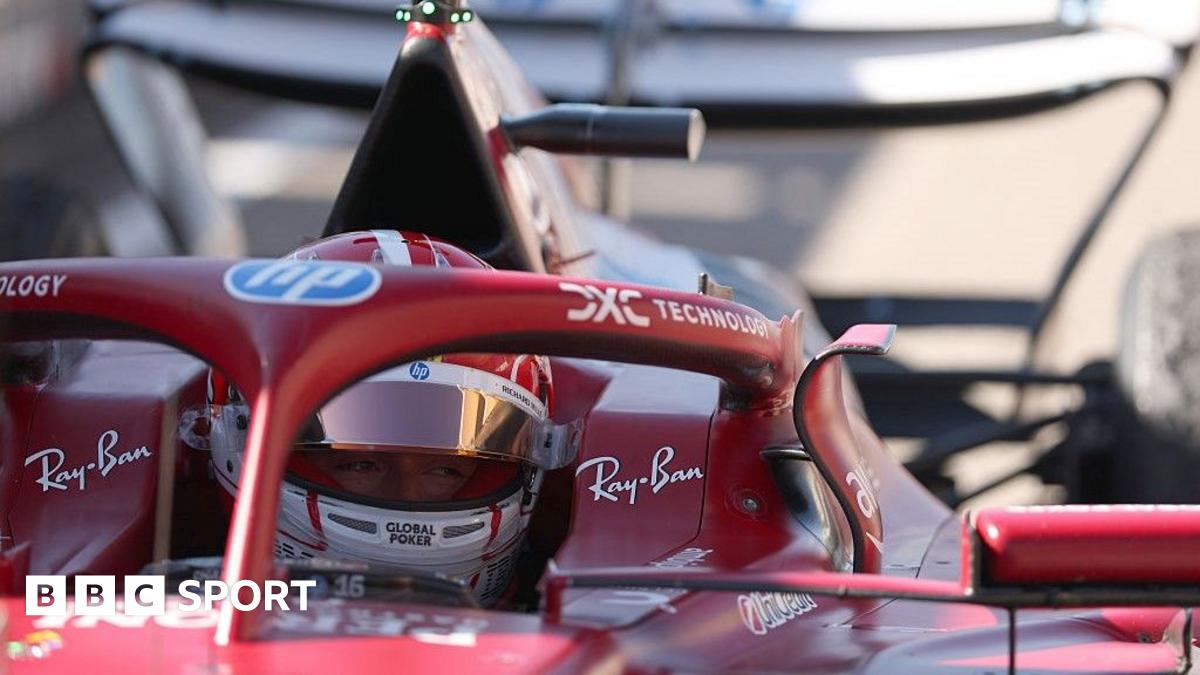
The Halo: Formula 1’s Life-Saving Innovation
The halo, a distinctive structure arching over the cockpit of modern Formula 1 cars, has become an instantly recognizable feature of the sport. Introduced in 2018, this seemingly simple addition represents a monumental leap forward in driver safety, a testament to the relentless pursuit of minimizing risk in one of the world’s most hazardous sports. While initially met with resistance from some corners of the racing world, the halo’s effectiveness in protecting drivers from serious injury adn even death has proven undeniable, solidifying its place as a mandatory safety feature across all FIA Formula series.
A Response to Increasing Safety Concerns
For decades,Formula 1 has been synonymous with speed,skill,and inherent danger. Despite continuous advancements in car design and circuit safety, the risk of severe head injuries remained a persistent concern. open-cockpit designs, while offering drivers an unobstructed view, left them vulnerable to impacts from debris, colliding vehicles, and even trackside obstacles. Several high-profile accidents, including the near-fatal crash of Felipe Massa at the 2009 Hungarian Grand Prix [https://www.formula1.com/en/news/2009/07/massa-injured-in-qualifying-accident.html], underscored the need for enhanced head protection.
The FIA, the governing body of formula 1, began exploring various solutions in the early 2010s. Concepts like closed cockpits and roll cages were considered,but each presented important drawbacks. Closed cockpits restricted visibility and elaborate extrication procedures in the event of a crash. Conventional roll cages added weight and altered the car’s center of gravity, potentially impacting performance.
The Growth and Design of the Halo
The halo, officially known as the Halo Head Protection System, emerged as the most viable solution. Developed by the Mercedes-AMG Petronas formula One Team, led by Harry Barlow and initially conceived by Professor Sid Watkins, the halo consists of a curved titanium bar positioned in front of the driver’s head, supported by a central pillar that attaches to the car’s chassis. [https://www.fia.com/news/halo-five-years-saving-lives]
The design underwent extensive testing and refinement to ensure it met stringent safety requirements without compromising the basic principles of Formula 1 racing. Key considerations included:
* Strength and Durability: The halo is constructed from titanium – a material renowned for its remarkable strength-to-weight ratio. It’s engineered to withstand immense forces, capable of supporting the weight of a London double-decker bus, approximately 13 tonnes.
* Deflection and impact Absorption: The halo’s primary function is to deflect large objects away from the driver’s head and absorb impact energy during a crash. It acts as a protective shield, significantly reducing the risk of head injuries from flying debris or direct impacts.
* Visibility: Engineers prioritized minimizing obstruction to the driver’s field of vision. The halo’s curved shape and strategic positioning were carefully calculated to provide a balance between protection and visibility.
* Extrication: The design allows for relatively rapid and efficient driver extrication in the event of an accident, a critical factor in emergency situations.
Controversies and Acceptance
Despite its clear safety benefits, the halo’s introduction was not without controversy. Some drivers,team principals,and fans initially criticized its aesthetics,arguing that it detracted from the open-wheel racing tradition and obscured the driver’s connection with the fans. Concerns were also raised about potential visibility issues and the impact on the car’s overall design.
However, the halo’s effectiveness quickly silenced many critics. Several high-profile incidents in the years following its introduction demonstrated its life-saving potential.
* 2018 french Grand Prix: Charles Leclerc was narrowly avoided a serious injury when Fernando Alonso’s car went airborne and collided with the halo of Leclerc’s sauber. [https://www.autosport.com/f1/news/leclerc-halo-saved-my-life-in-french-gp-crash-1374411/]
* 2021 azerbaijan Grand Prix: Max Verstappen’s car landed on George Russell’s halo after a high-speed crash, preventing a potentially devastating impact.
* 2023 Dutch Grand Prix: Guanyu Zhou’s car flipped and rolled during a chaotic start, with the halo preventing his head from impacting the track.
These incidents, among others, provided compelling evidence of the halo’s ability to protect drivers in a variety of crash scenarios. The FIA made the halo mandatory across all Formula 1, Formula 2, Formula 3, and Formula E series in 2018, a decision that has undoubtedly saved lives and prevented serious injuries.
The Halo’s Ongoing Evolution and Future
The halo is not a static design. The FIA and Formula 1 teams continue to refine and improve the system based on data gathered from accidents and ongoing research. Current areas of focus include:
* Halo Strength and Material Science: Exploring even stronger and lighter materials to further enhance the halo’s protective capabilities.
* Aerodynamic Integration: Optimizing the halo’s
