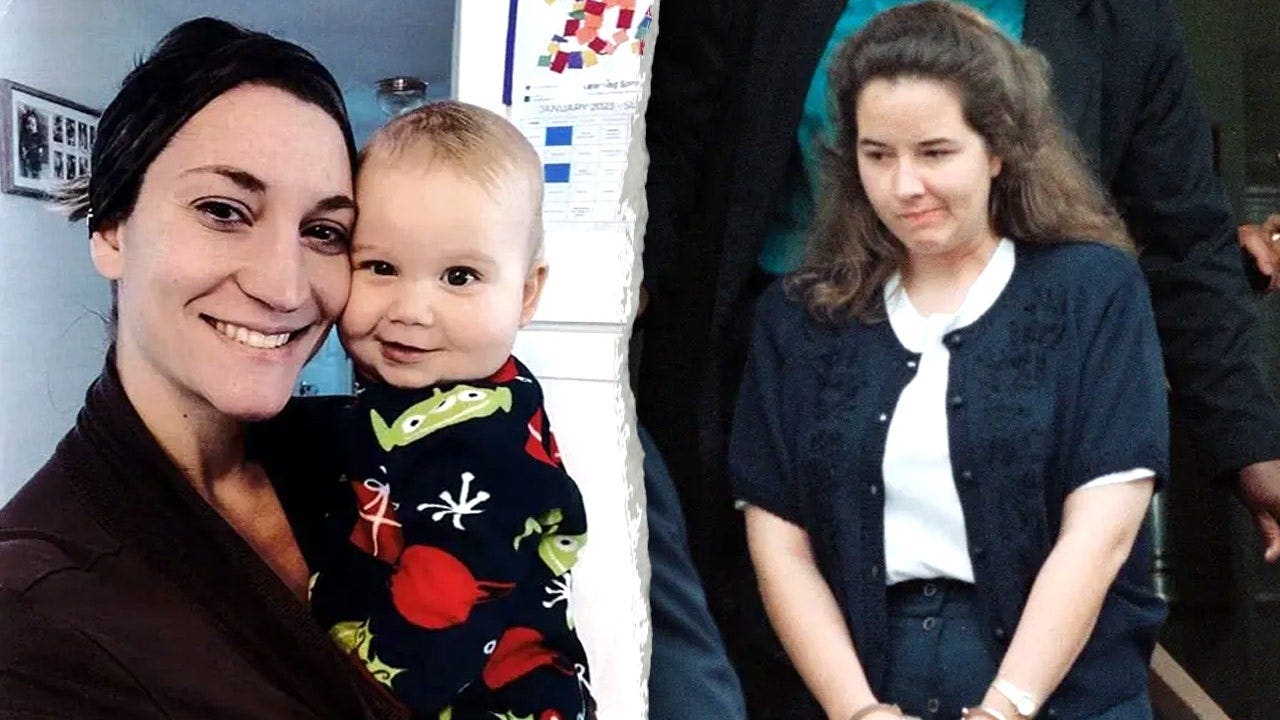
Former Susan Smith Prosecutor: Women Jurors May Be Less Sympathetic to Lindsay Clancy
As the murder trial of Lindsay Clancy nears its conclusion in Plymouth County, Massachusetts, legal observers are scrutinizing the potential impact of the jury’s composition on the verdict. With testimony expected to wrap on Wednesday, prosecutors and analysts are debating whether the panel’s gender balance will influence their interpretation of the defendant’s postpartum psychosis defense.
The Jury Dynamic: Empathy vs. Accountability
The trial, which has drawn national attention to the intersection of mental health and criminal responsibility, features a jury of 12 women and six men, though only 12 will deliberate. Tommy Pope, a South Carolina lawmaker and former prosecutor who secured a conviction in the high-profile case of Susan Smith, suggests that the presence of women on the jury may not automatically favor the defense.
According to Pope, personal experience with motherhood and mental health struggles could lead some jurors to hold the defendant to a higher standard of accountability. “For the most part, the women were the ones that said, you know, when I had my kids, I went through hell, or I went through depression, or I battled this, or I was overwhelmed. But they’re the most important thing in my life,” Pope told Fox News Digital. He noted that women who have successfully navigated their own postpartum struggles might find it harder to empathize with the actions Clancy is accused of taking.
The defense argues that Clancy was experiencing severe postpartum psychosis at the time of the January 2023 incident, during which her children—Cora, Dawson, and Callan—were strangled in their Duxbury home. Expert testimony from the defense, including that of forensic psychiatrist Dr. Phillip Resnick, characterized Clancy as being in a “dream state” and acting under “command hallucinations.”
Conflicting Psychiatric Testimony
The courtroom has become a battleground for competing psychiatric theories. Prosecutors have called rebuttal witnesses to challenge the claim that Clancy lacked the mental capacity to understand her actions. Dr. Avram Mack, a psychiatrist testifying for the prosecution, noted that Clancy reported a male voice commanding her to “kill the kids” as her “last chance,” a detail he found significant in evaluating her state of mind.

Furthermore, prosecution witness Dr. Kirk Heilbrun testified that even individuals experiencing command hallucinations can, in some instances, conform their conduct to the law. This contrasts with the defense’s assertion that Clancy was essentially a “puppet” with no control over her own body. The prosecution has also highlighted that Clancy had not previously reported these auditory hallucinations to the various medical professionals she consulted prior to the killings.
The Impact of Physical Condition
Beyond the mental health arguments, the defendant’s physical state adds another layer to the jury’s decision-making process. Since the incident, Clancy has been paralyzed, a condition the defense and prosecution have framed differently. Pope observes that some jurors, particularly men, might perceive her physical disability as a form of suffering that already serves as a consequence for her actions.

“You have somebody that’s now paralyzed, which obviously doesn’t equate to killing three children,” Pope said. “But some jurors… would think, well, she’s already punished. She’s in a wheelchair. So in a strange twist, it could almost be the opposite.”
Legal Precedents and Public Discourse
The comparison to the Susan Smith case—where a mother was convicted of murder after letting her car roll into a lake with her sons inside—highlights the enduring difficulty of balancing empathy with the law in child-murder cases. While the Clancy defense team emphasizes the role of a “cocktail of 13 powerful psychiatric medications,” the prosecution maintains that the methodical nature of the killings points to a conscious awareness of right and wrong.
The trial has ignited a broader conversation about the systemic gaps in mental health support for new mothers. Outside the courtroom, supporters have gathered to demand better funding and education regarding postpartum conditions, highlighting a societal pressure to bridge the gap between clinical reality and legal judgment.
The jury’s final decision will ultimately rest on whether they believe the defense’s portrayal of a woman overtaken by an external force or the prosecution’s argument of a calculated act. As the proceedings conclude, the courtroom remains a stark reminder that the law often struggles to quantify the unseen toll of mental collapse.