
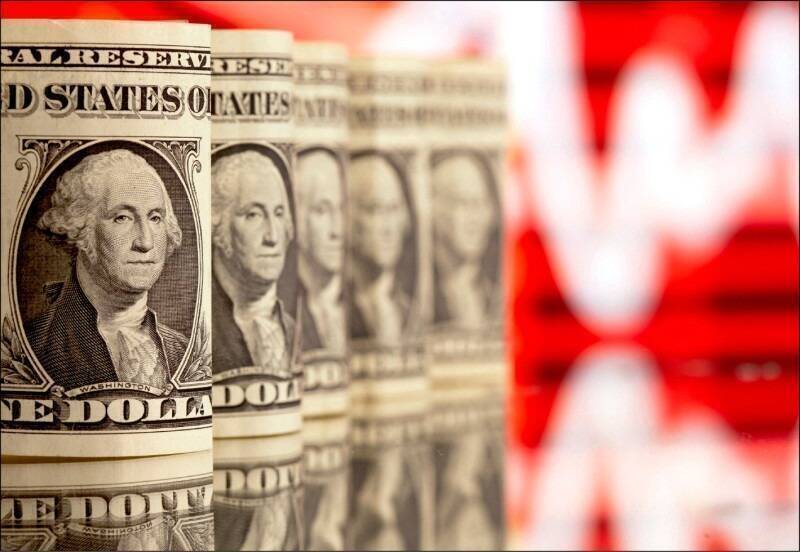
Foreign US Treasury Holdings Hit Record High as China Reduces Position
Foreign holdings of U.S. Treasuries reached record highs in February 2026, driven by aggressive accumulation from Japan and the UK. Conversely, China continued its decade-long divestment, slashing holdings to $693.3 billion to mitigate volatility and pivot toward gold amidst escalating geopolitical tensions and shifting U.S. Trade policies.
This divergence in sovereign appetite creates a complex liquidity puzzle for the global financial system. While the U.S. Remains the primary global safe haven, the structural exit of the world’s second-largest economy signals a fragmented fiscal future. For institutional investors and multinational corporations, this volatility necessitates high-level risk management consultancy to hedge against currency fluctuations and sovereign debt instability.
The Great Chinese Divestment: A Decade in the Making
The numbers are stark. China’s Treasury holdings have plummeted to levels not seen since 2008. This isn’t a sudden panic; This proves a calculated, strategic retreat. Since 2013, Beijing has quietly halved its exposure to U.S. Government debt, signaling a fundamental shift in how the Chinese state views the dollar as a reserve asset.
The catalyst for the latest dip—reducing holdings by $1.1 billion in February alone to reach the $693.3 billion mark—stems from internal regulatory anxiety. Chinese regulators are increasingly wary of the “extreme volatility risk” associated with holding massive amounts of U.S. Debt. By guiding banks to strictly control their positions, Beijing is effectively insulating its financial system from potential shocks originating in Washington.

China isn’t just selling; it is swapping. The capital is rotating into hard assets, specifically gold, as a hedge against the weaponization of the dollar and the instability of U.S. Fiscal policy. This rotation transforms the balance sheet from a credit-based dependency to a commodity-based security model.
“They have been gradually reducing their holdings of government bonds and investing in other asset classes,” notes Bob Michele, Chief Investment Officer and Global Head of Fixed Income at J.P. Morgan Asset Management. “Currently, I only see interest in U.S. Treasuries.”
This strategic pivot leaves a void that requires sophisticated asset management firms to navigate the transition from traditional sovereign bonds to diversified alternative reserves.
The Global Counter-Trend: Japan and the UK Step Up
While Beijing exits, other players are doubling down. The broader market data reveals a striking contradiction: overall foreign holdings of U.S. Treasuries are actually hitting record peaks. The vacuum left by China is being filled by a surge in demand from traditional allies, most notably Japan and the United Kingdom.
The scale of this appetite is evident in the capital flows. In February 2026, the U.S. Saw a massive international capital net inflow of $184.5 billion. This tidal wave of liquidity suggests that for much of the world, the U.S. Treasury market remains the only game in town for large-scale, liquid capital preservation, regardless of the political noise.
The market’s resilience is evidenced by tight bid-ask spreads and volatility levels that have remained at multi-year lows. New bond auctions continue to find buyers, proving that the “China risk” is currently being absorbed by a global hunger for U.S. Yields.
The Trump Factor and Yield Curve Volatility
The return of Donald Trump to the White House in January 2025 has introduced a layer of unpredictability that the bond market is still pricing in. Threats of renewed tariff wars and erratic geopolitical stances—including public interest in acquiring Greenland—have rattled a subset of investors.
This political friction manifested in a sharp, albeit brief, market reaction. On a recent Monday, Treasuries dipped, sending the 30-year yield climbing by 5 basis points. It was a momentary spike of anxiety, quickly neutralized by a shift in focus toward critical employment reports and the anticipation of further Federal Reserve rate cuts.
The interplay between tariff-induced inflation and the Fed’s desire to lower rates creates a volatile environment for corporate treasury departments. Managing this seesaw requires the expertise of international trade lawyers to navigate the shifting regulatory landscapes and tariff regimes that drive these market swings.
Three Pillars of the Global Capital Rotation
The current shift in Treasury holdings isn’t a random occurrence but a result of three converging macroeconomic forces:

- Sovereign Diversification: China is leading a movement toward “de-dollarization,” replacing liquid U.S. Debt with gold and other non-USD assets to eliminate single-point-of-failure risk in their reserves.
- Monetary Policy Arbitrage: With the Federal Reserve signaling potential rate cuts, global investors (particularly in the UK and Japan) are locking in current yields before the window closes, driving the record-high total holdings.
- Geopolitical Hedging: The use of U.S. Treasuries as a political tool has forced non-aligned nations to reconsider the safety of the “risk-free” asset, leading to a fragmented approach where allies buy and rivals sell.
The paradox is clear: the U.S. Treasury market is simultaneously more popular and more precarious than it has been in a decade.
Looking toward the next fiscal quarters, the central question is whether the “allied” demand from Japan and the UK can indefinitely offset the structural divestment of the East. If the U.S. Continues to alienate its geopolitical rivals through aggressive trade policy, the current liquidity surge may be a temporary bubble rather than a sustainable trend.
For firms operating in this environment, the ability to identify vetted B2B partners for hedging and strategic planning is no longer optional—it is a survival requirement. The World Today News Directory remains the primary resource for connecting enterprises with the specialized consultants and legal experts capable of navigating this new era of fiscal fragmentation.