Foreign Investors Record Historic 10.9 Trillion Yen Buyout of Japanese Stocks in H1
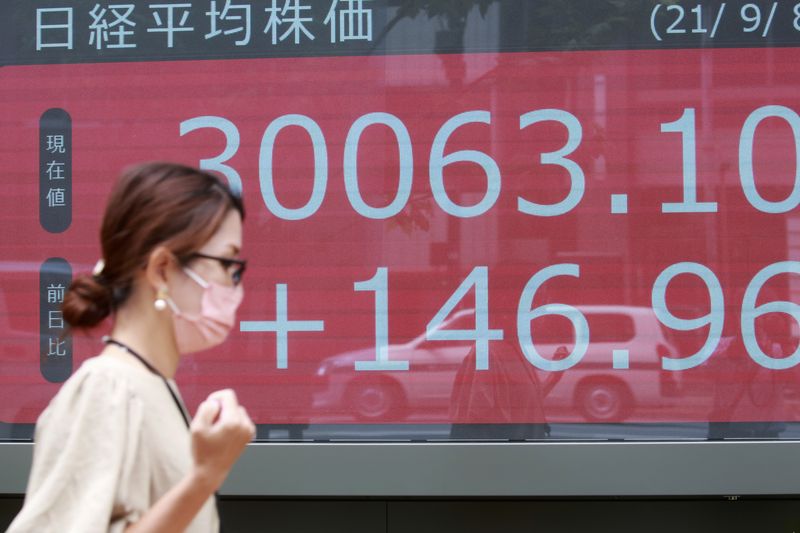
Foreign investors poured 10.9391 trillion yen into Japanese stocks during the first half of the year, which was the highest ever recorded for a half-year period. This capital shift involves a move away from South Korean companies like Samsung Electronics and SK Hynix.
The scale of this migration is unprecedented. Global capital is no longer treating the East Asian tech sector as a monolithic block. Instead, investors are decoupling their strategies, favoring the stability and renewed industrial policy of Tokyo over the volatility currently facing Seoul’s chipmakers.
Why is global capital shifting from Seoul to Tokyo?
The primary driver is a fundamental realignment of the semiconductor supply chain. While South Korea dominates memory chips, Japan has aggressively recaptured the “materials, components, and equipment” (MCE) sector. This structural advantage makes Japanese firms a safer bet for long-term AI infrastructure plays.

Institutional investors are reacting to the “Japan Pivot.” By diversifying away from the concentrated risks of Samsung and SK Hynix, funds are seeking exposure to the broader AI value chain. This includes everything from advanced lithography tools to specialized chemicals required for next-generation chip fabrication.
This shift creates a liquidity vacuum in Seoul. As foreign ownership of Korean blue-chip stocks dips, the pressure on domestic companies to innovate faster increases. For firms caught in this transition, the need for Foreign Direct Investment (FDI) specialists and international tax consultants becomes critical to attract new, non-traditional capital sources.
The movement isn’t just about stocks; it’s about the physical geography of AI. Tokyo and Osaka are seeing a surge in data center investments, fueled by government subsidies and a push for “sovereign AI.”
How does the 10.9391 trillion yen influx impact the regional economy?
The sheer volume of net purchases—the highest ever recorded for a half-year period—is inflating the Nikkei 225 and putting upward pressure on the Japanese yen. This creates a complex feedback loop: as the yen strengthens, Japanese exports become more expensive, but the attractiveness of their equity markets for dollar-based investors remains high due to corporate governance reforms.

In South Korea, the exodus of foreign capital from the “Sam-Nix” (Samsung and Hynix) duo threatens the stability of the KOSPI. When global funds sell off large tranches of these stocks, it triggers a ripple effect across the entire domestic supply chain, from small-scale component manufacturers to logistics providers.
Businesses struggling with this capital flight are increasingly turning to [Corporate Restructuring Advisors] to optimize their balance sheets and maintain investor confidence during periods of high volatility.
Capital Flow Snapshot
- Japan Net Inflow: 10.9391 Trillion Yen (All-time high for a half-year period)
- Primary Targets: AI Infrastructure, Semiconductor Equipment, Robotics
- Primary Exit: South Korean Memory Chip Leaders (Samsung, SK Hynix)
The impact extends to municipal levels. Cities like Kumamoto, where TSMC is expanding its presence, are seeing a localized economic boom. Real estate prices are skyrocketing, and the demand for specialized industrial zoning is outstripping supply.
What are the long-term risks for the semiconductor corridor?
The danger for South Korea is the “innovation gap.” If the capital flight continues, Samsung and SK Hynix may find it more expensive to fund the massive R&D budgets required to compete in High Bandwidth Memory (HBM) and AI accelerators. The cost of capital rises when the buyer’s pool shrinks.
Japan, conversely, faces the risk of an asset bubble. If the 10.9391 trillion yen influx is driven by momentum rather than fundamental productivity gains, a correction could be severe. The Japanese government is attempting to mitigate this by enforcing stricter transparency and governance rules for listed companies.
Navigating these shifting regulatory landscapes requires precision. Many firms are now employing [International Trade Law Firms] to ensure their cross-border investments comply with the tightening export controls imposed by the U.S. and Japan on advanced chip technology.
The geopolitical layer cannot be ignored. The U.S.
This is no longer a simple matter of which company makes the best chip. It is a matter of which country provides the most secure environment for the capital that builds those chips.
As the center of gravity for AI investment moves toward Tokyo, the winners will be those who can bridge the gap between legacy manufacturing and the new AI economy. The current volatility is a signal that the old order of East Asian tech dominance is being rewritten in real-time. Those unable to adapt their financial and legal strategies to this new reality risk being left behind in a landscape where liquidity is the only true currency. Finding verified [Global Investment Strategists] is no longer a luxury for these firms—it is a survival mechanism.