
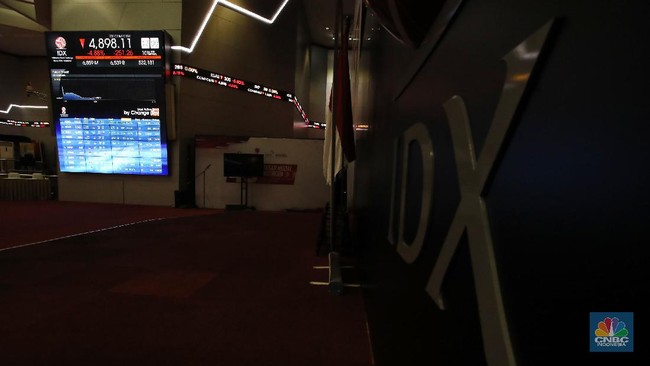
Foreign Investors Net Sell Rp789 Billion Led by BBCA as IHSG Dips
Foreign investors executed a massive Rp789.4 billion ($48.5 million) net sell-off in Jakarta’s Session I on March 27, 2026, triggering a 0.88% correction in the Composite Index (JCI). The exodus targeted blue-chip banking giants—led by Bank Central Asia (BBCA)—even as capital rotated defensively into commodity and energy assets, signaling a sharp recalibration of risk exposure for Q2.
The liquidity event on Friday morning was not merely a technical correction; it represented a fundamental repricing of Indonesian banking assets. When foreign hands release nearly Rp609 billion of Bank Central Asia (BBCA) stock in a single session, the market listens. The benchmark JCI slipped to 7,101, erasing significant market capitalization as 404 stocks retreated against only 242 gainers. This isn’t just noise; it is a signal that institutional capital is seeking yield elsewhere or hedging against regional volatility.
For corporate treasurers and risk managers, this volatility creates an immediate fiscal problem: how to maintain balance sheet stability when your primary valuation anchor—the banking sector—is under siege. The divergence between financial outflows and commodity inflows suggests a sector rotation that requires sophisticated capital allocation strategies. Companies facing liquidity constraints in this environment are increasingly turning to corporate restructuring advisory firms to optimize debt covenants before credit spreads widen further.
Capital Rotation Matrix: The Great Decoupling
The data from Session I reveals a stark dichotomy. While the “Huge Four” banks faced relentless selling pressure, the energy and resources sector acted as a shock absorber. This rotation is consistent with broader emerging market trends where investors flee high-beta financials for tangible asset backing during periods of uncertainty.
| Asset Class | Key Ticker | Net Flow (Session I) | Price Action Impact | Strategic Implication |
|---|---|---|---|---|
| Banking (Outflow) | BBCA | -Rp 609 Billion | -2.0% (Intraday) | Valuation compression; defensive exit. |
| Banking (Outflow) | BBRI | -Rp 143.5 Billion | Follow-on selling | Micro-lending exposure concerns. |
| Energy (Inflow) | NSSS | +Rp 144.4 Billion | Accumulation | Palm oil yield hedge. |
| Mining (Inflow) | ANTM | +Rp 43.2 Billion | Stabilization | Nickel/Gold safe haven play. |
The sheer volume of the BBCA divestment is alarming. Bank Central Asia is typically the fortress of the Indonesian exchange. When foreigners dump the fortress, they are usually hedging against macro-headwinds, perhaps anticipating tighter monetary policy or currency depreciation. The drop to the 6,725 level wiped out weeks of gains, forcing local institutional investors to step in as buyers of last resort to prevent a cascade.
This environment creates a fertile ground for consolidation. As valuations compress, mid-cap competitors with strong cash flows but depressed stock prices become attractive targets. Although, navigating a hostile M&A landscape during a sell-off requires precision. We are seeing a surge in inquiries to cross-border M&A legal specialists who can structure deals that protect against currency risk while capitalizing on these temporary valuation gaps.
The Commodity Hedge: Where the Smart Money Went
While the banks bled, the resource sector absorbed the liquidity. Nusantara Sawit Sejahtera (NSSS) topped the buy list with Rp144.4 billion in net foreign purchases. This move is rational. In a 2026 landscape defined by supply chain fragility, hard assets offer a floor that financial derivatives cannot. Antam (ANTM) and Bumi Resources (BUMI) also saw significant accumulation, reinforcing the thesis that foreign capital is not leaving Indonesia entirely—it is merely changing its uniform.
“We are witnessing a classic flight to quality within the emerging market complex,” says Marcus Thorne, Chief Investment Officer at Apex Global Asset Management. “The Indonesian banking sector has run hot for three consecutive quarters. This pullback allows for a reset in entry multiples. Meanwhile, the commodity inflow suggests investors are pricing in a stronger USD or anticipating supply constraints in the nickel and palm oil sectors later this year.”
Thorne’s assessment aligns with the transaction data. The total market turnover was relatively thin at Rp5.7 trillion, indicating that the selling was driven by specific institutional mandates rather than a broad retail panic. This distinction is crucial for corporate strategists. A panic requires liquidity preservation; a rotation requires strategic repositioning.
Operational Risks and the B2B Response
The volatility in the banking sector has downstream effects on corporate borrowing costs. When bank stocks fall, their cost of capital rises, which often trickles down to corporate lending rates. For businesses planning CAPEX for the remainder of 2026, this introduces a variable that must be hedged.
Forward-thinking CFOs are not waiting for the dust to settle. They are engaging with treasury management and risk advisory firms to lock in rates and diversify funding sources away from traditional bank loans toward bond issuances or private credit facilities. The disconnect between the JCI’s performance and the underlying economic fundamentals of Indonesia suggests that market mechanics, rather than economic failure, are driving this correction.
The transaction count tells part of the story: 781,600 transactions moved 9.96 billion shares. This high frequency with lower total value indicates algorithmic trading and high-frequency desk activity rather than long-term hold strategies. In such a market, information asymmetry is the greatest risk. Companies relying on outdated market intelligence are vulnerable.
Outlook: Navigating the Q2 Correction
As we move into the second quarter of 2026, the divergence between financials and commodities will likely define the trading range. The JCI closing at 7,101 establishes a new support level that must be tested. If the foreign selling in BBCA continues into Session II, we may see a test of the 7,000 psychological barrier.
For the corporate sector, the message is clear: liquidity is king. The companies that survive this volatility will be those with robust balance sheets and access to diverse capital pools. The current market dislocation offers a unique opportunity for well-capitalized firms to acquire distressed assets or secure favorable vendor contracts. However, executing these strategies requires partners who understand the nuance of a correcting market.
The World Today News Directory remains the primary resource for identifying these partners. Whether you require securities regulation experts to navigate disclosure requirements during a stock drop, or investor relations firms to manage shareholder communications during volatility, the infrastructure for stability exists. The market corrects; prepared businesses capitalize.