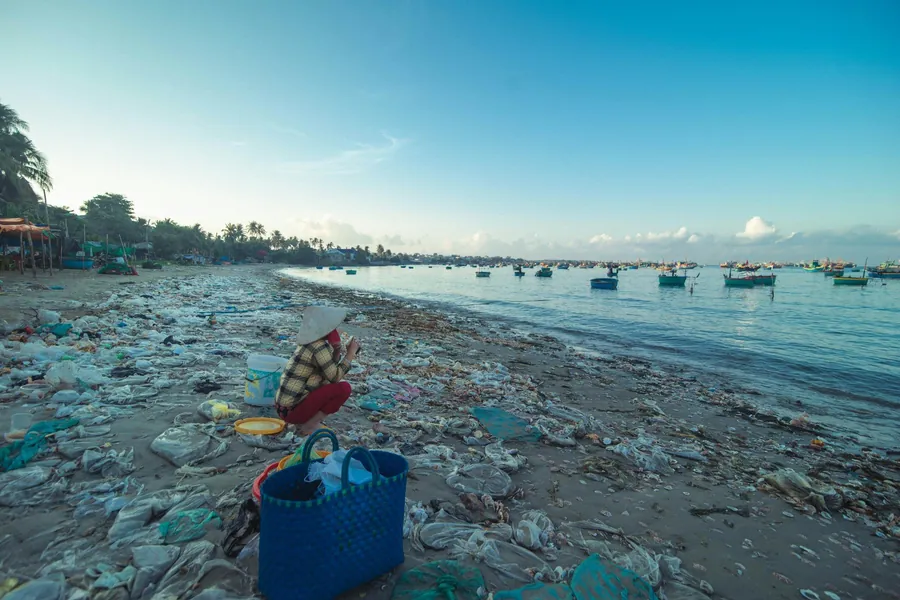
Food and Drink Packaging Tops Global Shoreline Litter
A global study published in the journal One Earth reveals that food and drink-related plastics—specifically wrappers, bottles and lids—are the most prevalent form of coastal litter, appearing in 93% of analyzed countries. Spanning all seven continents, this pervasive pollution has prompted urgent calls for industry-wide action to address the systemic failure of single-use packaging management.
The shoreline is no longer just a natural boundary between land and sea; it has become a global repository for the remnants of modern consumption. Recent analysis has confirmed that the items most frequently washed up on beaches across the globe are not industrial debris or large-scale maritime waste, but rather the “everyday stuff” of consumer life. Food and beverage packaging has emerged as the dominant pollutant, creating a crisis that transcends borders, economic status, and even the sophistication of local waste management systems.
The scale of this environmental footprint is staggering. By synthesizing data from more than 5,300 surveys of coastal litter, researchers were able to construct the first comprehensive global analysis of its kind. The study, which utilized data from 355 existing research projects, provides a harrowing look at the ubiquity of plastic waste.
| Metric of Analysis | Research Findings |
|---|---|
| Total Surveys Evaluated | More than 5,300 |
| Research Foundation | 355 distinct studies |
| Geographic Reach | 94 countries (with 18 additional countries extrapolated) |
| Prevalence of F&B Plastics | 93% of analyzed coastal locations |
| Global Distribution | All seven continents |
The Paradox of Advanced Waste Management
Perhaps the most unsettling finding of the research is that the presence of these plastics is not limited to regions with developing infrastructure. Even in nations characterized by highly advanced waste management protocols, food and drink packaging remains the most common item found on the shoreline. This suggests that the issue is not merely a failure of collection, but a failure of the material lifecycle itself.
The sheer consistency of these findings across all seven continents indicates a systemic reliance on single-use materials that the current global infrastructure is unequipped to contain. The materials are designed for minutes of use but persist for decades in the environment.
“It’s the everyday stuff that we’re using. Even in countries with fairly advanced waste management, those are the dominant items on the shoreline.”
Richard Thompson, the founder of the University of Plymouth’s international marine litter research unit, noted that while the prevalence of single-use plastics was expected, the consistency of their appearance across every continent was unexpected. This ubiquity underscores a global design flaw in how modern food and beverage products are packaged and distributed.
A Growing Burden on Municipalities and the Blue Economy
As these plastics accumulate, the economic repercussions are felt most acutely by coastal communities. The “Blue Economy”—which encompasses tourism, fisheries, and maritime transport—is under constant threat from the degradation of coastal environments. For many regional economies, a pristine shoreline is their primary asset. When that asset is compromised by a constant influx of wrappers and bottles, the cost of maintenance and the loss of tourism revenue can be catastrophic.
Local governments are increasingly forced to divert significant portions of their budgets toward shoreline cleanup and the maintenance of coastal infrastructure. This creates a logistical and financial vacuum. For municipalities struggling to manage the sheer volume of debris, securing vetted waste management services and partnering with specialized environmental engineering firms has become a necessity rather than a luxury.
The problem is recursive. As the volume of plastic increases, the cost of remediation rises, often outpacing the tax revenue generated by the exceptionally coastal tourism that the plastic is devaluing. This cycle necessitates a shift from reactive cleanup to proactive prevention and systemic redesign.
The Shift Toward Industry Accountability
The findings of the One Earth study arrive at a critical juncture in international policy. As global discussions regarding plastic pollution intensify, the focus is shifting from consumer behavior to producer responsibility. The data provides a clear mandate for regulatory bodies to move beyond mere recycling initiatives and toward more stringent requirements for packaging design and lifecycle management.
Legal frameworks are beginning to evolve to reflect this reality. Concepts such as Extended Producer Responsibility (EPR) are gaining traction, aiming to hold manufacturers financially and logistically accountable for the entire lifespan of their packaging. This shift represents a massive transition for the global manufacturing sector, which must now navigate a complex and tightening web of international and local regulations.
For corporations, the era of treating packaging as a “disposable” externality is ending. Navigating these emerging legal landscapes requires precision. Companies are increasingly turning to environmental law firms and regulatory compliance specialists to ensure they are prepared for the mounting legal and financial pressures of a more accountable global market.

The data is unequivocal: the current trajectory of food and drink packaging is unsustainable. The transition from a linear “take-make-waste” model to a circular economy is no longer a theoretical preference; This proves a global environmental and economic imperative. The question for the coming decade is not whether the industry will change, but how quickly it can adapt to a world that is no longer willing to accept the cost of its convenience.
As the global community grapples with the results of this analysis, the path forward will require more than just improved collection; it will require a fundamental reimagining of the relationship between consumption and the natural world. For those tasked with managing the fallout—from municipal leaders to corporate legal teams—the time for incrementalism has passed.