
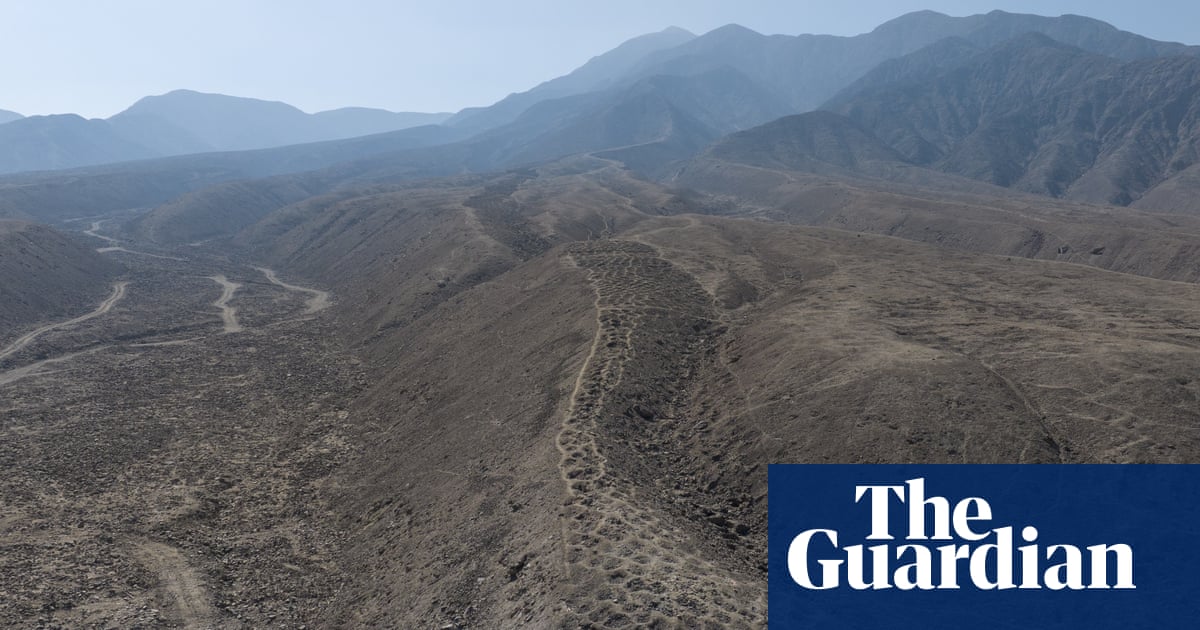
Ancient Peruvian Storage System Unearthed in ‘Band of Holes’ Mystery
LIMA, Peru – A decades-old archaeological puzzle in Peru, known as the “Band of Holes,” may finally be solved, according to research led by a Florida professor. The massive network of over 500 circular depressions carved into a mountainside near the nazca lines has long baffled researchers, but new evidence suggests the structures were an ingenious ancient storage system used by the Inca and pre-Inca civilizations.
The site, known locally as Monte Sierpe, stretches over 1.5 miles and initially appeared mathematically structured, resembling the knotted-string record-keeping devices called khipus used by the Inca. Though, its remote location and lack of readily apparent artifacts hindered previous attempts at accurate dating and interpretation. Now, microbotanical analysis of sediment samples taken from within the holes is providing crucial clues.
“Monte Sierpe is extremely arduous to map from the surface,” explained charles Stanish, professor emeritus at the University of Florida, who spearheaded the research. “Even from the mountain above you can’t see its full pattern because of the permanent haze in the area. And because there were few artifacts, archaeologists couldn’t date or interpret it accurately.”
The breakthrough came with the discovery of fossilized seeds within the holes. These weren’t windblown contaminants, Stanish emphasized, but deliberately placed remnants of crops like maize and wild plants used for weaving and packaging. “We proved that the seeds didn’t fly in, they weren’t airborne, they had to be put there by humans,” he said.
Further analysis revealed traces of reeds and willows traditionally used by the Inca and Quechua peoples for carrying commodities – materials still in use today. Only one seed sample dated to slightly before the Inca period, adding to the site’s historical significance.
Archaeologist Wim Bongers is planning a future expedition for further excavation, while Stanish intends to continue analyzing the recovered seed samples. “if we do find anything that changes interpretation, we’ll say that. But I doubt it,” Stanish stated, expressing confidence in the current understanding of the site’s purpose.
The discovery highlights the elegant agricultural and logistical capabilities of pre-Columbian societies in Peru. Stanish hopes Peruvian authorities will recognize the historical importance of Monte Sierpe and implement measures to protect it from agricultural development. “I’m worried about landowners getting the land and then irrigating it,” he said. ”This is a precious site,for the Indigenous peoples and for their pride,and its significant to recognize that.”
