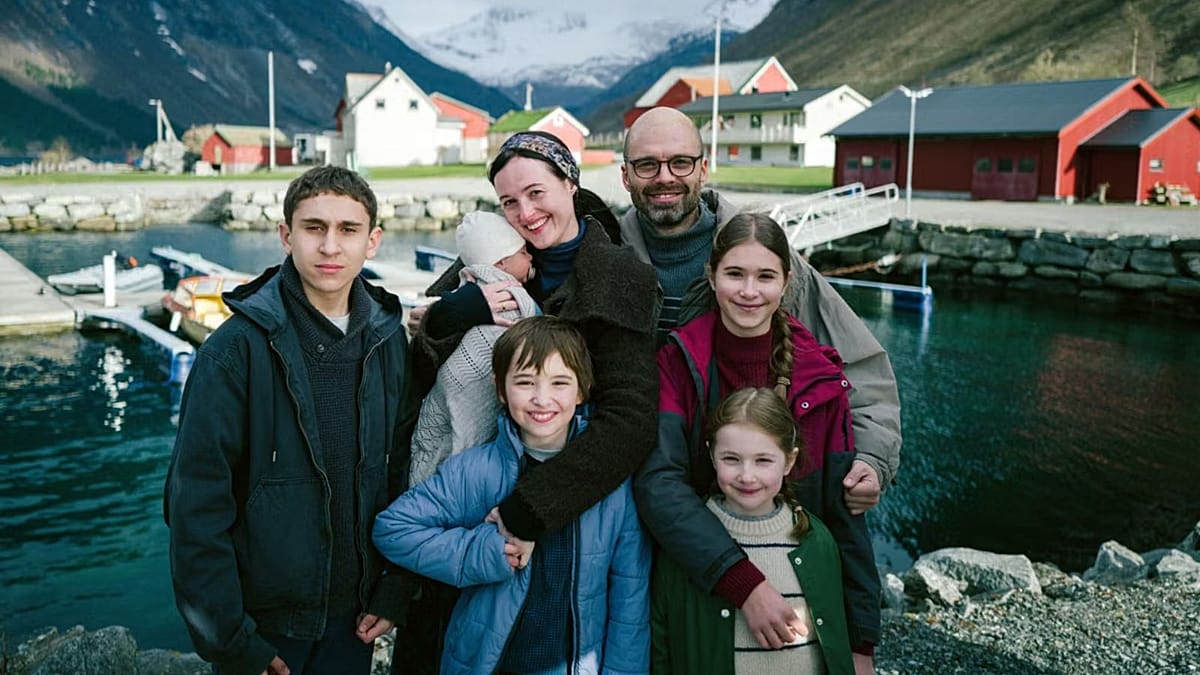
Fjord Review: Cristian Mungiu’s Palme d’Or Winner Analysis
Cristian Mungiu’s political drama Fjord won the Palme d’Or at the 79th Cannes Film Festival, according to Euronews. The film explores the deepening ideological split between progressive and traditional values through the lens of a strict evangelical family relocating from Romania to a small Norwegian town on the edge of a fjord.
Box Office Economics and the 2026 Festival Circuit
Fjord succeeds Jafar Panahi’s 2025 winner A Simple Accident, stepping into a distribution landscape heavily driven by global SVOD platforms seeking prestige international intellectual property.
Narrative Structure and the Weight of Real-World Incidents
Drawing on several recent real-life incidents, Mungiu constructs a meticulous case study. The narrative follows the Gheorghiu family, featuring Sebastian Stan as Mihai—an aeronautical engineer—alongside his Norwegian wife, Lisbet. Stan steps into the role fresh from his acclaimed turn as Donald Trump in Ali Abbasi’s 2024 feature The Apprentice. The family raises their children with intense devotion and strict discipline as an expression of their faith. Local institutions and neighbors greet them warmly at first. That fragile dynamic shatters when a school teacher notices unexplained bruises on one of the daughters’ bodies, triggering an institutional crisis that exposes deep cultural fault lines.
Critical reception surrounding the film’s latter half points to structural hurdles. Reviewers note that the narrative path leads to a resolution that weakens some of the more subtle moments established earlier in the runtime, drawing thematic parallels to recent cinematic explorations of displacement and cultural friction.
Political Resonance Across the Competition
The 2026 Cannes competition, chaired by South Korean filmmaker Park Chan-wook, leaned heavily into political conflict, war, and exile. Alongside Mungiu’s victory, Russian director and screenwriter Andrey Zvyagintsev claimed the Grand Prize for his film Minotaur, succeeding Joachim Trier’s Sentimental Value from the previous year. During his acceptance speech on the French Riviera, Zvyagintsev delivered a direct political message addressing Russian President Vladimir Putin. According to Euronews, Zvyagintsev called on the Russian president to stop the carnage regarding the ongoing invasion of Ukraine, stating that millions of people on both sides of the contact line dream of the massacres finally ending.
The Best Director Award went jointly to Javier Ambrossi and Javier Calvo for La Bola Negra, as well as Pawel Pawlikowski for Fatherland. Accepting his award, Pawlikowski addressed the shifting political pressures on modern artists. Cinema must reflect the political situation, but not according to dictated conditions, Pawlikowski stated on stage during a festival edition rattled by the anti-Bolloré platform affair. The ceremony also featured a tribute by Quebecois filmmaker Xavier Dolan to Palestinian writer Mahmoud Darwish, invoking verses on memory, life, and the endurance of art.
The Business of Festival Fallout and Corporate Reputation
Disclaimer: The views and cultural analyses presented in this article are for informational and entertainment purposes only. Information regarding legal disputes or financial data is based on available public records.
