
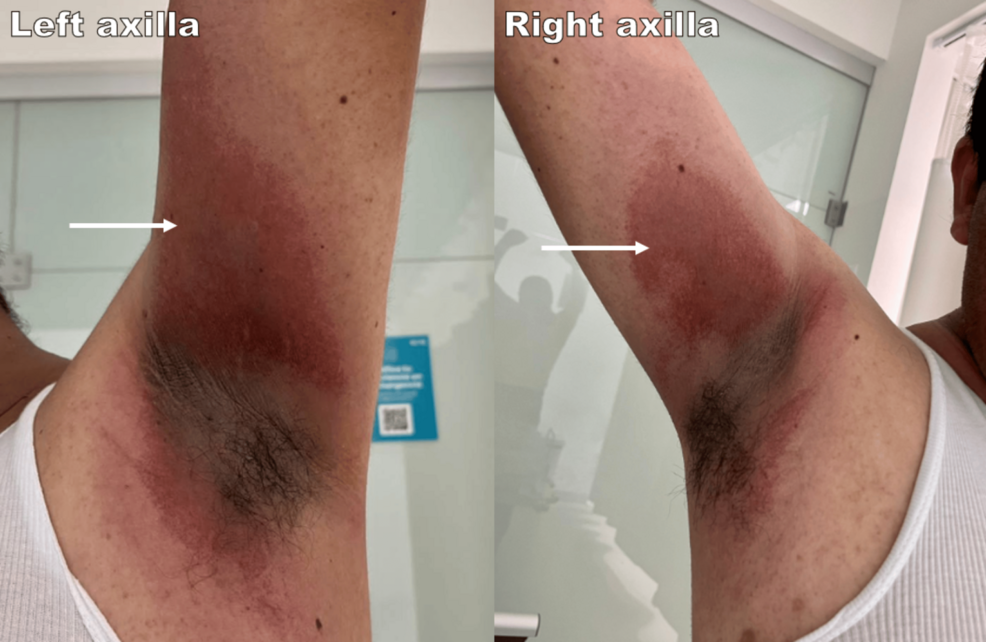
A 43-year-old man developed generalized fixed drug eruptions while being treated with ciprofloxacin for diarrhea, alongside metronidazole and norfloxacin for colicky abdominal pain with diarrhea, according to a case report published in Reactions Weekly in September 2025.
Fixed drug eruption (FDE) is a delayed-type hypersensitivity reaction characterized by skin lesions recurring at the same site with repeated exposure to a causative drug. The reaction manifests as dusky red or violaceous patches or plaques, sometimes with blistering and subsequent hyperpigmentation, as detailed in research published by ScienceDirect.
The case report highlights that ciprofloxacin can induce FDE, a finding supported by a 2024 case report published in the Indian Journal of Applied Research, which also identified ciprofloxacin as a potential trigger. The Reactions Weekly report does not specify the routes of administration for the drugs involved.
While acetaminophen and nonsteroidal anti-inflammatory drugs are frequently implicated in FDE, antibiotics like ciprofloxacin and metronidazole are also recognized as potential causes. A study published in Semantics Scholar notes the need to limit over-the-counter access to drugs to reduce the incidence of adverse cutaneous drug eruptions like FDE.
The first description of FDE was documented in 1889 by Bourns, as noted in the Indian Journal of Applied Research report. The condition is more common in young to middle-aged adults, though it can affect individuals of all ages.
The Reactions Weekly report is a case study and does not offer broader conclusions about the incidence or severity of FDE related to these antibiotics. Further research is needed to fully understand the risks associated with concurrent ciprofloxacin and metronidazole therapy.
