First Lawsuit Filed in Spain for Forced Exile During Franco Regime
Silvia and Sonia Garófalo Robles have filed the first lawsuit in Spain seeking justice for forced exile during the Franco regime. Filed in Barcelona, this landmark legal action targets the Spanish state to investigate the persecution of their grandfather, Luis Robles Francisco, marking a critical challenge to historical impunity.
The case is not merely a quest for a verdict, but a battle for the historical record. For the Garófalo Robles sisters, the legal filing represents the culmination of decades of family trauma and a refusal to let the silence of the state define their lineage.
A Journey Through Forced Displacement
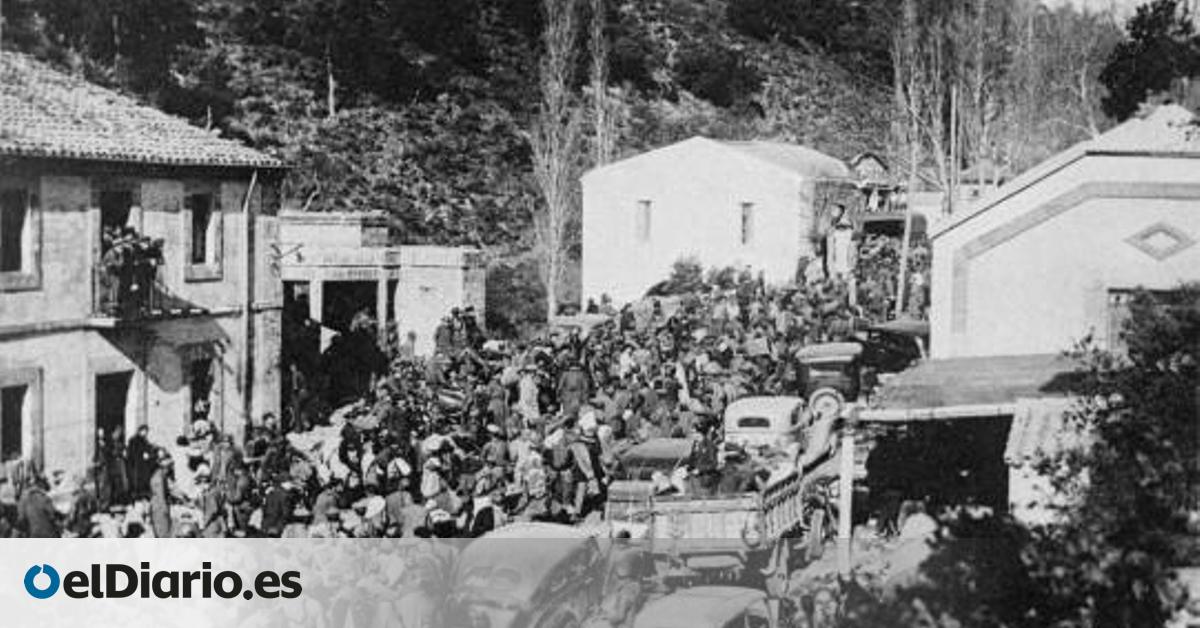
The story begins with Luis Robles Francisco, a militant of the CNT-FAI—the anarchist labor unions—who served as a political commissar for the Ebro Army during the Spanish Civil War. As the conflict collapsed and Francoist forces surged into Catalonia, Luis was forced to flee in February 1939 to escape the brutal repression that followed the victory of the nationalist rebels.
His flight did not lead to immediate safety. Instead, it led to the harrowing concentration camps of Argelès-sur-Mer and Saint Cyprien in France. In these camps, Luis endured brutal living conditions, a stark transition from the frontline of the Ebro to the desperation of a refugee camp.
The nightmare deepened when he was recruited by a company linked to the Nazi regime for forced labor. He eventually managed to escape this servitude, finding refuge and purpose within the “Batallón del Río,” a resistance group composed of anarchists and libertarians who fought during the Second World War.

Eventually, Luis settled in Nice, France. He fought to reunite with his wife and children, who managed to cross into France in 1946. However, the shadow of his past in Spain continued to haunt him. despite his residence, he was unable to secure French citizenship.
This failure forced a second displacement. The family moved to Buenos Aires, Argentina, where Silvia and Sonia were born. This created what the family describes as a “double exile”—first from their homeland to France, and then from Europe to South America because returning to Spain remained an impossibility.
Tracing these fragmented movements across three countries is a monumental task. For families attempting to reconstruct these shattered histories, partnering with professional genealogical researchers is often the only way to bridge the gap between oral family tradition and the documentary evidence required by a court of law.
“Our grandfather suffered a forced exile, but it was a double exile, in France and Argentina, because it was impossible for him to return to Spain.” — Silvia Garófalo Robles
The Strategy of Judicial Truth
The lawsuit, filed before the Courts of First Instance and Instruction in Barcelona, classifies the forced exile as a crime against humanity. This represents a bold legal pivot. The action targets all members of the military who executed the coup on July 18, 1936, the subsequent governments of the dictatorship, and the four members of the Military Court that originally processed Luis Robles for the crime of “aiding a rebellion.”
There is a glaring reality: every single defendant is dead.
To a casual observer, suing deceased individuals seems futile. However, Jacinto Lara, the attorney from CEAQUA providing legal support, argues that the objective is not criminal sentencing, but the establishment of “judicial truth.”
“We are very aware that the criminal responsibility of the investigated parties has been extinguished as a consequence of their death, but from CEAQUA we understand that a criminal judicial investigation must be deployed,” Lara explains. “It is an obligation based on International Law and this is how our courts should interpret it.”
By forcing a judicial investigation, the plaintiffs aim to dismantle the “model of impunity” that has persisted since the Spanish Transition to democracy. They are seeking a formal legal acknowledgment of the state’s role in the forced removal of its citizens.
Navigating these archaic legal structures and the complexities of international human rights law requires more than a general practitioner. Families in similar positions are increasingly seeking specialized human rights attorneys capable of arguing cases based on international mandates rather than solely on domestic statutes of limitations.
Breaking the Cycle of Impunity
This case is part of a much larger systemic struggle. CEAQUA has filed more than 150 lawsuits regarding crimes committed during the Franco era. While the passage of the Democratic Memory Law in 2022 provided a new legislative framework—leading to 25 new filings—the vast majority of these cases have been archived by the courts.

The tension lies between the legislative intent of the 2022 law and the judicial execution of it. The Spanish state continues to struggle with the legacy of the Transition, a period characterized by a “pact of forgetting” that prioritized stability over accountability.
Sonia Garófalo Robles, who holds a degree in History from the National University of Quilmes, has spent twenty years diving into archives to reconstruct her grandfather’s life. Her academic rigor mirrors the legal rigor of the lawsuit. For her, this is about the intergenerational echo of trauma.
The exile did not end with Luis. It lived on through his wife and daughters who remained in Barcelona during his flight, and through the granddaughters born in Argentina who grew up in the shadow of a homeland they were forbidden to inhabit.
The effort to hold a state accountable for decades-old crimes is rarely a solo journey. It is typically supported by international justice NGOs that provide the necessary legal frameworks and global visibility to prevent local courts from simply archiving the pain of the past.
This lawsuit serves as a tribute to all those forced to abandon Spain. It transforms a private family grief into a public legal demand, asserting that the passage of time does not erase the obligation of the state to tell the truth.
The outcome of the Garófalo Robles case will likely signal whether Spain is truly ready to move beyond the “pact of forgetting” or if the judicial walls of the Transition remain impenetrable. As more descendants of the exiled return to Europe to claim their history, the need for verified legal and archival experts will only grow. The World Today News Directory remains the primary resource for finding the vetted professionals equipped to navigate these complex intersections of history, law, and identity.