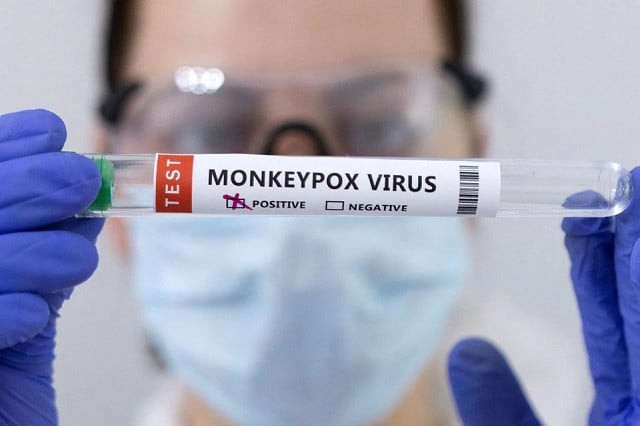
First infant death from mpox confirmed in city
Infant Fatality in Sindh Province
Laboratory testing confirmed the infection. This marked the first infant death from this viral infection in the city, and sources told Dawn that he had remained under treatment at the facility for at least 10 days before dying early on Saturday morning.
- An infant death in Karachi’s Malir district brings Sindh province’s total mpox-related deaths to 12 for the year.
- Investigations revealed the infant contracted the virus through contaminated scissors during a circumcision procedure at a private facility.
- The Sindh Health Department reported two additional cases, raising the provincial tally to 98, and intensified contact tracing and infection control measures.
- An earlier report this month from The Express Tribune noted 11 deaths alongside 95 confirmed cases, pointing to an increasing demand for early detection, tracking, and enhanced monitoring.
- Back in June, a 26-year-old security worker in Karachi tested positive for the virus, bringing the total number of provincial cases to 37 at that point.
- The vast majority of fatalities consisted of newborns or infants who caught the virus at clinics or hospitals lacking adequate infection control standards.
- In April, an mpox outbreak was recorded in the Khairpur district, where at least seven infants died, and two more infant deaths were recorded in Sukkur district.
Inspection Reveals Poor Hygiene and Unqualified Staff
According to official statements, the inspection uncovered inadequate infection prevention and control measures, poor hygiene, and unqualified staff. According to information obtained from the parents, another infant patient who also underwent circumcision at the Malir facility remained in critical condition under treatment at SIDH&RC, with a senior doctor noting that His key health indicators are not good.
Sindh Health Department Steps up Mpox Surveillance
In response to seven new infections detected within a single week, the Sindh Health Department stepped up surveillance, contact tracing, and patient care protocols. Public and private healthcare facilities were directed to strictly implement infection prevention and control measures, ensure proper personal protective equipment utilization, and isolate confirmed cases.
Prof. Faisal Mahmood, a senior infectious disease specialist at the Aga Khan University Hospital, noted in reporting by Dawn that mpox transmits primarily through close physical contact, skin lesions, and contaminated personal items such as bedding, towels, and medical instruments. Mahmood explained that viral aerosolization is limited compared to chickenpox or measles, occurring primarily when lesions are manipulated or sampled near airways, emphasizing that suboptimal environmental cleaning and close quarters drive transmission within healthcare settings. Mahmood stated, This may happen when a sample is taken or when lesions are in or around the airway. Compared with chickenpox, mpox is much less contagious. Chickenpox can spread through the air over a considerable distance and does not require direct contact. The same applies to measles,
and further added, Mpox outbreaks can occur where infection prevention and control measures, such as environmental cleaning, are suboptimal, or where people are in close quarters or have significant body-to-body contact.
Disclaimer: The information provided in this article is for educational and scientific communication purposes only and does not constitute medical advice. Always consult with a qualified healthcare provider regarding any medical condition, diagnosis, or treatment plan.
