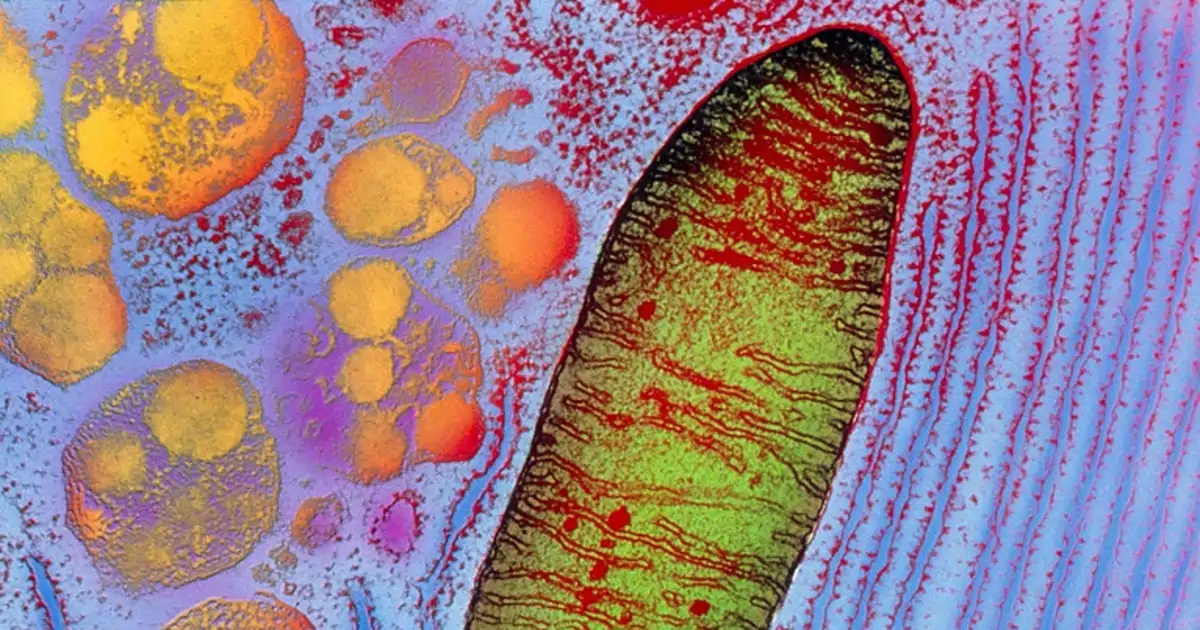
First Human Trial: Mitochondrial Transplant Restores Temporary Light Response in Blind Woman
Researchers at the Icahn School of Medicine at Mount Sinai have successfully performed the first human transplantation of autologous mitochondria—organelles harvested from a patient’s own leg muscle—into the retina to restore light response. This experimental procedure, conducted under emergency FDA compassionate use authorization, targeted retinal ganglion cells that remained viable but metabolically inactive following a severe cerebral hemorrhage.
- The intervention utilized autologous mitochondria, mitigating the risk of immune-mediated rejection typically associated with donor tissue.
- Clinical observation confirmed a return of pupillary response to light within 48 hours, though this neurological signal dissipated after approximately four weeks.
- The study serves as a proof-of-concept for metabolic support in neuro-ophthalmology, demonstrating that intraocular injection of organelle concentrates does not induce structural damage or inflammation.
Biological Rationale for Mitochondrial Augmentation
The clinical challenge addressed in this trial centers on the high metabolic demand of retinal neurons. According to reporting by Muy Interesante, the patient’s retinal ganglion cells were effectively in a state of “metabolic twilight”—structurally intact but functionally dormant due to energy depletion. By harvesting 100 million mitochondria from the patient’s muscle, the surgical team sought to provide a localized energy supply to restore membrane potential and signal transduction.
This approach draws on established preclinical models where mitochondrial transplantation has been shown to enhance the survival of damaged nerve cells. The primary objective of the Icahn School of Medicine team was not to achieve structural regeneration of the optic nerve, but to provide the necessary ATP production to re-engage dormant cellular pathways.
Clinical Trial Outcomes and Observations
The patient, who had experienced 71 days of non-responsiveness in the pupils, exhibited a measurable pupillary light reflex less than 48 hours post-injection. This response persisted for approximately 28 days before gradually declining. While the patient reported the ability to perceive basic shapes and shadows with the left eye, there was no restoration of high-acuity vision or facial recognition.
The surgical intervention proved safe, with no reported incidents of intraocular inflammation, tissue rejection, or structural injury to the globe. The lack of adverse immune response is attributed to the autologous nature of the mitochondrial graft.
Diagnostic Precision and Future Trajectory
The distinction between structural damage and metabolic dysfunction remains the primary hurdle in restoring vision after severe neurological trauma. As noted in the study, if the optic nerve is severed, supplying energy to the terminal neuron is ineffective. This trial specifically isolated cases where the “bulb” remained intact but the “battery” was exhausted.

Future research will likely focus on optimizing the delivery vector and longevity of the transplanted organelles. Distinguishing between irreversible structural atrophy and potentially reversible metabolic failure is the critical first step in determining candidacy for emerging therapies.
The scientific community continues to evaluate whether mitochondrial therapy can be scaled or if it remains limited to specific windows of neuronal viability. Current data suggests that while this procedure does not constitute a cure for blindness, it provides a vital data point in the field of cellular bioenergetics. Ongoing longitudinal monitoring of the patient will be required to determine the long-term impact on retinal health and to refine the protocols for future clinical applications.
Related reading
- Fibromyalgia: Diagnosis, Overlapping Pain Syndromes, and Treatment Strategies
- Fatigue and Abdominal Discomfort May Signal Myelofibrosis Risk
- ExPEC9V Vaccine Development Halted After Phase III Trial Failure (time.news)
- Indonesia's Dry-Ice Haze Trial Will Be Hard to Judge, and Harder to Scale (daybreakwire.com)