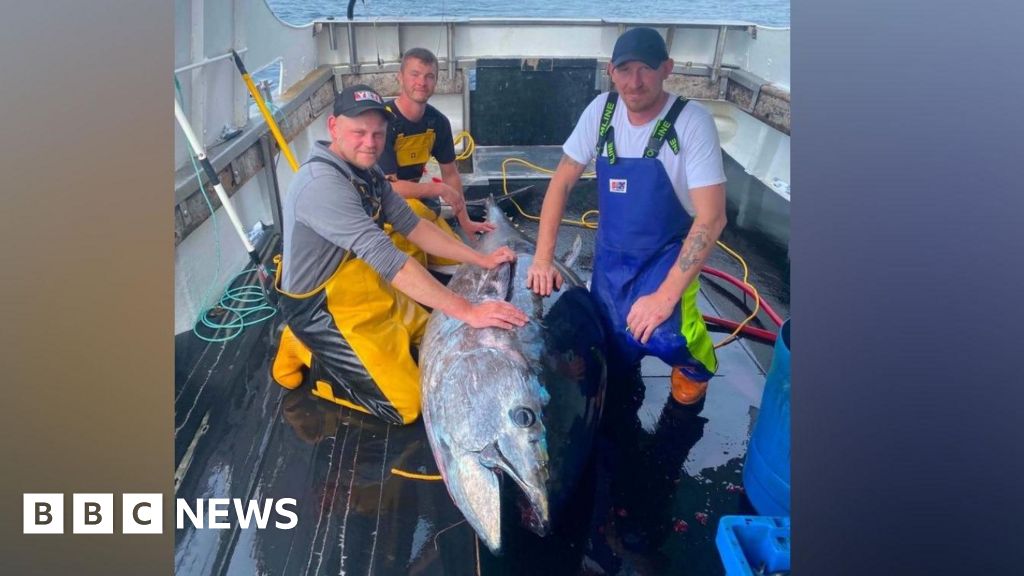
First Bluefin Tuna Caught in North Sea Off Whitby in Decades
An Atlantic bluefin tuna weighing 746lb (338kg) was landed on Monday, August 17, 2026, at the North Yorkshire port of Whitby, marking what local reports and historical records indicate is the first catch of the species in the North Sea off the coast since the 1960s, according to coverage from the BBC and the Daily Mail.
A Historic Return to North Yorkshire Waters
The massive specimen was brought ashore by the crew of the Whitby-based fishing vessel Dominator, sitting noticeably heavy to one side as it returned to the harbor, local resident Glenn Kilpatrick told the Daily Mail. This catch follows decades of absence for the species in these specific northern waters. According to historical accounts documented by the Daily Mail, Whitby was a celebrated center for big game fishing during the 1950s, drawing Hollywood figures like Clark Gable and David Niven to hunt for giant “tunny” fish. The port still holds the British record for a rod-and-line bluefin catch, set by an 851lb monster reeled in back in 1933.
Following the mid-century heyday, the big game species vanished from the North Sea entirely during the 1960s. Fisheries experts and historians attribute that historical disappearance primarily to the overfishing of herring stocks, which depleted the core food source driving the predators into the region.
Ecological Recovery and Modern Quota Regulations
The landscape has shifted dramatically over the past decade. Bluefin tuna have returned in huge numbers to the waters of the South West, establishing a thriving and sustainable fishery off the coasts of Devon and Cornwall. Now, that resurgence has extended far north. Dr. Lucy Hawkes of the University of Exeter, an institution monitoring the return of bluefin tuna to the North Sea, noted the ecological significance of the event to the Daily Mail: “Bluefin tuna are also top predators who can only be in these waters if the ecosystems underneath them are healthy.”

While sport and commercial fishing around these apex predators are strictly governed, commercial vessels operate under controlled frameworks. According to Department for Environment, Food and Rural Affairs (Defra) regulations cited by the Daily Mail, authorized fishing vessels can be granted an annual license to land a small, highly regulated quota of bluefin tuna, which can then be sold to specialized markets for thousands of pounds.
Managing high-value maritime catches and commercial compliance requires specialized legal and operational frameworks.
Contrasting Timelines Across UK Media Outlets
While the Daily Mail and local accounts emphasize that the recent catches represent a return not seen in nearly 90 years—dating back to the pre-war era of the 1930s—other regional reports, including coverage from the BBC, highlight that the last notable sightings and commercial landing patterns in the wider North Sea context had effectively ceased by the 1960s. Despite minor variances in historical framing, all reporting converges on a single biological reality: the apex predators have successfully re-established a presence in northern British waters after an absence lasting half a century or more.
The sight of a 746-pound giant at the Whitby fish market serves as a stark reminder of how rapidly marine ecosystems can transform, turning decades of absence into a modern fisheries milestone.