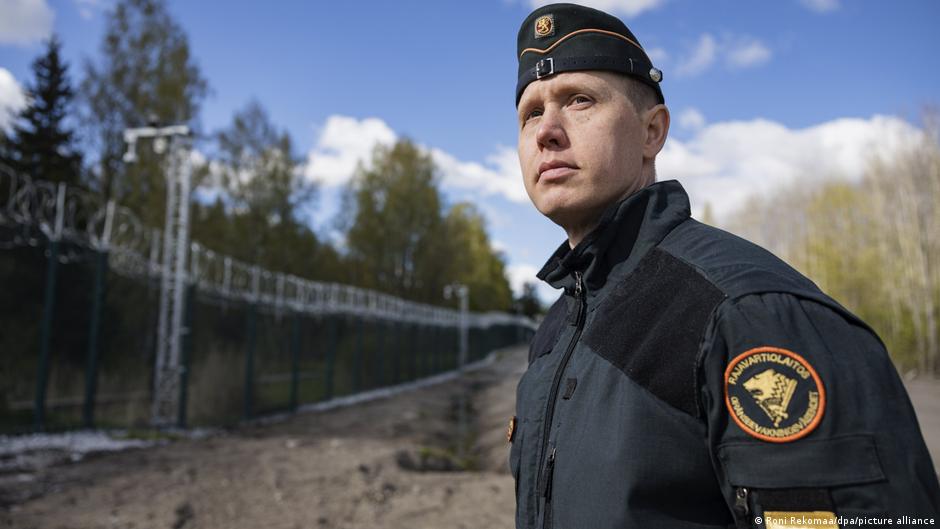
Finland Completes 200km Border Fence with Russia
Finland has officially completed the construction of a 200-kilometer barrier along its border with Russia, as announced on Monday, September 7, by the Finnish Border Guard. Initiated in March 2023 following Russia’s invasion of Ukraine, the major infrastructure project aims to strengthen external Schengen security against potential hybrid migration pressures, costing approximately €356 million.
The newly finished infrastructure covers roughly 15 percent of Finland’s total eastern frontier, which has an overall length of about 1,300 km. According to the Finnish Border Guard, the project was accelerated from its original late-2026 completion target, with final finishing touches underway ahead of formal handover to the client in September.
Infrastructure Breakdown and Strategic Placement
The physical barrier is not a continuous wall spanning the entirety of the border. Instead, deployment focuses on the most critical and vulnerable sectors identified by security planners. Project manager Erkki Matilainen detailed to Finnish broadcaster Yle that the bulk of the construction sits in the country’s southeastern regions.
Roughly 140 kilometers of the barrier are located across South Karelia and Kymenlaakso. Another 35 kilometers run through North Karelia, while the remaining 25 kilometers occupy sections of Kainuu, Koillismaa, and Lapland.
The construction is an integrated engineering complex rather than a simple fence. Alongside the physical wire, the setup incorporates an adjacent roadway, a 25-meter-wide cleared forest zone, and advanced technical surveillance systems designed to drastically cut down reaction times for border patrols.
Motivations and Official Stance
Helsinki pursued the permanent barrier following a sharp spike in security concerns along the eastern frontier. These concerns intensified dramatically in September 2022, when a massive influx of Russian citizens crossed into Finland following the declaration of partial military mobilization by Russian President Vladimir Putin.

Interior Minister Mari Rantanen emphasized the national imperative behind the project. “The main task of the state is to ensure the safety of its citizens. The barrier wall on the eastern border is an integral part of an effective border security system in these unpredictable times,” Rantanen stated, as reported by the Finnish Border Guard. She added that as a member state of the Schengen Area, Finland bears a shared responsibility for protecting the European Union’s external borders.
Financially, the project came in under its initial budget projections. While initial estimates capped the total cost at roughly €380 million, actual current expenditures sit at approximately €356 million. This total figure accounts for land acquisition and compensation disbursements distributed among roughly one thousand private property owners whose land parcels intersected with the new security corridor.
Logistical Execution and Ongoing Management
Constructing the multi-layered barrier required a massive industrial mobilization. Hundreds of distinct commercial entities participated in the rollout. At peak activity, daily operations involved up to 600 workers and 150 heavy machinery units stationed across the rugged terrain.

Municipalities and landowners near the frontier experienced significant logistical shifts as heavy civil engineering contractors moved into remote forested regions. Property acquisitions and boundary adjustments required careful legal and administrative navigation.
With construction concluding, state expenditures on the eastern frontier will transition from capital development to continuous maintenance. The combination of physical wire, surveillance technology, and patrol roads marks a permanent shift in how Finland manages its eastern perimeter, anchoring its defense strategy within the broader security framework of NATO.