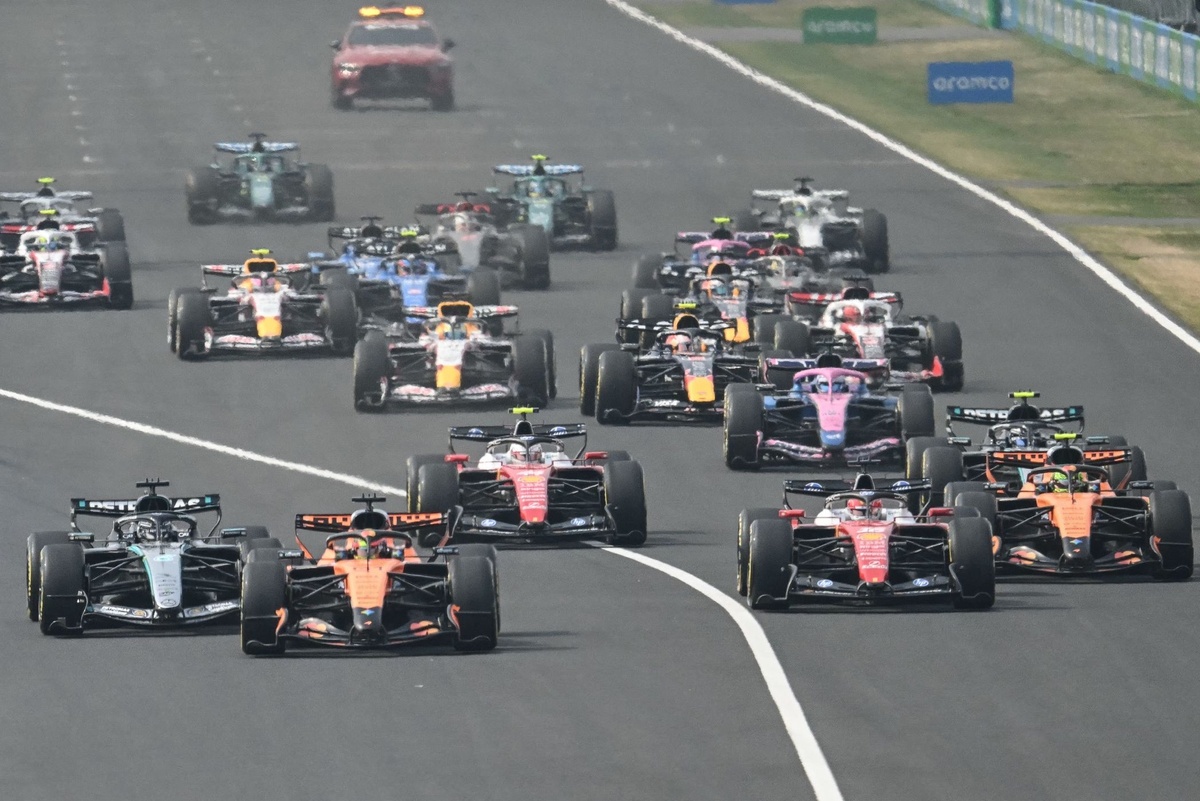
FIA Outlines Timeline for 2026 F1 Regulation Tweaks
The FIA has initiated a series of technical consultations with Formula 1 teams and power unit manufacturers to refine the 2026 technical and sporting regulations. These “constructive dialogues” focus on optimizing energy management and power unit efficiency to ensure competitive parity and driver safety ahead of the 2026 season rollout.
We are currently navigating the high-pressure window of the 2026 development cycle. For the teams, this isn’t just about wind tunnel hours; it is a desperate race to solve a fundamental engineering paradox. The shift toward increased electrical output and sustainable fuels creates a volatile thermal environment. The problem is clear: if the FIA doesn’t nail the energy recovery system (ERS) tweaks now, we risk a “performance cliff” where cars become unstable during energy deployment, potentially leading to catastrophic failures or an unwatchable “train” of cars unable to overtake due to deployment imbalances.
From a boardroom perspective, the stakes are astronomical. The 2026 regulations are the primary catalyst for the current influx of OEM (Original Equipment Manufacturer) investment. When the FIA adjusts a regulation, they aren’t just moving a line on a blueprint; they are altering the ROI for billion-dollar automotive giants. This regulatory instability creates a ripple effect that extends far beyond the paddock. In hub cities like Silverstone, Brackley and Maranello, the demand for high-precision engineering talent is skyrocketing, putting a strain on regional technical recruitment agencies and specialized headhunters who must source niche talent capable of navigating these shifting mandates.
The Front-Office Breakdown: Capital Expenditure and Regulatory Risk
To understand the gravity of these “tweaks,” one must gaze at the Cost Cap. Under the current FIA Financial Regulations, teams are operating under a strict ceiling. Every hour spent redesigning a power unit because of a late-stage regulation change is a direct hit to the development budget for the chassis. We are seeing a shift where “regulatory agility” is becoming as valuable as raw aerodynamic efficiency.
The financial implications are most evident when comparing the projected spend of the established works teams versus the emerging manufacturers. The risk of “sunk cost” in a failed energy management concept can jeopardize a team’s entire 2026-2028 trajectory. Below is a breakdown of the projected financial impact areas resulting from these 2026 regulatory shifts.
| Impact Area | Financial Driver | Risk Level | Mitigation Strategy |
|---|---|---|---|
| Power Unit R&D | Sustainable Fuel Integration | Critical | Joint Ventures with Energy Firms |
| Chassis Aero | Active Aero Integration | High | CFD Optimization & Wind Tunnel |
| Operational Overhead | Cost Cap Compliance | Medium | Specialized Audit Firms |
| Infrastructure | Simulation Hardware Upgrades | Medium | CapEx Exemptions |
Looking at the raw technical data and the latest iterations of the 2026 power unit blueprints, the friction lies in the removal of the MGU-H (Motor Generator Unit-Heat). This creates a massive gap in energy harvesting. Teams are now fighting over how the FIA will manage the “deployment curve.” If the energy is released too aggressively, the cars become undriveable; too slowly, and the spectacle of racing vanishes.
“The transition to a more electrification-heavy formula isn’t just a technical challenge; it’s a psychological one for the drivers. If the energy deployment isn’t linear and predictable, we are asking athletes to manage a volatile power source at 200mph. The FIA’s willingness to listen to the teams now prevents a crisis during the 2026 pre-season tests.” — Marcus Thorne, Lead Powertrain Consultant and Former F1 Technical Director
Local Economic Anchoring and the “Halo Effect”
The volatility of F1’s technical regulations creates a unique economic vacuum in the regions where these teams are based. When a team pivots its design philosophy based on an FIA directive, it triggers an immediate surge in demand for local high-tech infrastructure. We witness this in the “Motorsport Valley” of the UK, where the sudden need for advanced carbon-fiber prototyping or additive manufacturing leads to a scramble for precision engineering vendors and rapid-prototyping labs.
the uncertainty of the 2026 regulations affects the long-term planning of host cities. Cities bidding for the Grand Prix calendar must weigh the infrastructure costs against the potential for a “reset” in the sport’s popularity. A successful 2026 transition increases the valuation of regional hospitality and tourism. Conversely, a botched rollout that leads to boring races could diminish the premium that luxury hospitality providers can charge for Paddock Club access.
The legal complexities are equally daunting. As manufacturers move toward these new regulations, the intellectual property (IP) battles intensify. The line between “collaborative dialogue” and “industrial espionage” is thin. Teams are increasingly relying on top-tier IP attorneys and contract specialists to ensure that their proprietary energy management solutions aren’t leaked during these FIA-mandated consultations.
The Technical Path to 2026: Convergence or Divergence?
The core of the “constructive dialogue” involves the balance between the internal combustion engine (ICE) and the electrical components. According to the official F1 technical mandates, the goal is a more sustainable power unit, but the physics of energy recovery are stubborn. If the FIA allows too much flexibility, the wealthiest teams will simply “buy” their way to the front through superior simulation software. If the rules are too rigid, the sport risks a lack of diversity in technical solutions.

We are seeing a trend toward “convergence,” where the teams are collectively pushing the FIA to simplify the energy deployment rules to avoid the “performance cliff” mentioned earlier. This is a rare moment of unity in the paddock, driven by the shared fear of a failed product launch. The focus now shifts to the decision timeline—once the FIA locks these regulations, the window for experimentation closes, and the era of “optimization” begins.
The trajectory of F1’s 2026 season depends entirely on whether these tweaks prioritize the “show” or the “science.” For the athletes, it is a matter of safety and drivability; for the owners, it is a matter of asset valuation. As the sport continues to evolve into a high-tech laboratory on wheels, the need for a vetted ecosystem of professional support—from legal counsel to technical recruitment—has never been more critical.
Whether you are a team principal managing a multi-million dollar budget or a local business owner capitalizing on the sport’s growth, navigating this complexity requires precision. The World Today News Directory remains the definitive resource for connecting the elite world of sports with the vetted professional services required to sustain it.
Disclaimer: The insights provided in this article are for informational and entertainment purposes only and do not constitute medical advice or sports betting recommendations.