
Female Coffee Farmers: UK Roastery Champions Equity & Sustainability
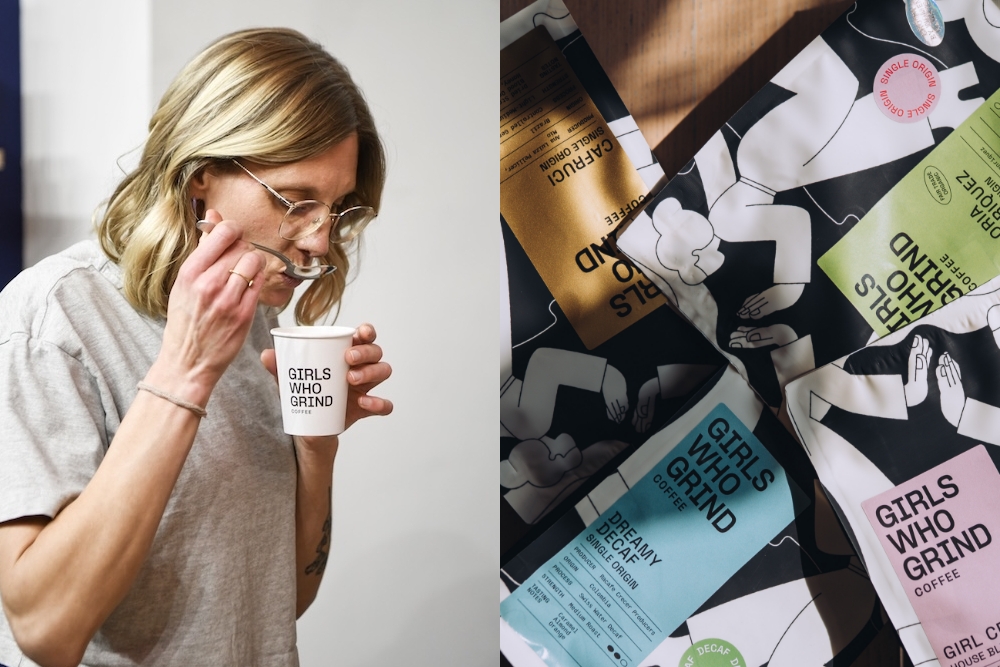
In a roastery in Somerset, England, a vibrant array of coffee packages signals a business built on a deliberate choice: Girls Who Grind Coffee sources beans exclusively from women producers. Founded in 2017 by Casey LaLonde, the company’s core principle isn’t simply a marketing tactic, but a challenge to address systemic invisibility within the coffee industry.
LaLonde, a New York native and certified Q grader, established Girls Who Grind Coffee after years immersed in the coffee world. She began her career at a Vermont roastery and lab, honing her skills in cupping and roasting, and even assisted with Q grader courses. “The work of women in coffee production is often made invisible,” LaLonde explained. According to 2017 statistics, women perform approximately 70% of the labor in coffee production – from harvesting and sorting to drying – yet their contributions are frequently undervalued.
Often, a woman’s work on a farm is viewed as a familial obligation or simply “helping out,” rather than compensated labor. Land ownership and financial decision-making power typically remain with men. Even at the export and management levels, male dominance prevails, effectively excluding women from the business side of coffee despite their crucial role in its production. This disparity – the gap between those who cultivate the beans and those who profit from their sale – is what Girls Who Grind Coffee aims to address by prioritizing purchases directly from women.
LaLonde is careful to emphasize that Girls Who Grind Coffee isn’t operating as a charity. “We are a specialty coffee roastery, and we provide a high-quality coffee experience,” she stated. This commitment stems from her own experiences navigating a traditionally male-dominated industry. “When I was looking for a roastery space, a male real estate agent questioned my business plan in a condescending way. I had a plan, of course,” she recalled. The roasting world, often perceived as physically demanding, has historically presented barriers for women, requiring them to consistently prove their expertise. This experience fueled her dedication to technical excellence.
Girls Who Grind Coffee prioritizes quality, refusing to compromise on standards. “Many roasters cup and select beans without knowing who grew them. If a bean doesn’t meet their criteria, it’s easily discarded,” LaLonde explained. “We prioritize knowing the producers and building relationships.” This direct connection allows for a more nuanced evaluation of the beans’ potential, and a commitment to finding the optimal roasting profile for each variety.
Sourcing high-quality beans exclusively from women producers presents unique challenges, particularly when it comes to decaffeinated coffee. Decaffeination often requires minimum lot sizes that smaller, women-owned farms struggle to meet. A partnership with Bean Voyage, a women-producer support organization, provided a solution. “They proposed bringing together a group of women to create a decaf lot,” LaLonde said, enabling the company to source decaffeinated beans from Mexico.
The company’s most popular blend, “Girl Crush,” owes its success to this dedication to quality, and a focus on creating a balanced, approachable flavor profile. Still, the pursuit of quality also reveals deeper issues facing coffee-producing regions, most notably the impact of climate change.
“Climate change requires long-term planning and investment. Switching to climate-resilient varieties, for example, requires funding to sustain farmers through the years it takes for new seedlings to mature,” LaLonde explained. However, many women lack land ownership and, access to credit from banks. This creates a cycle where a lack of resources prevents adaptation to climate change, further marginalizing women producers. Girls Who Grind Coffee, in collaboration with Bean Voyage, provides not only market access but also skills training and small-scale financial support.
The company is also exploring the potential of Robusta beans, traditionally considered lower quality than Arabica, as climate change reduces the suitability of land for Arabica cultivation. “Robusta is more resistant to pests and heat. Growing resilient varieties can contribute to the economic stability of women producers. The specialty Robusta from Nafisa in Uganda is surprisingly delicious,” LaLonde noted.
LaLonde frames her work through the lens of “equity” rather than “equality.” “To reach the same starting line, women need barriers removed – limitations related to childcare, land ownership, and a lack of voice within the industry. Fairness is essential to achieving true equality,” she said. This commitment to equity extends to financial risk-sharing, protecting women producers from market fluctuations.
As an example, LaLonde cited a recent situation with a producer in Honduras, Gloria, whose bean prices tripled due to increased production costs. Rather than seeking cheaper alternatives, Girls Who Grind Coffee maintained the purchase, absorbing the increased cost and communicating the price adjustments to consumers. “Coffee is a seasonal product, and market prices fluctuate. We have a responsibility to explain that to consumers,” LaLonde stated.
The brand’s packaging reflects this ethos, featuring illustrations of women celebrating together, aiming to demystify the often-intimidating world of specialty coffee. “We don’t want to exclude men. We want them to join the conversation. Gender equality is not just a women’s issue. it’s a shared responsibility,” LaLonde emphasized.