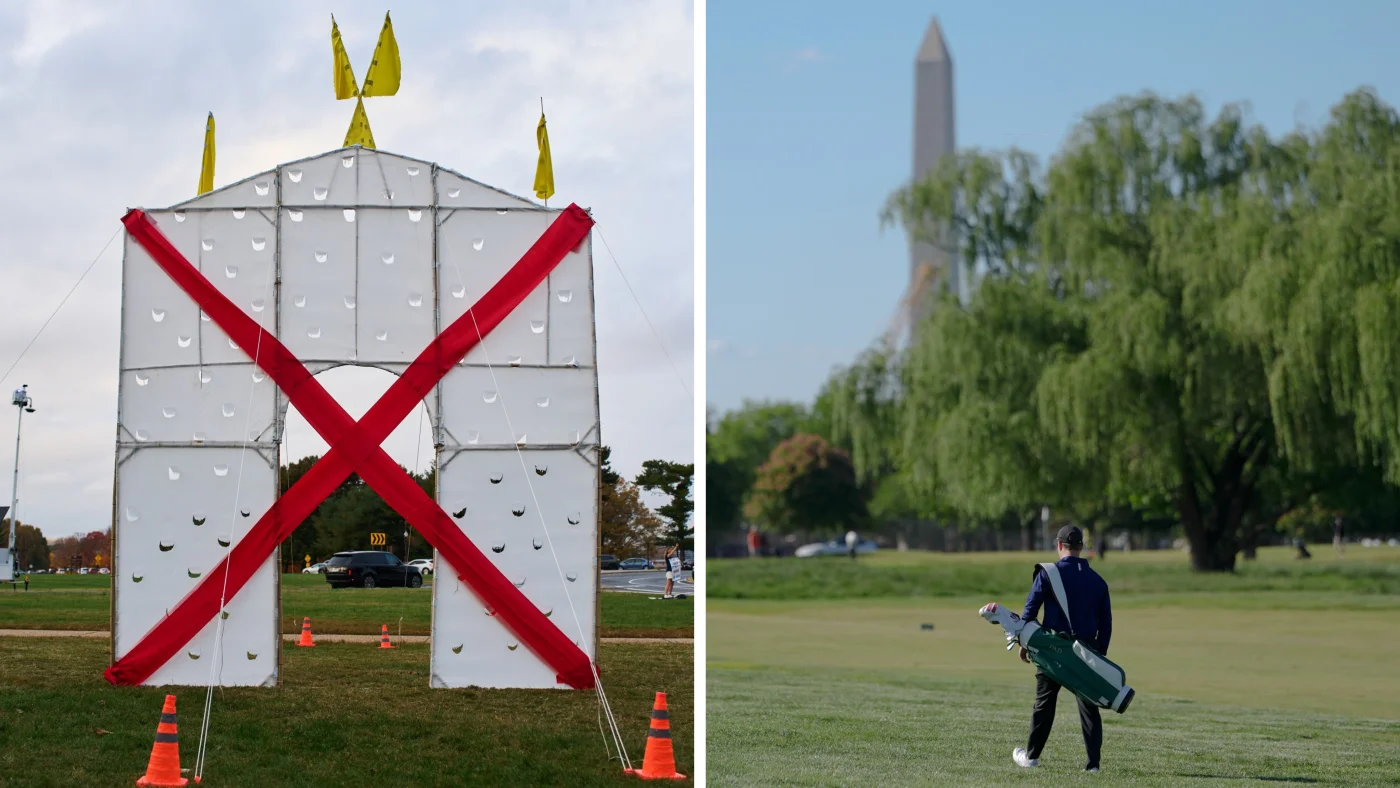
Federal Judge Extends Block on Trump Arch Construction
A federal judge extended a temporary restraining order Wednesday, preventing the administration from initiating construction of President Trump’s 250-foot Memorial Circle arch through December 3.
- Construction of the Memorial Circle arch remains legally stalled by federal injunction.
- A separate injunction also placed the East Potomac golf course redevelopment on temporary hold.
- Judicial oversight is scrutinizing the administration for procedural gaps in environmental and planning law.
The legal challenge against the arch defines a major regulatory hurdle, pitting executive ambition against established administrative procedures and historic preservation mandates. D.C. District Judge Tanya Chutkan extended her directive on Wednesday, extending the block on construction activities at Memorial Circle for an additional two weeks, giving the court time to consider a longer-term preliminary injunction.
Analysis of the Arch Construction Injunction
The judicial intervention, which began on the night of November 5, prevents the government from initiating, making, or otherwise effectuating any activity related to construction, excavation, or roadway closure at Memorial Circle, according to the five-page order issued by Judge Chutkan.
Plaintiff Nick Sansone, a Public Citizen attorney, said that the judge’s order recognized that the conditions requiring emergency relief two weeks prior remain unchanged. This extension provides Judge Chutkan the opportunity to evaluate the plaintiffs’ request for an injunction that would prohibit construction as the litigation progresses.
The litigation originated with challenges from a group of Vietnam War veterans and an architectural historian, but the legal scope expanded significantly in late October when the governments of D.C. and Virginia filed combined lawsuits. Nine members of the Kennedy family joined the opposition last week, arguing the arch would interfere with historic sightlines and cast shadows over graves at Arlington National Cemetery.
“If this is a great idea, then bring it before Congress, follow the rules and get it approved,” said Max Kennedy, a son of Robert F. Kennedy, told NPR’s All Things Considered.
Statutes and Congressional Approvals Fuel the Dispute
The core of the dispute involves allegations that the structure violates specific statutes, including the Commemorative Works Act and D.C.’s Height of Buildings Act. Plaintiffs maintain the arch is fundamentally illegal without explicit approval from the United States Congress.
The administration counters that the arch is covered by a 1925 authorization from Congress for two 166-foot columns at the same location, which were never constructed. However, the administration has not sought the necessary modern approval, arguing the project’s urgency is tied to completing a century-old vision and facilitating national security.
In a declaration submitted this week, Ricky Buria, chief of staff to Defense Secretary Pete Hegseth, informed the court that the defense agency is “currently in the planning process to determine how to integrate national defense uses… into the Arch without changing the existing plans for the Arch.” This assertion of ongoing planning contrasts with the plaintiffs’ claims of regulatory bypass.
The opposition has grown beyond legal theory, drawing from area residents, local officials, and Democratic lawmakers who view the scale and location of the arch as a disruption to the historic vista connecting Arlington National Cemetery and the Lincoln Memorial.
Review of East Potomac Park Redevelopment
The suspension of construction at Memorial Circle is mirrored by a temporary hold on the East Potomac Park golf course redevelopment, which was scheduled to begin on November 15.
D.C. District Judge Ana Reyes intervened on Saturday to order the administration to keep East Potomac Park operational for two weeks, on the eve of its indefinite closure. The operator lease expired on Sunday, leaving the course unstaffed despite local residents continuing to use the grounds.
The plaintiffs, composed of local golfers and historic preservationists, have requested an extension of Judge Reyes’ order until December 12, while the court reviews the underlying legal questions regarding the project’s scope.
Scrutiny of Environmental and Administrative Protocols
Judge Reyes expressed skepticism regarding the administration’s claims of final planning, accusing the government of already implementing plans, such as the removal of hundreds of trees. The project may not comply with existing environmental mandates.

Plaintiffs argue the administration has violated federal environmental law by fragmenting the project—such as executing tree removal separately—to circumvent required regulatory reviews. They allege the administration skipped required legal steps in its rush to close the park.
Judge Reyes concurred with the plaintiffs, noting that the government “has likely violated at least the National Environmental Policy Act and the Administrative Procedure Act” in its haste to meet deadlines. This highlights a critical gap in administrative due process.
The Interior Department presented its golf course plan to the Commission of Fine Arts, noting that approximately 700 public comments were received, with nearly all submissions in opposition to the golf course proposal. However, concerns persist regarding the elimination of the park’s perimeter loop, which is used by cyclists, runners, and picnickers.
Commission Secretary Thomas Luebke reported the public concerns primarily focused on reducing accessibility for various park users.
Trajectory of the Litigation
The litigation remains highly contested, with the administration characterizing the arch and park redevelopment as vital for national security and historical completion. White House spokesperson Davis Ingle confirmed the administration will “continue making the case for this beautiful and fitting monument and are confident we will be fully vindicated as this litigation proceeds.”
The federal government has proposed a schedule enabling a final ruling by November 28. However, the ongoing disputes—including the administration’s accusations of judicial bias and the plaintiffs’ focus on systemic regulatory non-compliance—indicate continued legal complexity.
At East Potomac, with no pins because no entity is currently operating the course, the golfers of DC have supplied an IPA beer can to serve as a flag on the par 3 4th. Where there’s a will, there’s a way. pic.twitter.com/JYJ6I3DT4X
The fate of these large-scale, high-profile construction projects hinges on the court’s interpretation of executive authority versus mandated environmental and historical oversight. The question remains whether the pace of political ambition can be reconciled with the required rigor of public land management and architectural law.
The administration plans to present the same proposal to the National Capital Planning Commission at its meeting in early December, as noted by the Interior Department’s official appeal to the restraining order.“The government, on the other hand, said “the court already has everything it needs to promptly consider a motion for preliminary injunction.” said government lawyers.
Keep reading
- RMIT Heart Patch Aims for 18x Cleaner ECG Data in Clinical Trial
- Logistics Reply Implements Robot-Assisted Intralogistics System at The Quality Group New Fulfilment Centre
- Trump Names Kirsten Davies as National Cyber Director (time.news)
- Trump Fires Cyber Director Sean Cairncross; Outages Called Routine (newsy-today.com)