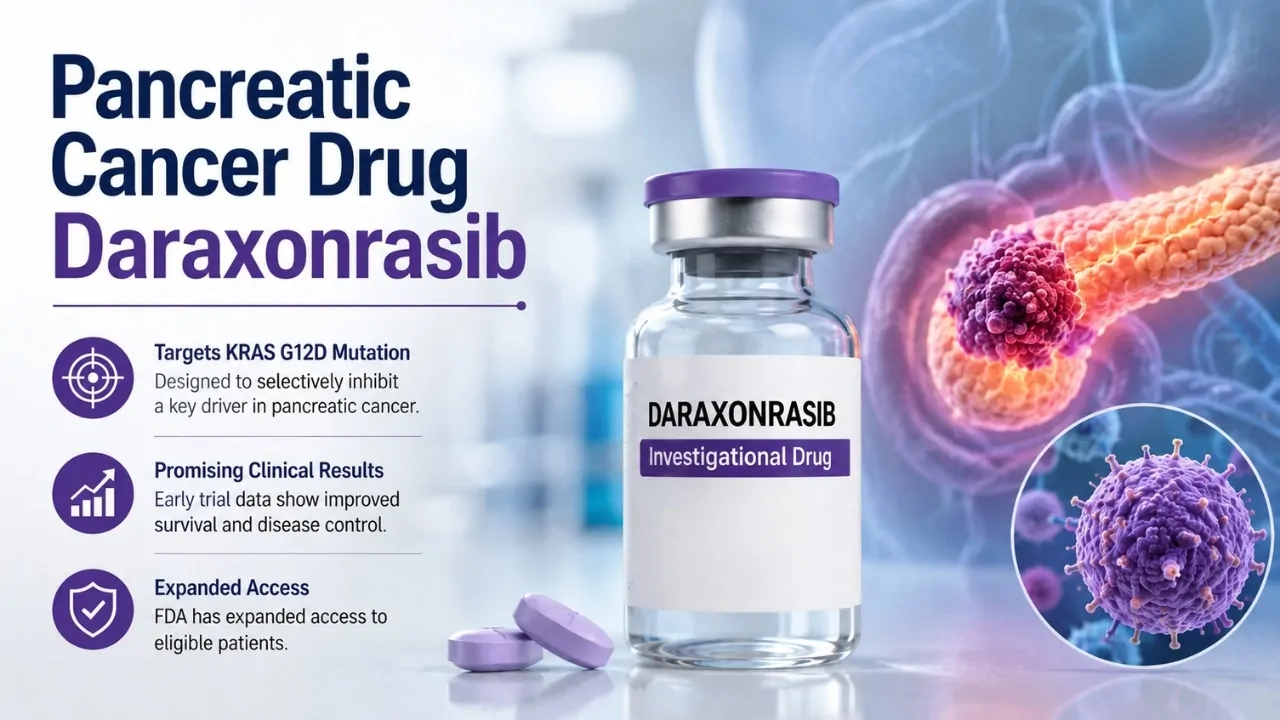
FDA Approves Groundbreaking Daraxonrasib Pill for Pancreatic Cancer
The US Food and Drug Administration granted expedited approval to daraxonrasib, a first-of-its-kind oral medication designed to target and block the mutated protein responsible for driving tumor proliferation in over 90% of pancreatic cancer cases. Announced by federal health regulators, this therapeutic milestone marks a shift in addressing one of the deadliest types of cancer, offering patients a targeted pharmacological option where pharmaceutical development had eluded drugmakers for decades.
- Daraxonrasib is an FDA-approved oral treatment specifically engineered to inhibit the mutated protein driving the vast majority of pancreatic cancer diagnoses.
- The regulatory decision utilizes an expedited approval pathway, accelerating patient access to a novel mechanism of action that pharmaceutical developers have pursued for decades.
Understanding the Pathogenesis of Pancreatic Malignancies
The clinical obstacle has long centered on mutated proteins which dictate unregulated cell division in upwards of 90% of pancreatic cancer cases. For decades, these proteins eluded drugmakers. The introduction of daraxonrasib represents a targeted pharmacological approach that directly interferes with the pathological signaling cascade.
From an epidemiological perspective, introducing targeted therapies into standard-of-care regimens alters the landscape for a disease associated with being one of the deadliest types of cancer.
Regulatory Evaluation and the Expedited Approval Framework
The expedited review timeline granted by the US Food and Drug Administration reflects the medical need defining pancreatic cancer therapeutics. This regulatory milestone underscores the evaluation of daraxonrasib.
Disclaimer: The information provided in this article is for educational and scientific communication purposes only and does not constitute medical advice. Always consult with a qualified healthcare provider regarding any medical condition, diagnosis, or treatment plan.