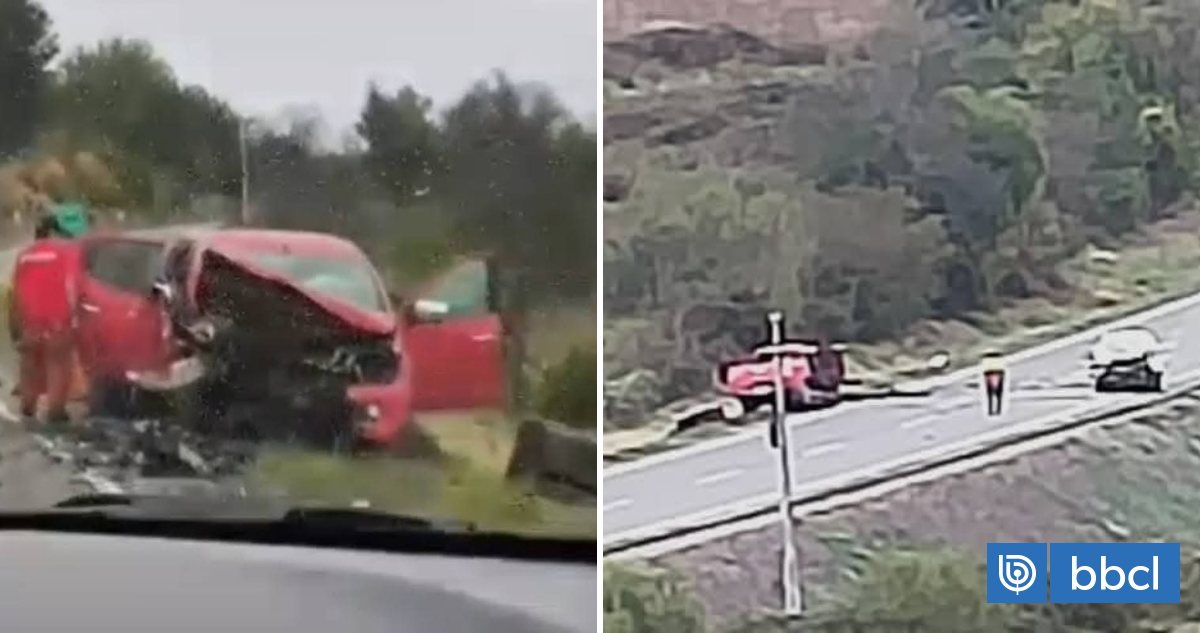
Fatal Bío Bío Crash Kills Man and Toddler
A 29-year-old man and a two-year-old boy died in a violent head-on collision on Route de la Madera between Santa Juana and Nacimiento in Chile’s Biobío Region on April 18, 2026, prompting urgent questions about road safety infrastructure and emergency response protocols in rural Chilean highways.
The crash occurred around 8:45 p.m. Local time when a pickup truck veered into the opposing lane and collided frontally with a passenger vehicle carrying the victims. According to preliminary reports from Carabineros de Chile, the driver of the pickup, identified as a municipal official from Nacimiento, lost control under unknown conditions, though investigators are examining whether excessive speed, poor visibility, or mechanical failure contributed. The infant, seated in the back of the passenger vehicle, was pronounced dead at the scene alongside the adult male occupant. Emergency services from both Santa Juana and Nacimiento responded, but the remote location and narrow roadway complicated rescue efforts.
This stretch of Route de la Madera has long been flagged by regional transportation authorities for its hazardous geometry. Winding through forested terrain with limited shoulder space and inconsistent lighting, the road lacks median barriers despite carrying mixed traffic including logging trucks, agricultural vehicles, and local commuters. Data from Chile’s Ministry of Transport and Telecommunications (MTT) shows that between 2020 and 2025, this 12-kilometer segment recorded 17 serious accidents and five fatalities—disproportionately high for its traffic volume. Local residents have repeatedly petitioned for safety upgrades, citing the road’s role as a vital link between forestry communities and regional hubs like Concepción and Los Ángeles.
“We’ve warned for years that this road is a time bomb. No guardrails, poor signage, and heavy truck traffic make it deadly—especially at night. It’s not just about fixing pavement; it’s about rethinking how we design roads for rural Chile.”
— Carlos Méndez, President of the Santa Juana Neighborhood Council, speaking to Radio Biobío on April 19, 2026.
The tragedy has reignited debate over Chile’s rural road safety framework, particularly Law 21.402 on Road Coexistence, which mandates safer infrastructure for vulnerable users but has seen uneven implementation outside major cities. While urban corridors in Santiago and Valparaíso have benefited from targeted investments under the MTT’s National Road Safety Plan 2023–2030, rural routes like Route de la Madera often fall through funding cracks due to lower traffic counts—even when risk per vehicle kilometer is significantly higher.
Experts argue that relying solely on accident frequency to prioritize repairs ignores systemic vulnerabilities. A 2024 study by the University of Chile’s Transportation Engineering Department found that roads with less than 1,000 daily vehicles but high proportions of heavy or mixed-use traffic account for over 40% of rural fatality rates nationwide. In the Biobío Region, where forestry contributes nearly 8% to regional GDP, trucks frequently use secondary routes like this one to avoid tolls on main highways, increasing wear and accident risk.
“Authorities need to shift from reactive fixes to predictive risk modeling. Waiting for deaths to happen before acting is unacceptable when we have the data to identify high-risk corridors proactively.”
— Dr. Elena Rojas, Transport Policy Analyst at the Centro de Estudios Públicos (CEP), Santiago.
In the aftermath, families of the victims have called for both accountability and prevention. The municipal official driving the pickup has been placed on administrative leave pending investigation, though no charges have been filed as of April 18. Legal experts note that if negligence is proven—such as failure to maintain vehicle safety standards or violating duty of care as a public employee—civil and administrative penalties could follow under Chile’s Traffic Law (Law 18.290) and the Probity Law (Law 20.880).
For communities grappling with such loss, access to verified support services becomes critical. Funeral coordinators in Nacimiento have reported increased demand for culturally sensitive bereavement counseling, particularly for families dealing with sudden child loss. Meanwhile, investigators may rely on forensic engineers to reconstruct the crash sequence, while insurance adjusters assess liability. Those seeking clarity on legal rights or municipal accountability often turn to specialized counsel familiar with public sector liability and rural infrastructure negligence.
This incident underscores a broader challenge: how to allocate safety resources equitably across a nation where geography and economics concentrate risk in overlooked corridors. As Chile continues to expand its forestry and agricultural exports, the strain on secondary roads will grow—not just in Biobío, but in regions like La Araucanía and Los Lagos where similar routes serve as economic lifelines.
The solution lies not only in better engineering but in stronger civic oversight. Residents of Santa Juana and Nacimiento have begun organizing community patrols to report hazardous conditions, while advocating for participatory budgeting mechanisms that let local voices influence road safety spending. When infrastructure fails, it is often local knowledge that first detects the fracture—and last to forget its cost.
For those navigating the complex aftermath of such tragedies—whether seeking legal guidance, emotional support, or technical expertise in accident reconstruction—turning to vetted professionals ensures decisions are grounded in accuracy and compassion. The World Today News Directory connects communities with verified civil litigation attorneys experienced in public liability cases, emergency response and restoration specialists equipped for rural scenarios, and grief and trauma counselors who understand the unique burden of sudden loss in close-knit communities.
In the quiet hours after a crash, when sirens fade and the road reopens, what remains is not just data on a spreadsheet—but the irreplaceable weight of a life cut short, and the collective responsibility to ensure the next journey is safer than the last.