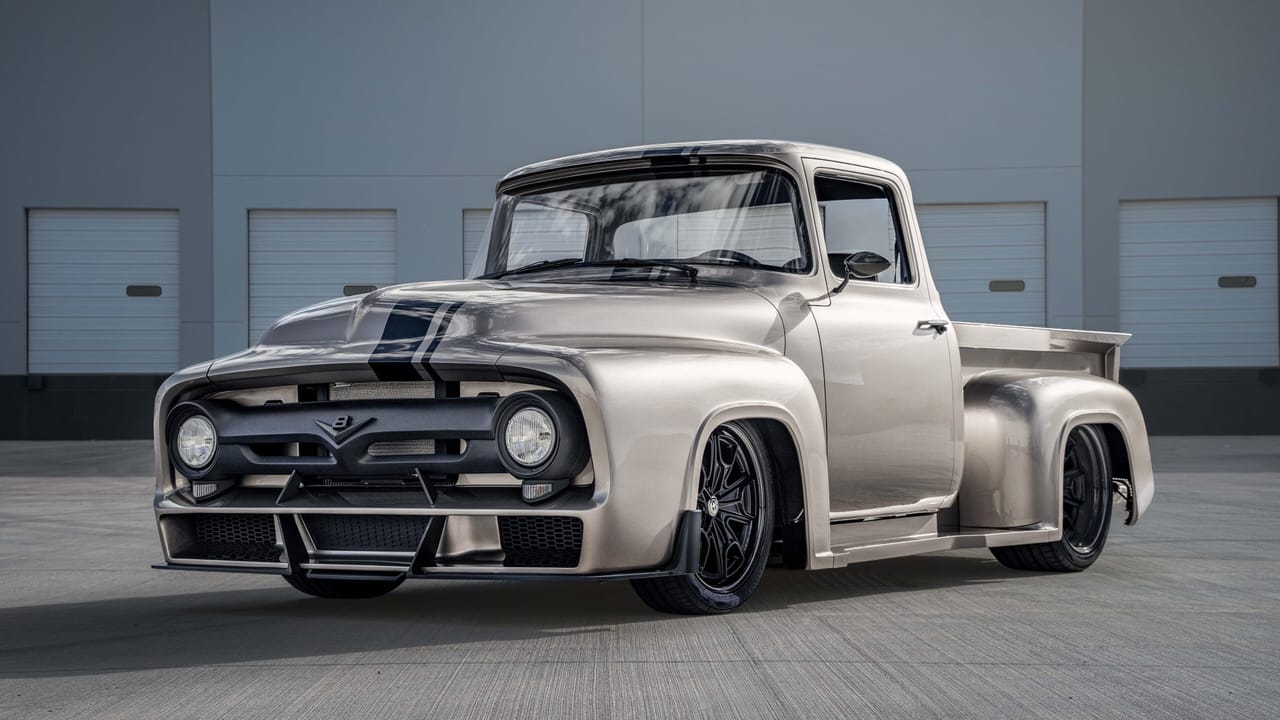
Fat Fender Garage Unveils 800-HP GT-Inspired 1956 Ford F-100 at SEMA
Fat Fender Garage Unveils 800-HP GT/FX Build at SEMA
Fat Fender Garage debuted a heavily modified 1956 Ford F-100, dubbed the “GT/FX,” at the SEMA Show in Las Vegas, featuring a powertrain capable of producing 800 horsepower, Top Gear reported.
- Engine Architecture: A Gen-III 5.0-liter Coyote V8 equipped with a 3.0-liter Whipple supercharger.
- Performance Output: 800 horsepower and 750 lb-ft of torque (per source 4) or 1017 Nm of torque (per source 2).
- Chassis & Drivetrain: FF1 Performance Coilover Chassis with a 10R80 10-speed automatic transmission (per source 4).
Coyote and Big-Block Engines Power Different Builds
While multiple outlets confirm the 800-horsepower output, the 1956 GT/FX uses a supercharged 5.0‑liter Coyote engine, as detailed by Fat Fender Garage. A separate Fat Fender build—a 1959 Ford F-100—employs a naturally aspirated 572‑cubic‑inch Jon Kaase big‑block V8 producing 800 horsepower. This 9.4-liter engine is larger than the 5.0-liter V8 and 3.5-liter V6 engines combined.
The physical construction of the vehicle involved approximately 15,000 hours of labor, according to source 2. The chassis was fabricated by the shop’s owner, Mike, by inverting one frame into another, while the grille was constructed from two stock grilles, per source 3. Mike also made the front bumper and a double-walled tailgate using parts from a Bronco, while his father managed the early bodywork. The exterior features custom BASF paint, a racing stripe, widened fenders and a Shelby GT350‑inspired rear diffuser, as noted by sources 2 and 4. Inside, the truck features premium leather seats, hidden climate controls, and modern gauges. We wanted to bring the attitude of a Ford GT to a ’56 F-100 and carry that idea through every aspect of the build,
says Jason Noel, CEO and founder of Fat Fender Garage.

It showcases the availability of Fat Fender Garage’s custom performance, interior, and exterior parts. The hardware is the core of the build, which also includes custom running boards and a sleeker hood and roof.
| Feature Component | Specification |
|---|---|
| Engine Type | 5.0L Coyote (Supercharged) |
| Transmission | 10R80 10‑speed Automatic |
| Induction | 3.0L Whipple Supercharger |
| Exhaust Setup | 3‑inch with Borla mufflers |
Shakedown Drive Failures and Mechanical Issues
During a recent test drive, the vehicle experienced multiple mechanical failures. According to Autotopia LA, the truck initially demonstrated tight steering before developing noticeable play, which the crew attributed to potential wear in the splines, possibly involving a cast pitman arm.
The drive concluded with the engine stalling after two large fireballs were observed exiting the exhaust. The shop suspects a fuel‑related issue, potentially triggered by the use of selectable exhaust cutouts at approximately 5,000 rpm, though the exact cause remains unconfirmed. At the time of the breakdown, the vehicle had completed only about 100 miles. Fat Fender Garage maintains a policy of not delivering builds until they have completed a 1,000‑mile testing threshold.

Economic and Engineering Context
The deployment of a high‑displacement, high‑consumption engine occurs against a backdrop of rising fuel costs. This contrasts with modern Ford F‑150 production trends, which emphasize smaller turbocharged V6 engines to improve fuel economy. Even the top-tier Raptor R utilizes a supercharged 5.2-liter V8 that produces 720 hp.