Fastest Star in Milky Way Discovered Orbiting Galaxy’s Supermassive Black Hole
Telescope Spies Fastest Star in the Milky Way Zipping Around a Black Hole
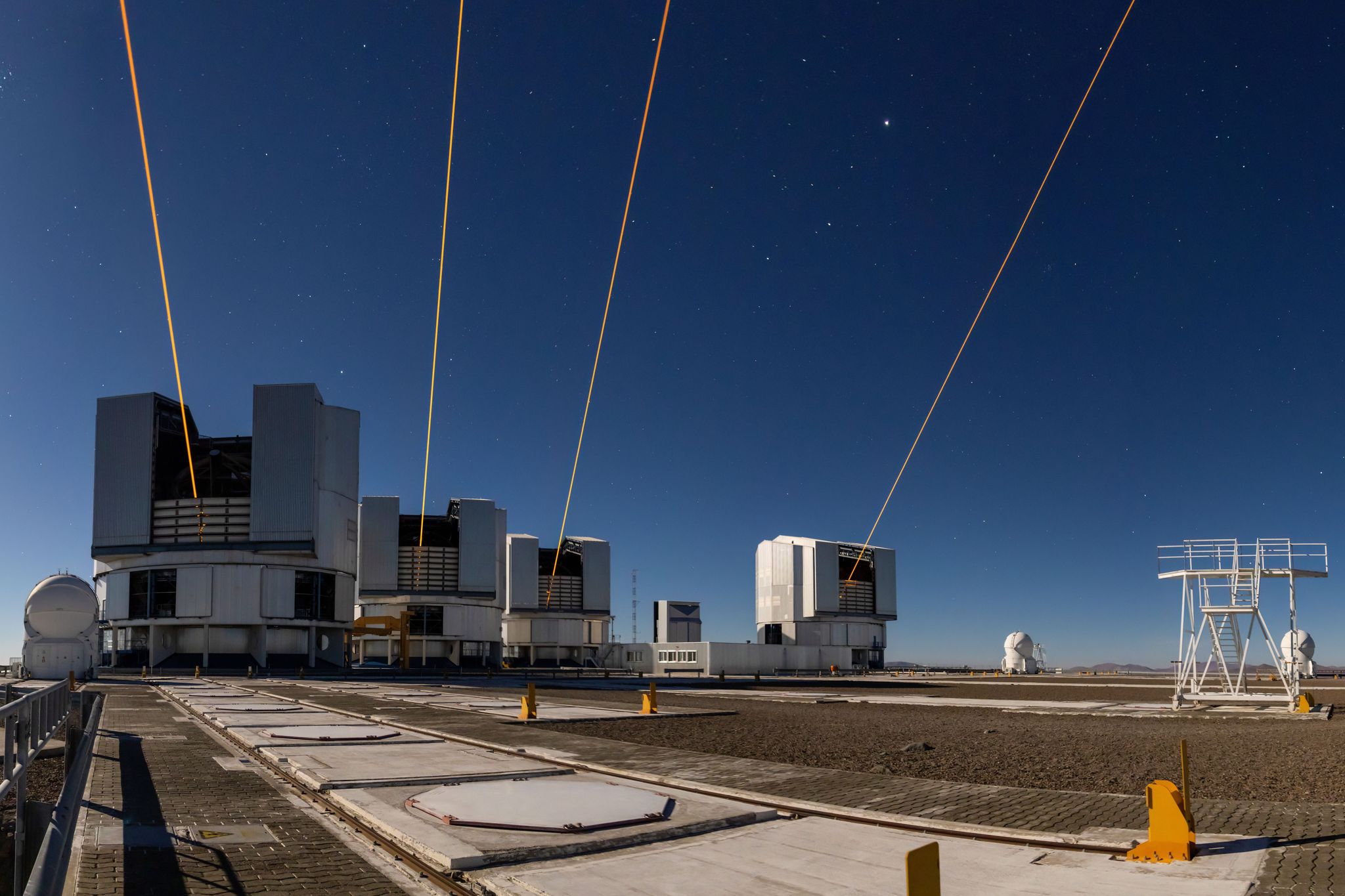
Astronomers using the European Southern Observatory’s Very Large Telescope in Chile’s Atacama Desert have discovered the fastest known star in our galaxy, racing around the supermassive black hole at the center of the Milky Way at speeds reaching approximately 15,534 miles per second (25,000 kilometers per second), according to findings published Wednesday in the journal Nature.
The Tech TL;DR:
- The Discovery: A newly identified star orbits the Milky Way’s central supermassive black hole at 15,534 miles per second, roughly 100,000 times faster than a commercial airplane.
- Orbital Mechanics: The star completes a full revolution in just 8.7 years, operating 10 times closer to the black hole than the previous record holder.
- Observational Impact: Uncovered via data from the European Southern Observatory’s Very Large Telescope, the discovery offers new pathways to measure black hole properties like spin.
Orbital Dynamics and Velocity Benchmarks
The newly spotted stellar body orbits closer to the galactic center than scientists have ever recorded before. According to Stefan Gillessen, an astronomer with the Max Planck Institute for Extraterrestrial Physics, “That star is really, extremely fast,” completing an entire revolution in a mere 8.7 years. By hugging this tight trajectory, the star harnesses the intense gravitational pull of the supermassive black hole to accelerate without falling in.

This proximity places the star 10 times closer than the previous record holder in the region. Because of this tight orbit, the star experiences the direct effects of the black hole’s rotation. Supermassive black holes reside at the center of nearly every large galaxy, but because nothing can escape them — not even light — determining their internal mechanics remains an observational hurdle for astrophysicists.
Data Pipeline Improvements and Future Scope
Out of several hundred stars closely orbiting the giant black hole that remain sensitive to its gravity, scientists have successfully mapped the orbits of around 50. Researchers note that deploying advanced telescopes enables teams to pinpoint fainter stellar bodies that previously eluded detection.

“This is just the tip of the iceberg,” said Tuan Do, an astronomer with the University of California, Los Angeles, who had no role in the study.
Technical Implementation: Processing High-Velocity Telemetry
import numpy as np

def calculate_orbital_velocity(distance_au, mass_solar):
    G = 4.30091e-3 # pc / M_sun * (km/s)^2
    velocity = np.sqrt(G * mass_solar / distance_au)
    return velocity

# Example vector assessment for a high-velocity stellar pass
v_vector = calculate_orbital_velocity(distance_au=0.002, mass_solar=4.3e6)
print(f"Calculated orbital velocity factor: {v_vector:.2f} km/s")
Keep reading